
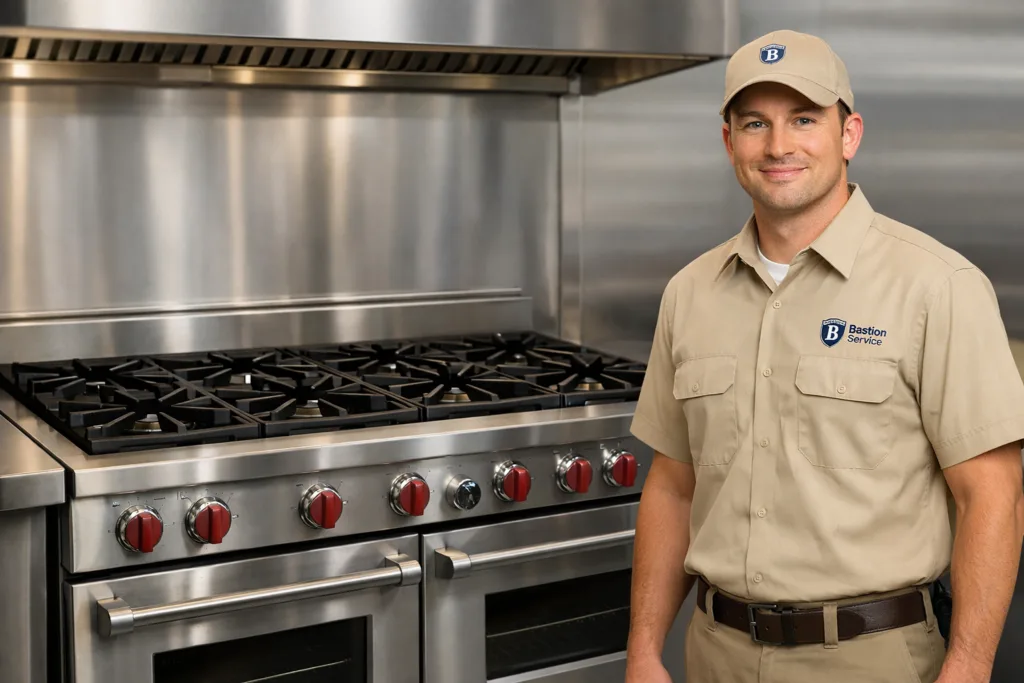




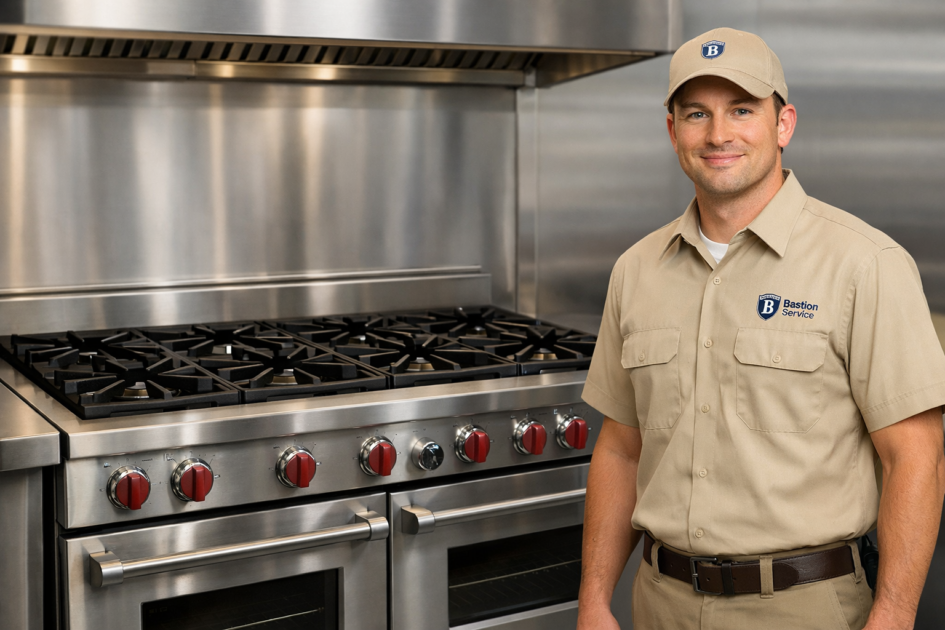
Range problems rarely stay isolated for long in a working kitchen. If a Wolf unit starts missing ignition, running with weak flame, or losing oven temperature during service, the impact shows up quickly in ticket times, food quality, and staff workflow. For businesses in Venice, repair service is most useful when the visit is built around the exact symptom pattern, the urgency of the downtime, and whether the equipment can be used safely until repairs are completed.
Related commercial service paths in Venice include Wolf Commercial Repair in Venice, Wolf Oven Repair in Venice, and Wolf Fryer Repair in Venice.
Bastion Service works with Venice businesses to diagnose Wolf range issues that interrupt production, create inconsistent heat, or make the line harder to run efficiently. The goal is to identify the failure accurately, explain what is affecting performance, and help operators move forward with the right repair decision instead of guessing based on symptoms alone.
Common Wolf range symptoms that point to service needs
Burners that click but do not light
Repeated clicking with delayed ignition usually means more than a simple nuisance. The problem may involve the igniter, burner assembly, moisture contamination, wiring, or a gas delivery issue. In daily operation, this can slow down prep stations and force staff to avoid certain burners or relight them repeatedly. If ignition is inconsistent, the range should be evaluated before the problem turns into a full loss of burner function.
Weak flame or uneven burner output
When one burner runs lower than the others, flames look uneven, or heat feels inconsistent across the cooking surface, the cause may be clogged ports, regulator problems, valve issues, or wear in burner-related components. These problems often first appear as longer cook times, poor searing, or difficulty keeping pans at a stable working temperature.
Oven not reaching set temperature
If the oven section runs cool, takes too long to preheat, or never seems to recover properly between loads, service should focus on ignition performance, temperature sensing, control response, and airflow-related factors. In a busy kitchen, underheating affects timing just as much as a complete failure because batches take longer and consistency drops.
Temperature swings during active use
Some Wolf range problems only become obvious when the equipment is under demand. A unit may seem acceptable when lightly used, then struggle as multiple burners are running or the oven is opened repeatedly. That pattern can point to a developing fault in controls, gas regulation, sensing, or internal components that are no longer performing well under load.
Oven overheating or cooking unevenly
Overheating, erratic cycling, or hot spots inside the oven can lead to scorched product, uneven browning, and unreliable cook times. These symptoms may come from control issues, sensor problems, ignition irregularities, or heat-distribution failures. When operators start rotating trays constantly or adjusting cook times around the equipment, the range is already affecting output enough to justify a repair visit.
Why these problems need diagnosis before parts are replaced
Wolf ranges can show similar symptoms for very different reasons. A burner that will not stay lit might involve ignition, gas flow, safety controls, or valve-related failure. An oven that seems cold may actually be cycling incorrectly or reading temperature inaccurately. Replacing parts based only on the most obvious symptom can increase costs and still leave the main problem unresolved.
A structured diagnosis helps answer the questions that matter most to a business in Venice:
- Which component or system is actually failing
- Whether the issue is isolated or part of broader wear
- Whether continued operation risks more damage
- How urgent the repair is for daily production
- Whether repair remains the sensible path
Signs the range is already affecting kitchen performance
Not every equipment issue looks dramatic at first. In many cases, staff adapt around the problem before management realizes how much productivity is being lost. Service is usually warranted when teams are compensating in ways that should not be necessary.
- Using only certain burners because others are unreliable
- Adding extra cook time to make up for weak heat
- Rotating pans to avoid uneven cooking results
- Waiting through repeated ignition attempts during rush periods
- Noticing that oven recovery gets worse as service continues
- Seeing flame behavior change from one shift to the next
These are not minor quirks. They are operational warning signs that the range is no longer performing predictably.
When continued use can make repairs more expensive
Running a range with active ignition or heating problems can increase wear on related components. A burner that misfires repeatedly may put added stress on the ignition system. An oven that overheats or cycles erratically can create extra strain on controls and temperature-related parts. Weak flame conditions may also lead to poor cooking results that affect service speed and product consistency.
If there is a strong gas odor or a suspected gas leak, stop using the equipment immediately and follow appropriate safety procedures before arranging appliance repair. If there is no gas odor but the range is clicking, lighting inconsistently, or failing to heat normally, the issue should still be checked promptly rather than worked around shift after shift.
Repair or replacement: how businesses usually evaluate the choice
Many Wolf range issues can be repaired successfully when the equipment is otherwise in good condition and the failure is limited to a specific system. Repair tends to make sense when the unit still fits the kitchen’s volume, the rest of the range is sound, and one targeted correction can restore stable operation.
Replacement becomes more likely when multiple systems are failing, downtime is becoming frequent, or the range no longer supports the pace of service even after prior repairs. The decision is usually based on a mix of factors:
- Current condition of burners, oven performance, and controls
- Frequency of recent service problems
- Impact of downtime on production and staffing
- Whether the next repair addresses the root issue or only a symptom
- How well the equipment still matches present kitchen demand
What to have ready before scheduling Wolf range repair in Venice
A faster service process often starts with better information from the kitchen. Before scheduling, it helps to note when the problem occurs and how the range behaves during normal use. Even simple details can shorten troubleshooting time and make the visit more productive.
- Which burners or oven functions are affected
- Whether the issue is constant or intermittent
- Any recent change in flame quality, ignition speed, or heat output
- Whether the problem appears more under heavy load
- Any error indicators, unusual sounds, or repeated clicking
- Whether staff have noticed overheating, underheating, or slow recovery
This kind of information helps connect the symptom to the likely failure path and supports a more efficient repair plan.
What a service visit should clarify
A useful Wolf range service call should do more than identify one failed part. It should clarify what is causing the performance issue, whether other components have been affected, and whether the unit can return to dependable daily use after repair. For businesses in Venice, that matters because the real issue is not just equipment failure in isolation; it is the effect that failure has on labor, timing, and consistency.
If your range is not lighting reliably, heating evenly, or holding temperature through service, scheduling repair early is usually the best way to limit downtime and avoid broader disruption. The right next step is a symptom-focused evaluation that shows what is wrong, how urgent it is, and what repair path will get the kitchen back to stable operation.


