
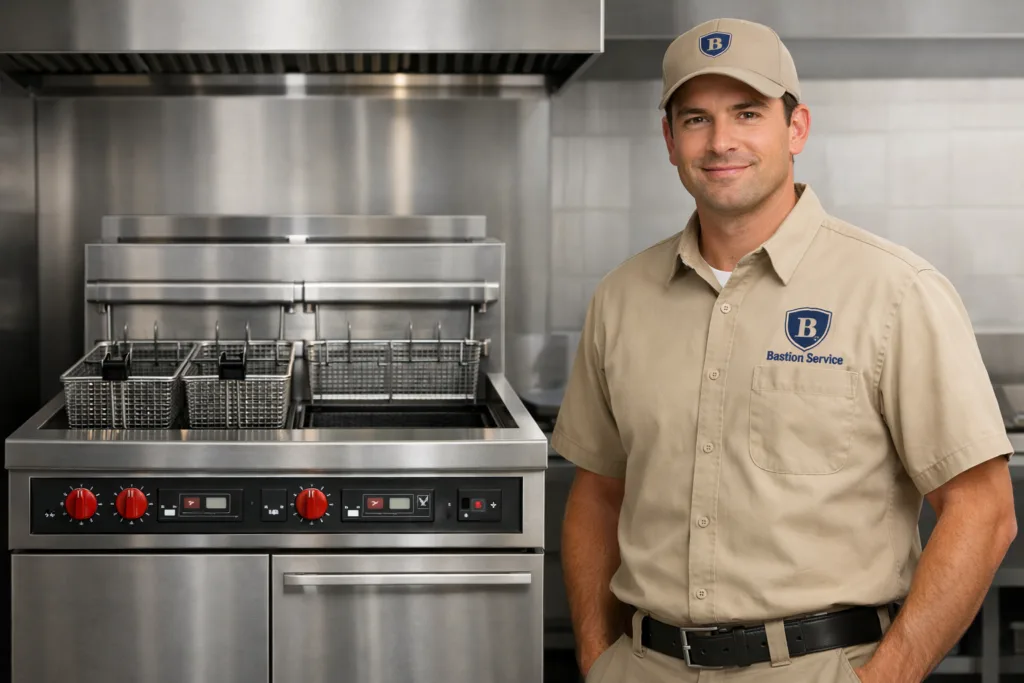





Fryer trouble can disrupt an entire kitchen shift, especially when the problem shows up as slow heat-up, burner failure, unstable oil temperature, or unexpected shutdowns during active production. For businesses in Venice, service is most effective when the symptom pattern is evaluated first so repair decisions, parts planning, and scheduling are based on how the Vulcan fryer is actually failing rather than on guesswork. Bastion Service handles Vulcan fryer issues with attention to uptime, safe operation, and the practical need to get equipment back into a reliable service routine.
Related commercial service paths in Venice include Vulcan Commercial Repair in Venice, Commercial Fryer Repair in Venice, and Vulcan Oven Repair in Venice.
Common Vulcan fryer problems seen in Venice kitchens
Not heating or taking too long to recover
If the fryer does not heat at all, heats only partway, or struggles to recover after baskets are dropped, the issue may involve ignition components, burner performance, temperature sensing, safety limits, gas flow, or control-related faults. In day-to-day operation, this often appears as longer cook times, inconsistent food color, and a fryer that falls behind during rush periods.
Slow recovery is not just an inconvenience. It can affect batch timing, product consistency, and labor flow, especially when staff begin compensating by changing load size or extending cook times. That usually means service should be scheduled before the problem causes a full outage.
Oil temperature swings and uneven cooking results
When oil runs hotter or cooler than the set point, the fryer may still seem functional while producing poor results. Foods may come out too dark, too pale, greasy, or uneven from one batch to the next. Temperature instability can be tied to thermostat drift, sensor problems, control faults, calibration issues, or burner conditions that interfere with steady heat delivery.
These symptoms also raise operating costs. Oil can break down faster when temperatures are not controlled properly, and product waste tends to increase before staff realize the fryer is no longer holding a stable cooking range.
Pilot, ignition, and burner sequence issues
A pilot that will not stay lit, burners that fail to ignite, or a fryer that starts intermittently usually points to a problem somewhere in the ignition sequence. Several different components can create similar symptoms, which is why testing matters. A fryer that works normally one cycle and fails the next often has an intermittent fault that will become more disruptive under heavier use.
When ignition is unreliable, kitchens may experience mid-service shutdowns or delayed startup at the beginning of a shift. That kind of pattern is worth addressing quickly because it tends to worsen rather than resolve on its own.
High-limit trips, resets, and lockouts
If staff are resetting the fryer repeatedly or dealing with lockout conditions, the unit is already indicating that normal operation has been interrupted. Overheating, failed sensors, ignition faults, and electrical or control problems can all trigger shutdown behavior. A reset may restore temporary operation, but repeated resets are a warning sign, not a fix.
Lockouts should be taken seriously because they can mask a larger reliability issue that may eventually leave the fryer completely unavailable when it is needed most.
Oil leaks and drain-related problems
Oil leaks under or around the fryer can come from worn seals, loose fittings, drain valve wear, damaged components, or deterioration tied to long-term heat exposure. Even a small leak should not be ignored. Beyond cleanup concerns, leaking oil creates safety risks and can interfere with nearby components or surrounding work areas.
Drain issues also matter operationally. If draining is slow, incomplete, or inconsistent, cleaning and filtering routines become harder to manage, and that can contribute to additional fryer performance problems over time.
Why accurate diagnosis matters on a Vulcan fryer
Many fryer symptoms overlap. A unit that will not hold temperature might have a sensor issue, a burner issue, a control issue, or a gas-related problem. A fryer that shuts down unexpectedly may be experiencing overheating, ignition failure, or a safety-control fault. Because the visible symptom does not always identify the failed part, proper diagnosis helps avoid unnecessary part replacement and repeated downtime.
For businesses in Venice, this matters beyond the repair itself. Better diagnosis helps with repair scheduling, deciding whether the fryer can remain in service temporarily, and understanding whether the problem is isolated or part of a broader wear pattern.
Signs service should be scheduled soon
- The fryer heats slowly or does not reach set temperature.
- Recovery between batches has become noticeably worse.
- Oil temperature swings are affecting cook quality.
- The pilot goes out or ignition is inconsistent.
- The fryer overheats, trips, or shuts down during use.
- Staff have to reset the unit to keep it running.
- Burner flame looks weak, uneven, or abnormal.
- Oil is leaking from the unit or drain area.
If the kitchen has already adjusted procedures to work around the fryer, that is usually a strong sign the unit needs attention even if it still runs part of the time.
When continued use can increase downtime
Running a fryer with unstable temperature control, unreliable ignition, or leaking oil can make the final repair more involved. Repeated overheating can affect safety components and controls. Intermittent ignition can place additional strain on related parts. A leak that starts small can become a larger operational and safety issue if normal use continues.
In many cases, the best decision is to stop using the fryer when operation becomes erratic or unsafe and arrange service before the next heavy production window. That approach can help limit product loss and reduce the chance of a more disruptive breakdown.
Repair or replacement: how the decision usually gets made
Many Vulcan fryer problems are repairable when the main structure of the unit is still in good condition and the failure is limited to serviceable components. Repair often makes sense when the fryer has otherwise been dependable, the issue is identifiable, and the expected result is a stable return to normal production.
Replacement becomes more likely when the fryer has a history of repeated failures, multiple worn systems, ongoing leak concerns, or continuing performance problems after prior service. If downtime is becoming routine and confidence in the equipment is low, replacement may be the better long-term decision for the kitchen.
How to prepare for a service visit
Before scheduling service, it helps to note whether the problem is constant or intermittent, whether the fryer fails during startup or during active cooking, and whether staff have noticed error displays, shutdown patterns, or changes in flame behavior. It is also useful to identify whether the issue began suddenly or worsened over time.
Helpful details include:
- Whether the fryer is not heating at all or simply heating slowly
- If poor recovery happens only during peak production
- Whether shutdowns occur after a specific amount of time
- If oil temperature appears too high, too low, or inconsistent
- Any visible leak location near the drain, valve, or beneath the unit
That information can make the appointment more efficient and help narrow the most likely fault path faster.
Service-focused support for Venice businesses
When a Vulcan fryer begins affecting output, food quality, or kitchen timing, the next step should be based on symptoms, operating risk, and how quickly the unit needs to return to stable use. For businesses in Venice, prompt evaluation helps determine whether the issue involves ignition, controls, gas flow, temperature regulation, or leak-related wear, and it gives the kitchen a workable repair plan instead of trial-and-error part changes. If the fryer is showing signs of unreliable or unsafe operation, scheduling service early is usually the best way to protect uptime and avoid a broader interruption.


