





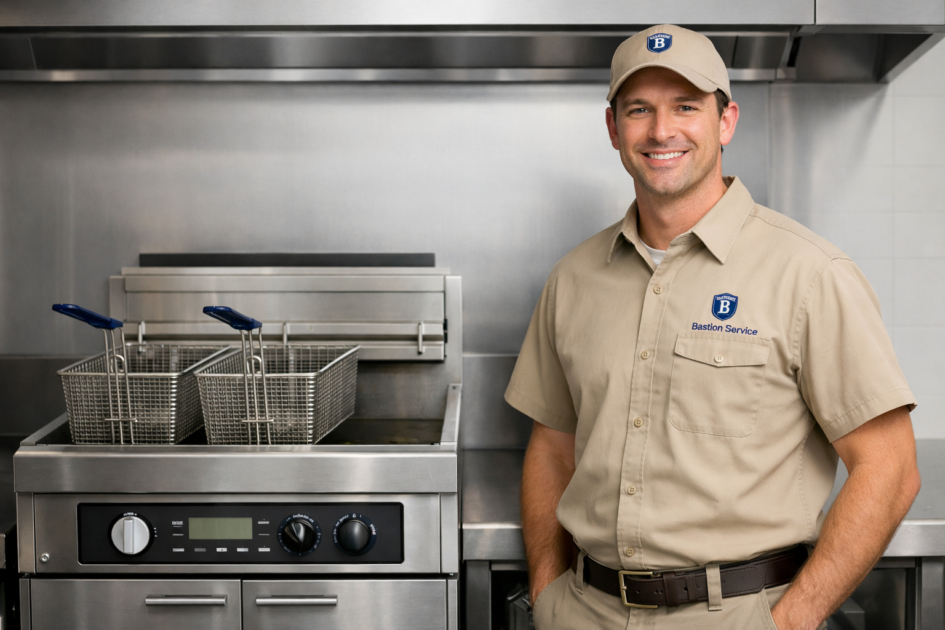
Fryer problems can quickly turn into service delays, inconsistent product, and unnecessary oil loss when the root cause is not identified early. For businesses in Cheviot Hills, the most useful next step is to schedule service based on the exact symptom pattern the fryer is showing, whether that means no heat, slow recovery, ignition trouble, temperature drift, or repeated shutdowns. Bastion Service handles Frymaster fryer repair with a diagnosis-first approach so the repair decision is based on the actual fault rather than trial-and-error part replacement.
Related commercial service paths in Cheviot Hills include Frymaster Commercial Repair in Cheviot Hills, Commercial Fryer Repair in Cheviot Hills, and Pitco Fryer Repair in Cheviot Hills.
Fryer issues that interfere with daily kitchen output
A Frymaster fryer does not need to be fully down to create problems. Equipment that still turns on but heats slowly, recovers poorly, or cycles unpredictably can affect ticket times and food consistency just as much as a complete failure. In busy kitchens, those issues often show up first as staff workarounds: longer cook times, constant monitoring, manual resets, or shifting production to other stations.
Common repair calls involve units that will not heat, fail to ignite, overshoot temperature, recover too slowly between batches, display control faults, shut off during use, or show signs of oil leakage or visible wear. These symptoms can come from different systems, so the repair process should focus on confirming whether the problem is tied to controls, sensing, gas components, electric heating parts, wiring, safety devices, or general wear from heavy use.
Why is my Frymaster fryer not heating or recovering temperature properly?
When a fryer is not heating at all, not reaching set temperature, or taking too long to recover after a drop, the issue may involve ignition failure, a weak or failed heating component, a high-limit problem, a faulty temperature probe, power supply issues, or a control problem. On gas units, burner and gas-delivery faults can also cause partial heating or uneven recovery.
Slow recovery matters because it often gets worse during higher-volume periods. A fryer may appear usable during light production but fall behind once basket loads increase. That can lead to undercooked product, longer queue times, and excess strain on staff trying to compensate. If recovery time has changed noticeably, it is usually a sign that the fryer needs service rather than continued adjustment by kitchen staff.
Symptoms that point to different fryer problems
Ignition failure or burner problems
If the fryer will not ignite, clicks without lighting, lights inconsistently, or loses flame during operation, the failure may involve ignition components, flame-sensing issues, burner performance, gas-side parts, or related safety controls. These faults should be checked promptly because repeated attempts to start the fryer can hide the original symptom and make the problem harder to isolate.
Oil temperature swings
When the oil runs hotter or cooler than expected, product quality usually changes first. Operators may notice darker color, uneven texture, or inconsistent cook times from one batch to the next. Temperature swings can be related to probe issues, control inaccuracy, heating response problems, or cycling faults that only appear once the fryer is under load. This is one of the most important symptoms to diagnose correctly because it affects both food quality and oil life.
Intermittent shutdowns
A fryer that shuts down mid-shift, resets unexpectedly, or goes into fault mode during normal use may be dealing with overheating protection, unstable electrical connections, failing controls, or a gas interruption. Intermittent problems are especially disruptive because they create uncertainty: the fryer may seem fine during startup and fail later when production is highest.
Error codes or control faults
Control displays and fault messages can help narrow the problem, but they do not always identify the failed part by themselves. A code may point toward a temperature, ignition, or communication issue while the actual cause sits elsewhere in the system. Proper service focuses on testing the related components rather than replacing parts based only on the display message.
Leaks, unusual noises, or visible wear
Oil around fittings or components, rattling, abnormal burner noise, or signs of wear around key assemblies should not be ignored. Some conditions are straightforward to repair when caught early, while others signal broader wear that affects reliability and safe operation. If the fryer has started showing multiple symptoms at once, a full evaluation is usually more useful than addressing one visible issue in isolation.
What a proper diagnosis helps you decide
Diagnosis is not just about naming a bad part. It helps determine whether the issue is isolated, whether continued use is likely to cause additional damage, and whether the repair is likely to restore stable performance. That matters for kitchens trying to avoid repeat downtime and keep production predictable.
For example, what looks like a major heating failure may turn out to be a sensing issue or control fault. In other cases, repeated temperature problems may reflect broader wear that makes another short-term repair less worthwhile. A service visit should clarify the condition of the unit, the likely repair scope, and whether the fryer is a good candidate for repair based on its current performance and history.
When to schedule service instead of waiting
It is time to schedule fryer service when you notice:
- No heat or delayed heat-up
- Slow recovery between batches
- Oil temperature that will not stay stable
- Ignition problems or burner irregularities
- Unexpected shutdowns during operation
- Error messages or repeated resets
- Oil leaks or signs of component wear
- Cooking results that have become inconsistent without a menu change
Waiting for a full breakdown often creates a longer outage than addressing the warning signs earlier. Many fryer failures progress from intermittent performance to complete downtime after multiple shifts of compensating around the problem.
How ongoing use can increase downtime
Continuing to run a fryer with unstable heat, repeated ignition attempts, shutdowns, or control faults can place added stress on other components and complicate the eventual repair. In some kitchens, the unit stays in rotation because it still works part of the time. The problem is that partial function often masks the seriousness of the fault until the fryer fails during a busy period.
If staff have to watch the fryer closely, restart it often, adjust cooking patterns around it, or avoid certain loads because it cannot keep up, the equipment is already affecting operations. That is usually the point where service becomes the more efficient option.
Repair or replace: what usually matters most
The right choice depends on more than whether the fryer still powers on. Age, condition, service history, part availability, operating demand, and the number of active issues all matter. A targeted repair is often the best option when the unit is structurally sound and the failure is limited to a specific system. Replacement becomes a stronger consideration when the fryer has recurring major faults, visible wear across multiple systems, or a pattern of repairs that no longer restores consistent performance.
For Cheviot Hills businesses, the most practical decision is usually the one that restores dependable output without creating repeat service interruptions. That is why the evaluation should focus on actual operating condition rather than assumptions based on one symptom alone.
Preparing for a service visit
Before scheduling service, it helps to note what the fryer is doing and when the issue appears. Useful details include whether the problem happens at startup or only after the fryer has been running, whether the display shows any fault message, how long recovery now takes compared with normal operation, and whether staff have noticed shutdowns, flame issues, or unusual oil behavior. That information can help narrow the likely cause faster.
If the fryer is leaking, overheating, failing to ignite reliably, or shutting down during active use, it is best to stop relying on it for regular production until it has been checked. The final goal is not simply to get the fryer running for the moment, but to return it to stable operation with a repair plan that fits the unit’s condition and your kitchen’s workload in Cheviot Hills.


