
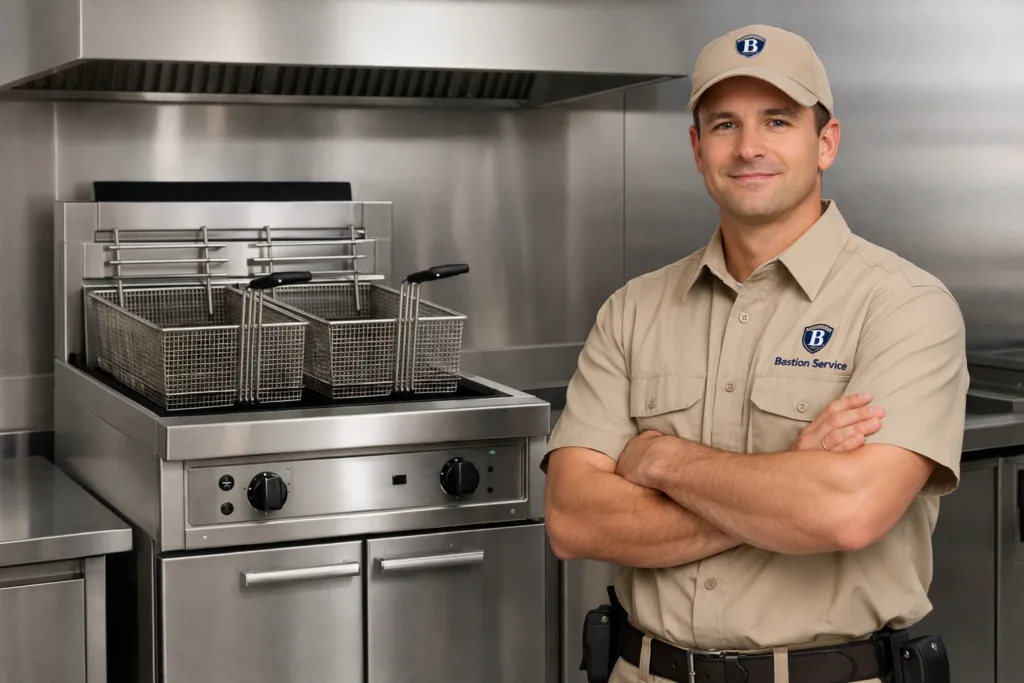




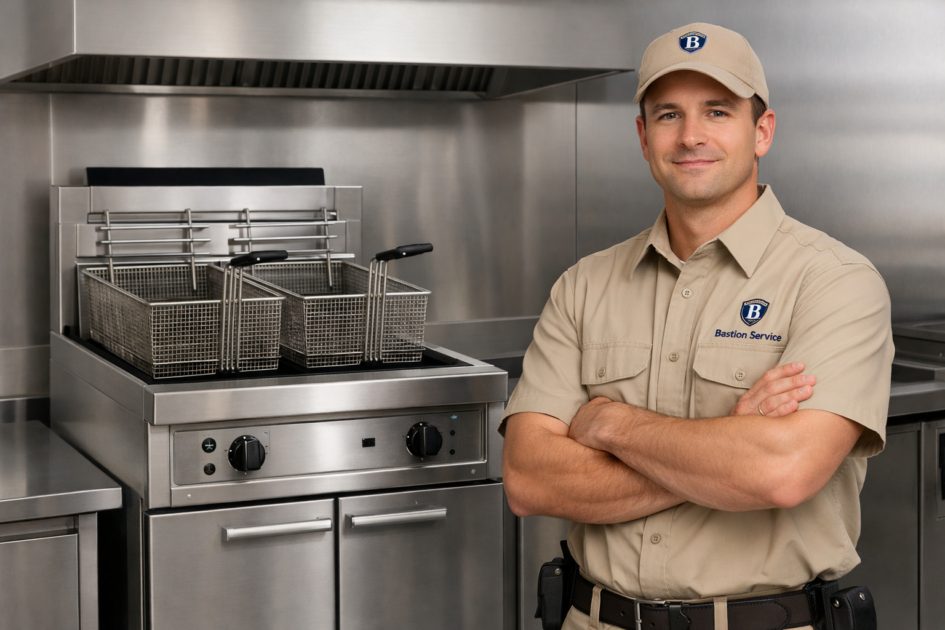
Fryer failures can disrupt an entire kitchen long before the unit stops working completely. When a Vulcan fryer begins losing heat, cycling unpredictably, or dropping out during service in Cheviot Hills, the priority is to identify the exact fault, understand how serious it is, and schedule repair before the problem spreads into longer ticket times, wasted oil, and inconsistent output. Bastion Service handles Vulcan fryer repair for businesses in Cheviot Hills with a service-first approach focused on symptom pattern, equipment condition, and the fastest sensible path back to reliable operation.
Related commercial service paths in Cheviot Hills include Vulcan Commercial Repair in Cheviot Hills, Commercial Fryer Repair in Cheviot Hills, and Vulcan Oven Repair in Cheviot Hills.
Vulcan fryer problems that usually need service
Many fryer complaints sound similar at first, but the underlying causes can be very different. A no-heat condition may involve ignition, controls, power, wiring, safety circuits, or gas-related components. A fryer that seems to heat normally at startup but struggles during heavier production may point to a different issue entirely.
Service is usually warranted when staff notice any of the following:
- The fryer does not heat at all
- Oil temperature rises too slowly
- Recovery lags during busy periods
- Temperature swings affect cooking consistency
- The burner fails to ignite or stay lit
- The control behaves erratically or stops responding
- The fryer shuts down unexpectedly during use
These symptoms affect more than one menu item. They can force the kitchen to reroute volume, adjust cook times, or rely on workarounds that reduce consistency and put extra pressure on the line.
What common symptoms can indicate
No heat or failure to start
If a Vulcan fryer will not heat, the problem may be tied to the ignition sequence, temperature control, hi-limit circuit, power supply, wiring, or gas flow. In some cases, a fryer reaches a point of complete no-heat after days or weeks of inconsistent startup. What looks sudden to staff may actually be the final stage of a developing failure.
This is one of the clearest signs to stop guessing and have the unit checked. Repeated reset attempts or repeated startup cycles do not solve the root issue and can delay the right repair.
Slow heat-up and poor recovery
When a fryer eventually reaches temperature but cannot keep up once baskets start dropping, production slows quickly. Slow recovery can be related to burner performance, control response, temperature sensing drift, or other faults that only become obvious under load. Kitchens often compensate by extending cook times or reducing batch pace, but that workaround usually leads to lower throughput and uneven results.
If recovery is noticeably worse than usual, the fryer may still be running, but it is no longer supporting normal service demands.
Oil temperature drifting too high or too low
Temperature complaints are not just quality complaints. If oil runs hotter than intended, food can darken too quickly and oil life may shorten. If the fryer runs too cool, cooking times stretch and product consistency suffers. These problems can point to issues with the thermostat, probe, control logic, calibration, or related safety components.
Operators sometimes describe this symptom as “the fryer feels off” rather than “the fryer is broken.” That is still worth scheduling. Temperature instability often gets worse with continued use.
Ignition trouble and burner instability
A fryer that clicks, tries to light, lights inconsistently, or loses burner performance after startup needs attention before it becomes a complete outage. Ignition complaints can overlap with flame-sensing faults, gas valve issues, wiring problems, control failures, or wear in associated components.
Because several systems can produce similar startup symptoms, replacing parts based only on appearance or assumption can lead to repeat downtime.
Intermittent shutdowns during service
Intermittent faults are especially disruptive because the fryer may appear normal during part of the day and fail when production picks up. Heat-sensitive electrical issues, unstable controls, safety trips, or failing components can all cause a fryer to drop out after it has been running for a while.
If staff have started saying the fryer “usually works until it doesn’t,” that is a strong sign to schedule repair before a busier shift turns the issue into a full interruption.
Why diagnosis matters on a Vulcan fryer
Vulcan fryer repair is most effective when the symptom is tied to the actual operating condition of the unit, not just the first visible complaint. Two fryers can show the same surface-level problem and still need very different repairs. A burner issue can resemble a control issue. A temperature complaint can be connected to sensing or safety response rather than the part most people first suspect.
That is why the service process should focus on how the fryer behaves at startup, under load, at temperature, and during repeated cycles. For businesses in Cheviot Hills, this helps avoid unnecessary part changes and makes it easier to decide whether the unit should be repaired now, paused from use, or evaluated for broader condition concerns.
Signs the fryer is affecting more than one part of the kitchen
A fryer problem rarely stays isolated to the fryer station. Once heat performance becomes unreliable, the rest of the kitchen usually feels it in one or more of these ways:
- Longer ticket times during rush periods
- Inconsistent color, texture, or cook results
- Faster oil breakdown from unstable temperature control
- Extra strain on other fryers or adjacent equipment
- Staff workarounds that slow production and increase error risk
When teams begin adjusting around the fryer instead of using it normally, the equipment has already become a productivity problem, even if it still turns on.
When to stop using the fryer until it is repaired
Some performance issues can be monitored briefly while service is being arranged, but others point to a stronger need to take the fryer out of rotation. Continued use is harder to justify when the unit repeatedly fails to ignite, shuts down without warning, overheats, produces unstable burner operation, or requires repeated attempts just to stay running.
In those situations, ongoing use can increase wear, create avoidable oil waste, and make the final repair more disruptive. If the fryer is no longer predictable, it is usually better to schedule service promptly than to wait for a complete failure during an active shift.
Repair or replacement: how businesses usually decide
Not every Vulcan fryer issue means the unit should be replaced. In many cases, repair is the better decision when the problem is isolated, the fryer is otherwise structurally sound, and restoring stable performance is practical. Replacement becomes a more serious discussion when failures are recurring across multiple systems, the equipment condition has declined broadly, or the cost of keeping the fryer in service no longer supports reliable daily use.
For businesses in Cheviot Hills, the decision usually comes down to downtime exposure, parts investment, age and wear, and whether the current issue is a single repair event or part of a larger pattern.
How to prepare for a service visit
A little symptom detail can make the repair process more efficient. Before service is scheduled, it helps to note:
- Whether the fryer fails cold, after preheat, or during active cooking
- If the issue is constant or intermittent
- Any error behavior, unusual cycling, or shutdown pattern
- Whether temperature seems too high, too low, or unstable
- How long the problem has been getting worse
Even simple observations from kitchen staff can help narrow down the likely fault path and reduce delays in determining the next step.
Service decisions should support uptime, not just restart the unit
The goal of Vulcan fryer repair in Cheviot Hills is not only to get the fryer heating again, but to restore dependable operation that the kitchen can trust during normal production. A good service outcome should explain the symptom, isolate the cause, and make the next step clear, whether that means repair, temporary shutdown until correction, or a broader equipment decision. If your fryer is affecting output, temperature control, or line flow, scheduling service early is usually the most practical way to limit downtime and protect daily operations.


