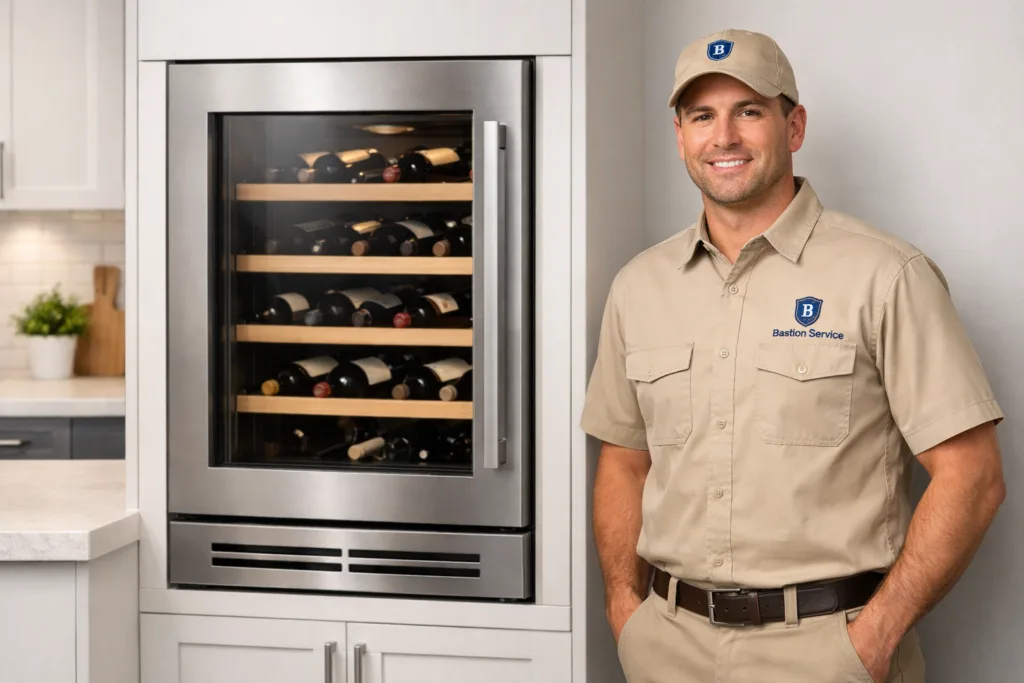
Wine coolers depend on stable airflow, accurate sensing, and a sealed cooling system that can recover after the door opens. When any of those basics start to slip, the first signs are often subtle: bottles not feeling as cool as usual, the cabinet running longer than normal, or a small change in fan or compressor sound. Catching those symptoms early can help prevent spoiled collections, excess condensation, and unnecessary strain on the unit.
Common wine cooler problems homeowners notice
Temperature drift is one of the most common complaints. If the cabinet stays too warm, the issue may be tied to a dirty condenser area, restricted ventilation, a weak door gasket, a faulty thermistor, an evaporator fan problem, or declining compressor performance. If the cooler runs too cold or starts freezing contents, that often points more toward a sensor, thermostat, or control problem than a simple setting mistake.
Noise can also tell an important story. A steady hum is normal for most units, but louder buzzing, rattling shelves, fan scraping, or vibration against surrounding cabinetry can suggest loose hardware, worn fan components, or airflow obstruction. In some cases, what sounds like a major failure turns out to be a mounting or leveling issue. In others, unusual noise appears because the cooler is struggling to maintain target temperature.
Moisture problems deserve attention as well. Fogging on the glass, water inside the cabinet, or persistent condensation around the door can be caused by repeated warm-air intrusion, a torn gasket, a drainage issue, or improper temperature balance. If the symptom is concentrated in a separate freezer compartment or tied to heavy frost and poor recovery, Freezer Repair in West Hollywood may be the better fit for that diagnosis.
What often causes poor cooling
Not every cooling complaint means the sealed system has failed. Wine coolers are especially sensitive to blocked vents, tight installation clearances, dirty coils, and failed circulation fans. Even a small airflow problem can create warm spots, uneven temperatures from top to bottom, or longer run times that make the appliance seem weaker than it really is.
Door-seal problems are another common cause of unstable temperatures in homes. If the gasket no longer seals evenly, room air can enter the cabinet throughout the day. That makes the compressor cycle more often, raises interior humidity, and can produce condensation that homeowners mistake for a drainage problem. Shelves that prevent the door from closing fully can create the same effect.
Control-related faults can be harder to identify without testing. A wine cooler may appear to cool normally for part of the day, then warm up unexpectedly because the sensor is misreading cabinet temperature or the control board is not responding correctly. Those intermittent problems are frustrating because the appliance may seem fine during a brief check, even though it cannot maintain stable performance over time.
Symptoms that should not be ignored
If the cabinet stays warm for hours, the compressor clicks on and off without settling into a cycle, or the interior temperature swings widely from one day to the next, service should not be delayed. Continued operation under those conditions can add wear to the compressor and may turn a manageable repair into a larger one.
Electrical smells, repeated breaker trips, or a unit that goes completely dead are more urgent signs. Those symptoms can involve wiring, relays, controls, or compressor-start components and should be checked before the appliance is used again. A wine cooler is smaller than a full refrigerator, but it still relies on the same basic refrigeration and electrical systems.
Some households also notice a problem because ice production or a nearby dispenser system is acting up at the same time. When the symptom is really centered on fill issues, leaks, or poor ice harvest rather than beverage cooling, Ice Maker Repair in West Hollywood may be the more relevant service path.
Repair or replacement?
Many wine cooler repairs make sense when the fault is limited to accessible parts such as fans, thermostats, temperature sensors, switches, gaskets, lights, or certain control components. These issues can often be identified clearly and compared against the condition and age of the appliance before any major decision is made.
Replacement becomes a more serious consideration when the unit has major sealed-system trouble, compressor failure, repeated breakdowns, corrosion, or poor parts availability. If the cabinet itself is in rough condition and cooling performance has been declining for some time, putting money into repeated repairs may not offer good long-term value.
It can also help to separate wine cooler symptoms from broader kitchen refrigeration problems. If food storage temperatures are inconsistent in the main fresh-food section as well, Refrigerator Repair in West Hollywood may be the better place to start, especially when the concern is not limited to beverage storage.
What a service visit should focus on
A useful diagnosis starts with how the unit is actually behaving in the home, not just which part seems most likely from the symptom alone. That usually means checking temperature response, fan operation, airflow, door sealing, drain condition, control behavior, and how the cooling system cycles under load. In West Hollywood homes, installation placement and ventilation clearance are often just as important as the internal components.
The goal is to determine whether the wine cooler can return to stable operation, whether continued use should be limited until repair is completed, and whether the repair is worthwhile based on the appliance’s overall condition. That kind of symptom-based evaluation gives homeowners a better path forward than replacing parts by guesswork.
When local homeowners call for wine cooler repair
Most service calls happen after a pattern becomes hard to ignore: bottles not staying at serving temperature, constant running, fresh condensation on the glass, or a new noise that keeps returning. Those are practical signs that the unit is no longer operating the way it should. Addressing the issue early usually gives you more options than waiting until there is a complete loss of cooling.
For households in West Hollywood, the most helpful next step is to match the symptom to the actual fault and decide from there whether a repair is straightforward, whether use should be paused, or whether replacement makes more sense. That keeps the decision based on the appliance’s condition rather than on guesswork or temporary workarounds.