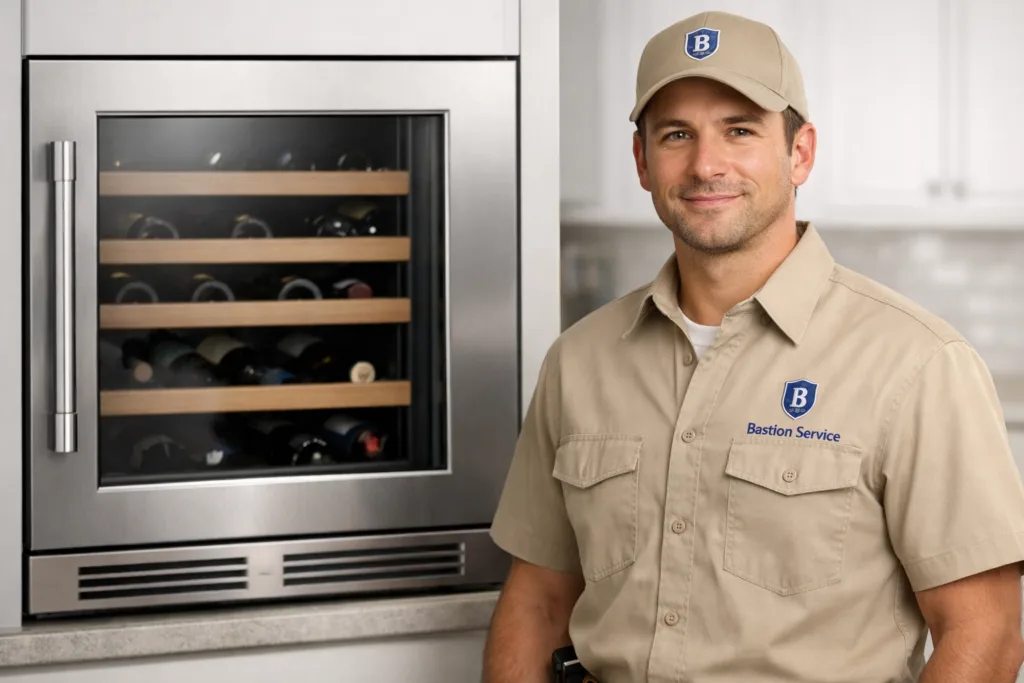
A Marvel wine cooler that starts drifting off temperature, collecting moisture, or making new noises usually gives warning signs before it stops working entirely. The pattern of those signs matters. A unit that runs but cannot recover temperature points to a different repair path than one that clicks, shuts off, or freezes the interior. For homeowners in West Hollywood, paying attention to how the cooler behaves from one cycle to the next can help narrow down the problem quickly.
What different symptoms usually mean
Wine coolers are designed to maintain a narrow, stable range. When that stability changes, the issue is often connected to airflow, temperature sensing, sealed cooling performance, drainage, or door sealing. Even symptoms that seem minor at first can affect storage conditions and put extra strain on the appliance over time.
Running warm or not cooling enough
If bottles feel warmer than usual or the cabinet never seems to reach the set temperature, common causes include restricted condenser airflow, a weak fan motor, a faulty thermostat or sensor, control problems, or a cooling system issue. In some cases, the unit still appears to run normally but does so almost constantly because it is no longer cooling efficiently.
This is one of the most important symptoms to address early. A Marvel wine cooler that runs long cycles without reaching proper temperature may be working much harder than it should, which can increase wear on key components.
Too cold, freezing, or developing frost
Overcooling can be just as concerning as warming. If the interior starts freezing contents, building frost in the wrong areas, or dropping well below the selected setting, the problem may involve a sensor that is reading incorrectly, a control that is not cycling properly, airflow disruption, or a door that is allowing moisture inside.
Frost is especially useful as a clue. Light condensation can happen from normal use, but recurring frost usually means the unit is not managing temperature and humidity the way it should.
Clicking, buzzing, rattling, or loud humming
Some operating sound is normal, but a new or worsening noise usually suggests a specific fault. Rattling may come from panels or mounting vibration. Buzzing can point to a fan or compressor-related issue. Clicking that repeats without a normal cooling cycle may indicate trouble with start components or controls.
If the sound is paired with weak cooling or short cycling, it is less likely to be harmless background noise and more likely to signal that the unit is struggling to operate correctly.
Water, condensation, or fogging
Moisture around the door, water under the unit, or interior condensation can come from a blocked drain path, an uneven installation, a worn door gasket, or warm air leaking into the cabinet. Those problems do more than create mess. They often cause longer run times, unstable temperatures, and avoidable stress on the cooling system.
Why door seals and airflow matter so much
Many wine cooler complaints trace back to poor airflow or a compromised seal. If the condenser area is dusty, ventilation is restricted, or the door gasket is not closing tightly, the unit can lose efficiency long before it appears completely broken. In a built-in setup, limited airflow around the appliance can also affect how well it sheds heat.
Signs to watch for include:
- The door no longer closes with the same resistance
- Condensation appears near the frame or glass
- The cooler runs longer during warmer parts of the day
- One section feels noticeably warmer or colder than another
- The exterior seems hotter than usual during operation
These symptoms do not always mean a major failure, but they do suggest the cooler is no longer operating under the conditions it was designed for.
When to stop waiting and schedule service
It is time to schedule service if the cabinet cannot hold temperature, the unit runs almost nonstop, the compressor tries to start repeatedly, leaking continues, or frost and moisture keep returning after basic cleaning and door checks. The same applies when the display, controls, or interior lights behave oddly even though the cooler still has power.
Gradual decline is also worth taking seriously. Many homeowners notice the change first as longer run times, slightly warmer storage, extra vibration, or more noticeable fan noise. Catching those issues earlier can prevent a smaller repair from turning into a more involved one.
Problems that can get worse with continued use
Not every issue requires immediate shutdown, but some do become more expensive when the unit keeps running under strain. A fan that is failing, a condenser that cannot shed heat properly, or a control issue that causes short cycling can all increase stress on the compressor. Heavy icing, repeated startup attempts, and ongoing leaks can also create secondary damage.
If the wine cooler is clearly unstable, it is usually better to reduce use and avoid repeatedly adjusting settings in hopes that it corrects itself. Temperature instability rarely improves without addressing the underlying fault.
Repair or replacement depends on the cause
Replacement is not always the right answer just because cooling performance has changed. Many Marvel wine cooler issues involve repairable parts such as fans, controls, sensors, gaskets, drains, or start components. In those cases, repair may restore normal operation without replacing the entire appliance.
Replacement becomes more likely when there is major sealed-system failure, repeated breakdown across multiple systems, severe age-related wear, or cabinet condition that makes further work less practical. The real decision usually comes down to the diagnosed failure, the overall condition of the unit, and whether the repair is likely to restore stable performance.
What a service visit should help clarify
A useful appointment should determine whether the problem is related to cooling production, air circulation, drainage, temperature sensing, power delivery, or control electronics. It should also identify whether the cooler can keep running safely while parts are ordered or whether continued operation risks more damage.
For homeowners in West Hollywood, the goal is simple: protect stored wine, restore steady performance, and make a repair decision based on the actual source of the problem rather than guesswork. That is what makes Marvel Wine Cooler Repair in West Hollywood worth addressing early, especially when the first symptoms seem small but keep returning.