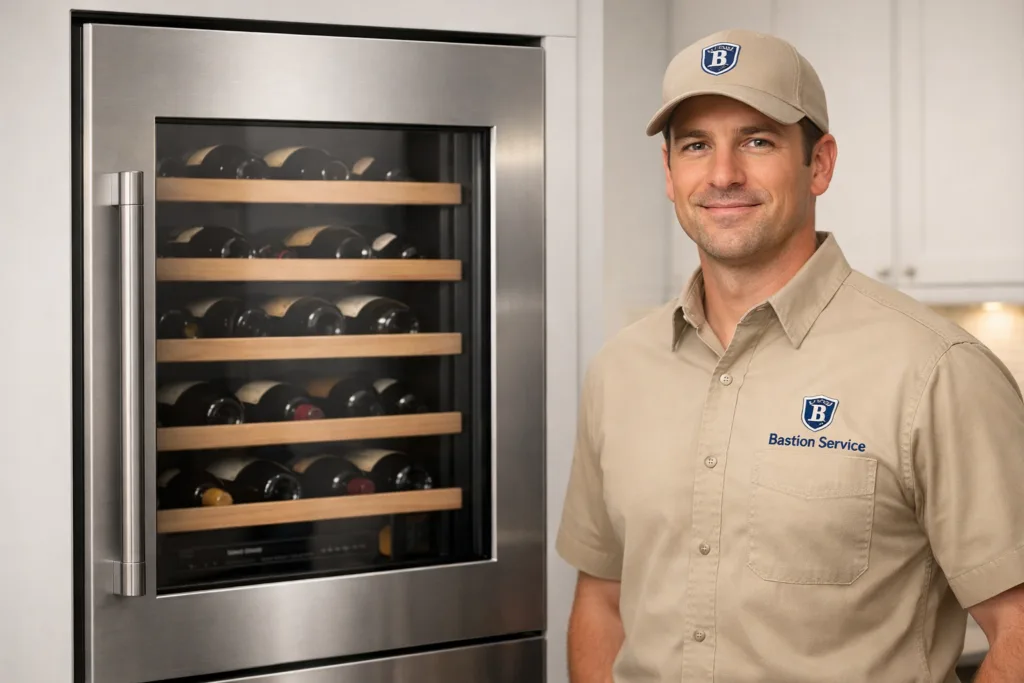
Temperature instability in a wine cooler usually points to one of a few core systems: airflow, temperature sensing, door sealing, drainage, or the cooling system itself. Because those systems affect each other, a cabinet that feels slightly warm one day and frosty the next can be more than a simple setting issue. Looking at the full symptom pattern often reveals whether the problem is likely minor or whether it is putting extra strain on the appliance.
What the symptom pattern usually tells you
KitchenAid wine coolers are designed to hold a steady environment, so even small changes in performance matter. If the unit starts behaving differently for several days in a row, that consistency is often more meaningful than a single warm cycle or isolated noise.
Running warm or not cooling enough
If stored bottles are not reaching the expected temperature, common causes include restricted airflow, a weak fan motor, dirty condenser components, sensor trouble, control problems, or a door that is not sealing well. In some cases, the compressor may be running but the cabinet still does not cool properly, which can suggest a deeper refrigeration issue. Warm operation that persists after basic setting checks usually deserves service.
Overcooling, frost, or interior icing
A wine cooler that becomes too cold can be just as problematic as one that runs warm. Frost buildup may indicate a sensor or control fault, poor air circulation, excess moisture entering through the door seal, or an issue with the defrost process if the model uses one. Heavy frost can interfere with fan movement and make the cooler less stable over time.
New buzzing, clicking, rattling, or fan noise
Not every sound means the same thing. A mild vibration may come from leveling or cabinet contact, while repeated clicking can point to start-related electrical trouble. A scraping or uneven fan sound may suggest ice contact, worn bearings, or an obstructed blade. When noise appears together with cooling problems, it usually deserves quicker attention.
Condensation or water inside the cabinet
Moisture inside the unit often comes from warm air entering through a compromised door seal, frequent door opening, or a drainage issue. If water is collecting at the bottom or appearing around the cooler, a blocked drain path or excess frost melt may be involved. Even a small leak can create cabinet, trim, or flooring concerns if it continues unnoticed.
Controls that behave inconsistently
Display irregularities, buttons that stop responding, lights that act unpredictably, or settings that do not seem to hold may indicate a control board, interface, or sensor problem. These issues can be especially frustrating because the cooler may still run, just not accurately. When controls and temperature symptoms happen together, the underlying cause is often more than cosmetic.
Common causes behind KitchenAid wine cooler problems
Several failures can produce similar symptoms, which is why guessing based on temperature alone often leads to unnecessary parts replacement. A service visit should sort out whether the problem is tied to:
- Airflow restriction from ice, dust, or blocked vents
- Evaporator or condenser fan failure
- Thermistor, thermostat, or sensor inaccuracy
- Door gasket wear or poor door alignment
- Drainage or condensation management issues
- Electronic control or user interface faults
- Compressor or sealed-system trouble
That distinction matters because a fan or sensor repair is very different from a major cooling system issue, even when the first complaint is simply that the cooler feels warm.
When to stop waiting and schedule service
Some issues start subtly. A unit may seem to recover after a reset, only to drift out of range again. If your KitchenAid wine cooler in West Hollywood is no longer maintaining a consistent temperature, is making repeated new noises, is leaking, or is building frost where it normally does not, service is usually the better next step.
It is also smart to schedule repair when the cooler runs almost constantly, shuts off unpredictably, or shows signs that the controls are not responding normally. Problems that appear intermittent often become easier to diagnose after they develop a pattern, but harder on the appliance if they are ignored too long.
Signs continued use may cause more damage
There are times when limited use is reasonable, and times when continued operation can make the repair more expensive. If the cabinet is warming while the compressor repeatedly tries to start, if the fan is striking ice, if water is spreading onto the floor, or if exterior surfaces feel unusually hot, further use can add stress to major components.
In those situations, reducing use and arranging an inspection is often the safer choice. That is especially true when the cooler is built into cabinetry, where heat and moisture problems can affect surrounding finishes.
Repair or replacement: what usually makes sense
Many KitchenAid wine cooler problems are worth repairing when the cabinet is otherwise in good condition and the issue is related to controls, fans, sensors, drainage, switches, or door sealing. Those repairs can often restore stable performance without the cost of replacing the entire unit.
Replacement becomes a more serious consideration when the cooler has multiple failing systems, recurring major cooling issues, structural wear, or a sealed-system problem that makes the total repair path hard to justify. Age matters, but condition and failure type matter more. A newer unit with a specific component failure may be a strong repair candidate, while an older unit with repeated temperature problems may not be.
What a service visit should help clarify
A useful visit should identify whether the fault is electrical, mechanical, airflow-related, or part of the sealed system. It should also determine whether the temperature complaint matches the actual component failure, rather than replacing parts based only on a broad symptom. For a wine cooler, the goal is not just to make the unit turn on, but to restore stable storage conditions.
For homeowners in West Hollywood, the most helpful outcome is knowing whether the problem is straightforward, whether additional component stress has already developed, and whether repair is likely to return the appliance to reliable operation. That gives you a realistic path forward instead of continuing to guess at settings, resets, or short-term workarounds.