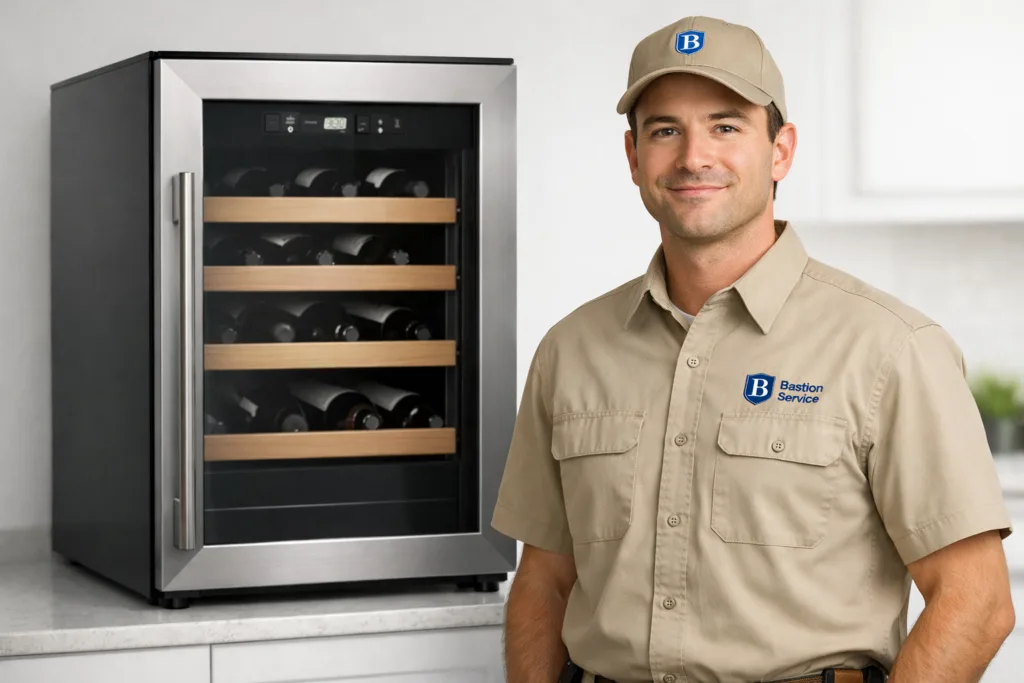
An EdgeStar wine cooler that stops holding temperature, starts frosting over, or runs constantly can put a collection at risk quickly. In West Hollywood homes, the next step should be a careful diagnosis, because the same symptom can come from very different causes such as restricted airflow, a failing fan, a door seal problem, a sensor issue, or a sealed-system fault.
Start with the symptom pattern
Wine coolers are built to maintain a fairly narrow temperature range, so small changes in performance matter more than they would in a standard refrigerator. If bottles feel warmer than the display suggests, the unit cycles strangely, or moisture starts collecting inside, the problem usually goes beyond a simple settings adjustment. The goal is to identify whether the issue is electrical, mechanical, airflow-related, or part of the cooling system itself.
Temperature swings or poor cooling
If the cabinet is too warm, too cold, or uneven from shelf to shelf, likely causes can include a faulty temperature sensor, control board issue, blocked condenser airflow, weak evaporator fan, or compressor trouble. On dual-zone EdgeStar models, one section drifting away from the set temperature often points to airflow or control problems rather than a basic user setting.
Warning signs worth paying attention to include:
- The display shows the correct setting, but the interior feels noticeably warmer
- One zone cools normally while the other struggles
- The cooler takes much longer than usual to recover after the door is opened
- Bottles never seem to reach a stable storage temperature
Noise, vibration, or nonstop running
Some operating sound is normal, but loud buzzing, clicking, rattling, or constant operation is not. A wine cooler may run longer in a warm room or tight enclosure, but if it rarely cycles off, there may be dirty coils, poor ventilation, a worn gasket, a failing fan motor, or a refrigeration problem.
Vibration can also come from leveling issues, loose shelving, or mounting points that have shifted over time. If the sound is new, persistent, or getting worse, it usually means a component is under strain rather than simply operating as designed.
Condensation, frost, or water buildup
Moisture problems are easy to dismiss at first, but they often signal an issue that affects cooling performance. Condensation on the glass, water under the unit, or frost on interior panels can indicate a door that is not sealing properly, humid air entering repeatedly, a clogged drain path, or a defrost-related fault.
In a wine cooler, excess moisture is more than a cosmetic issue. It can interfere with temperature stability, increase run time, and place extra wear on the cooling system.
Common causes behind EdgeStar wine cooler issues
Many service calls come down to a handful of problem areas. While the exact repair depends on testing, the most common causes include:
- Failed or inaccurate temperature sensors
- Control board or display problems
- Evaporator or condenser fan failure
- Restricted airflow from dust buildup or poor installation clearance
- Worn door gaskets allowing warm air inside
- Drainage problems causing internal moisture
- Compressor or sealed-system faults
Because several of these can produce similar symptoms, guessing based on appearance alone often leads to wasted time and unnecessary part replacement.
When service is worth scheduling sooner
If your wine cooler is no longer maintaining the temperature you set, it is better to address it sooner rather than later. Improper storage conditions can affect wine quality, and a unit that keeps struggling may place additional wear on the compressor, fans, and controls.
Service is especially appropriate when you notice:
- Repeated cooling loss after resetting the unit
- A display that does not match actual cabinet temperature
- New electrical behavior such as tripping breakers or failing to restart
- Persistent leaks, condensation, or frost
- Unusual noises that were not present before
Intermittent issues also deserve attention. A cooler that works normally one day and drifts the next often has an underlying sensor, wiring, or airflow problem that will not be solved by changing settings.
When continued use can make the problem worse
Many homeowners keep a wine cooler running as long as it still cools a little, but partial cooling is not reliable cooling. If the cabinet struggles to reach temperature, short cycles, or develops heavy frost, continued operation can accelerate wear on major components.
Water leakage should be addressed promptly as well, especially in finished kitchens, bars, or built-in cabinetry. What starts as a cooling issue can turn into surrounding cabinet or floor damage if moisture is left alone.
Repair versus replacement
Repair is often a sensible option when the problem involves a fan motor, sensor, control component, gasket, drain issue, or another accessible electrical part. These faults can often be corrected without replacing the entire unit.
Replacement becomes more likely when the cooler has a major sealed-system problem, repeated cooling failures, or several aging components failing at once. The better choice depends on the actual diagnosis, the age and condition of the appliance, and whether the repair is likely to restore stable long-term performance rather than temporary improvement.
What to check before an appointment
Before service, it helps to note a few details about how the unit is behaving. This can make troubleshooting faster and more accurate.
- The current set temperature and the temperature you believe the cabinet is actually holding
- Whether the issue affects one zone or the whole cooler
- When noise occurs, such as during startup, shutdown, or constant running
- Whether the door closes firmly and the gasket sits flush
- Whether the cooler has enough clearance for ventilation
- Any recent power interruption or breaker issue
These observations can help separate installation or airflow concerns from actual component failure.
What homeowners in West Hollywood should keep in mind
Wine coolers are less forgiving than many kitchen appliances because their job depends on stable, consistent performance. If your EdgeStar unit is showing signs of warming, excessive moisture, fan noise, or erratic cycling, the most useful approach is symptom-based diagnosis focused on temperature control, airflow, and overall cooling behavior. That gives homeowners in West Hollywood a more reliable way to decide whether repair is the right next step.