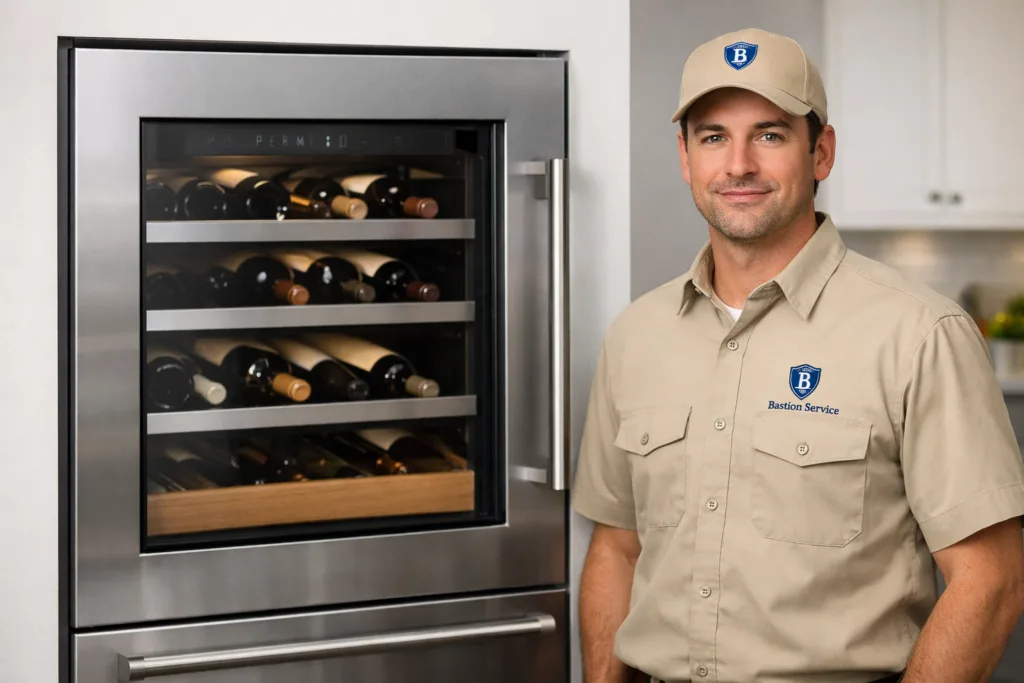
A Perlick wine cooler that starts drifting from its set temperature, collecting moisture, or running louder than normal should be checked before storage conditions become unreliable. Because these units are designed for consistent preservation, smaller performance changes often point to a specific fault rather than normal variation. The most useful first step is matching the symptom to the likely system involved.
What Different Symptoms Often Point To
Cabinet is warm or not cooling enough
If bottles no longer feel consistently cool, the interior seems warmer than the display suggests, or the unit takes too long to recover after the door opens, several causes are possible. Common repair paths include sensor failure, evaporator fan problems, restricted condenser airflow, start component trouble, or an electronic control issue. In some cases, low cooling performance can also indicate a sealed-system problem, which is why this symptom should not be treated as a simple settings issue if it keeps returning.
Wine cooler is too cold or freezing in spots
Overcooling is just as important as warming. If bottles near vents are getting excessively cold, frost appears where it should not, or temperatures drop below the selected range, the problem may involve a faulty thermistor, control board behavior, or airflow imbalance inside the cabinet. When a wine cooler runs colder than intended, it can affect both storage quality and overall system efficiency.
Condensation, interior moisture, or water near the base
Water-related symptoms can come from more than one source. A blocked drain, poor door sealing, cabinet leveling issues, or heavy run time caused by another cooling fault may all create moisture buildup. Condensation on the glass or along the door edge can also point to warm air entering the cabinet. In built-in installations, limited ventilation around the unit may add extra heat stress and make moisture problems more noticeable.
Fan noise, rattling, humming, or constant running
New sounds usually mean a part is working harder than it should or is beginning to wear out. Rattling can come from vibration or installation shift, humming can be tied to compressor strain, and clicking may suggest start-related trouble. If the wine cooler seems to run for unusually long periods without cycling off, that often means it is struggling to reach or hold the target temperature.
Display problems or intermittent operation
When the controls stop responding normally, readings jump around, or the unit powers on and off unpredictably, the issue may involve the control interface, wiring, sensor feedback, or incoming power. Intermittent behavior is worth addressing early, since it can become harder to trace after the symptom changes or disappears temporarily.
Common Causes Behind Perlick Wine Cooler Problems
Perlick wine coolers depend on several systems working together. A failure in any one of them can affect overall performance:
- Temperature sensing: inaccurate sensor readings can lead to overcooling, warming, or erratic cycling.
- Air movement: fan issues can create uneven temperatures, hot spots, and frost patterns.
- Heat removal: dirty or restricted condenser areas can make the unit run longer and cool less effectively.
- Door sealing: worn gaskets or alignment problems allow warm air and humidity into the cabinet.
- Electronic controls: board or interface faults can affect cycling, setpoint response, and display accuracy.
- Starting components and compressor operation: trouble here may cause clicking, humming, or loss of cooling.
When to Schedule Repair
Service is usually the right move when the cooler can no longer maintain a stable interior temperature, starts frosting unexpectedly, leaks, develops new noise, or behaves inconsistently from day to day. If basic checks have already been done, such as confirming the door closes fully and the settings have not been changed by mistake, ongoing symptoms typically indicate a component problem that needs hands-on diagnosis.
Simple Checks Homeowners Can Make First
Before scheduling service, a few observations can help narrow down the issue:
- Confirm the door is sealing evenly and not being blocked by bottle placement.
- Check whether the display temperature matches the actual feel inside the cabinet.
- Look for visible frost, standing water, or repeated condensation on the door.
- Notice whether the sound is coming from the fan area, compressor area, or cabinet vibration.
- Think about whether the problem started after a power interruption, deep cleaning, or loading change.
These details can make troubleshooting more efficient and help distinguish between airflow, control, drainage, and cooling-system faults.
When Continued Operation Can Lead to Bigger Repairs
It is best not to ignore a unit that is warming, freezing contents, clicking repeatedly, or leaking. Running a refrigeration appliance while it cannot cycle correctly can place added stress on the compressor, fans, and electrical components. Moisture issues may also affect nearby cabinetry if they continue long enough. If temperature protection is already inconsistent, waiting often increases the repair scope instead of reducing it.
Repair or Replace?
Many Perlick wine cooler issues are repairable, especially when the problem is limited to fans, sensors, controls, door gaskets, drainage components, or start devices. Replacement becomes a more serious consideration when there is major sealed-system trouble, repeated breakdown history, or overall appliance condition that no longer supports a sensible repair investment. The right decision depends less on the symptom itself and more on the confirmed cause, part availability, and the likelihood of restoring stable performance.
Built-In Installation Factors in West Hollywood Homes
In West Hollywood homes, wine coolers are often installed into finished cabinetry, bars, or kitchen layouts where ventilation and leveling matter more than many owners realize. Tight enclosure conditions can amplify heat buildup, moisture symptoms, and long run times if airflow is compromised. During diagnosis, installation conditions should be considered alongside the mechanical and electrical checks so the repair plan addresses the actual source of the problem.
What to Have Ready for a Service Visit
A service appointment usually goes more smoothly when you can describe whether the issue is constant or intermittent, how long it has been happening, and whether any unusual sounds, display readings, or moisture patterns have appeared. Photos of frost, water, or control readings can also help if the symptom changes before the visit. For homeowners trying to protect a wine collection, that symptom history is often the fastest route to a practical repair plan.