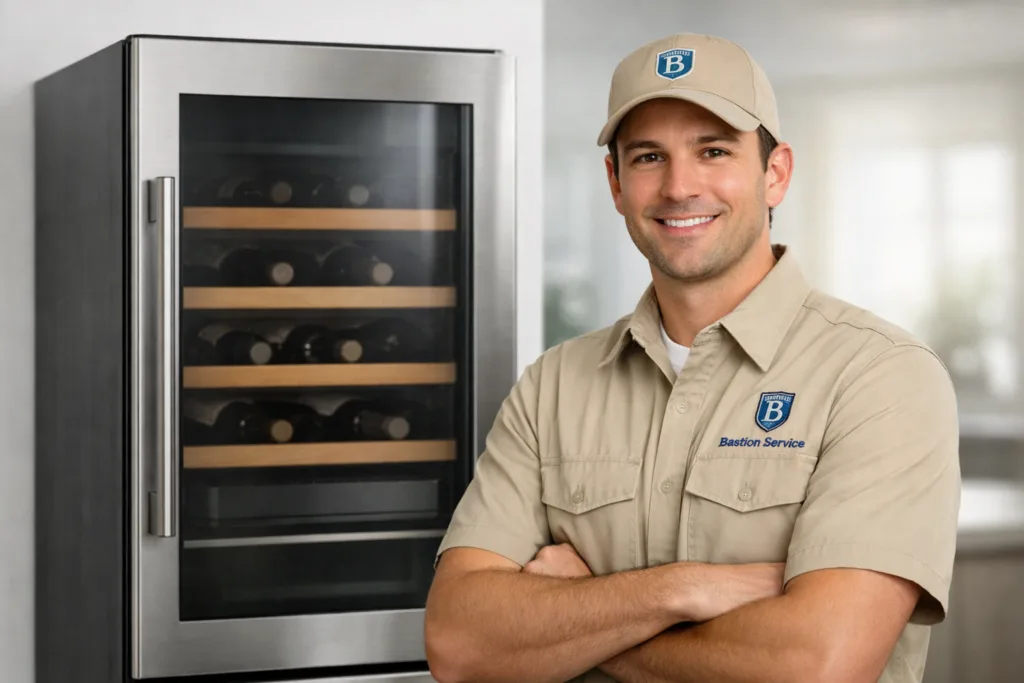
A Miele wine cooler that runs warm, drips water, or cycles constantly can put a collection at risk faster than many homeowners expect. Similar symptoms often come from very different causes, including airflow restriction, fan failure, sensor problems, door seal wear, drainage issues, or deeper cooling-system trouble. Sorting out which pattern the appliance is actually showing is what prevents unnecessary parts replacement and helps determine whether repair makes sense.
What a proper diagnosis should verify
Wine storage depends on stability, not just cold air. A service evaluation should confirm how the unit is cooling over time, whether both zones are behaving normally if applicable, how long the compressor runs, whether fans are moving air correctly, and whether the controls are reading temperature accurately. It should also include the condition of the door gasket, the drain path, and the installation space around the unit.
In many West Hollywood homes, Miele wine coolers are installed into cabinetry or compact kitchen layouts where ventilation matters. A cooler can appear to have a major cooling problem when the real cause is trapped heat, poor air movement, or a door that no longer seals evenly. Those details matter because the repair path changes depending on whether the issue is external, electrical, mechanical, or sealed-system related.
Common symptom patterns and what they may mean
Not cooling enough
If bottles are no longer staying near the set temperature, the cause may be a weak evaporator or condenser fan, a thermistor reading incorrectly, a control issue, a leaking door gasket, or a compressor problem. Built-in units can also lose performance when ventilation is restricted and heat cannot dissipate properly.
When one section cools better than another, that usually points toward a zone-specific issue rather than a total cooling failure. Airflow imbalance, sensor faults, or control problems become more likely in that situation.
Runs constantly or cycles too often
A wine cooler that seems to run all day is usually struggling to reach or hold temperature. Warm air leaking past the door seal, blocked vents, fan trouble, or declining refrigeration performance can all create that pattern. Constant operation increases wear and energy use while still failing to create stable storage conditions.
If the cabinet feels only slightly cool but the machine keeps running, that is often more concerning than a short cycle problem because it suggests the system is working hard without achieving the target result.
Too cold, freezing near vents, or wide temperature swings
Overcooling can be just as damaging as warming, especially if bottles near a vent or rear wall are getting much colder than expected. This may indicate a sensor issue, control board fault, or airflow problem causing uneven distribution inside the cabinet.
Temperature swings are especially important in a wine cooler because the appliance may still seem operational at a glance. If readings move up and down noticeably or the interior feels inconsistent from shelf to shelf, the issue should be evaluated before it becomes a larger failure.
Water inside, under, or around the unit
Moisture problems often come from a clogged drain path, excess humidity entering through a poor seal, or cooling irregularities that interfere with normal condensation management. Water collecting under the appliance can also be mistaken for another kitchen spill, so repeated moisture should not be ignored.
In cabinetry, even minor leaks can affect surrounding wood panels, flooring, or trim. When water appears along with temperature issues, the cause is often more than simple condensation.
Fan noise, buzzing, rattling, or clicking
Some operating sounds are normal, but new or louder sounds usually deserve attention. A scraping or ticking noise may come from a fan blade interference issue. Buzzing can point to vibration, mounting problems, or compressor strain. Repeated clicking at startup may indicate trouble with a relay, compressor, or control sequence.
The timing of the noise helps narrow the cause. Sounds that happen only during startup, only after the door closes, or only during extended cooling cycles often point to different components.
Checks you can make before scheduling repair
Before service, it helps to note a few details:
- Verify that the set temperature was not changed accidentally.
- Make sure bottles and shelves are not blocking the door from closing fully.
- Look for visible gasket gaps, twisting, or hardened seal areas.
- Check whether the issue affects both zones or only one.
- Notice whether water, noise, and temperature problems happen together.
- Confirm that any ventilation openings are not blocked.
These observations will not replace service, but they make the symptom pattern clearer and can shorten the path to the right repair.
When service is worth scheduling sooner
Do not wait if the cooler is no longer holding temperature, the cabinet feels warm, the unit is repeatedly trying to start, or new mechanical noises begin while cooling performance drops. Repeated alarms, visible condensation, and ongoing water buildup also justify prompt attention.
Wine coolers are less forgiving than standard refrigerators when consistency matters. A unit that is still partly cooling can still be storing bottles in unstable conditions, and that is often when homeowners delay service because the failure does not yet seem complete.
Repair versus replacement
Many Miele wine cooler problems are repairable, especially when the fault involves fans, sensors, controls, drains, switches, or door sealing components. Replacement becomes a more serious consideration when the appliance has sealed-system trouble, repeated breakdowns across multiple parts, or age-related wear that makes long-term reliability uncertain.
The best decision depends on the confirmed failure, the overall condition of the appliance, and whether the repair is likely to restore stable performance rather than only improve symptoms temporarily. For homeowners in West Hollywood, that usually means evaluating the actual fault first and then weighing cost, age, and expected reliability instead of guessing based on one visible symptom.
Why symptom details matter with Miele wine coolers
Miele wine coolers are designed for controlled storage, so small changes in behavior often matter more than they would in a standard food refrigerator. A slight but persistent rise in temperature, uneven cooling between shelves, or a fan sound that was not there before can all be early indicators of a repairable issue.
Paying attention to those details helps preserve the appliance and the contents inside it. When the symptoms are documented clearly, a repair plan is easier to make and the outcome is usually more predictable.