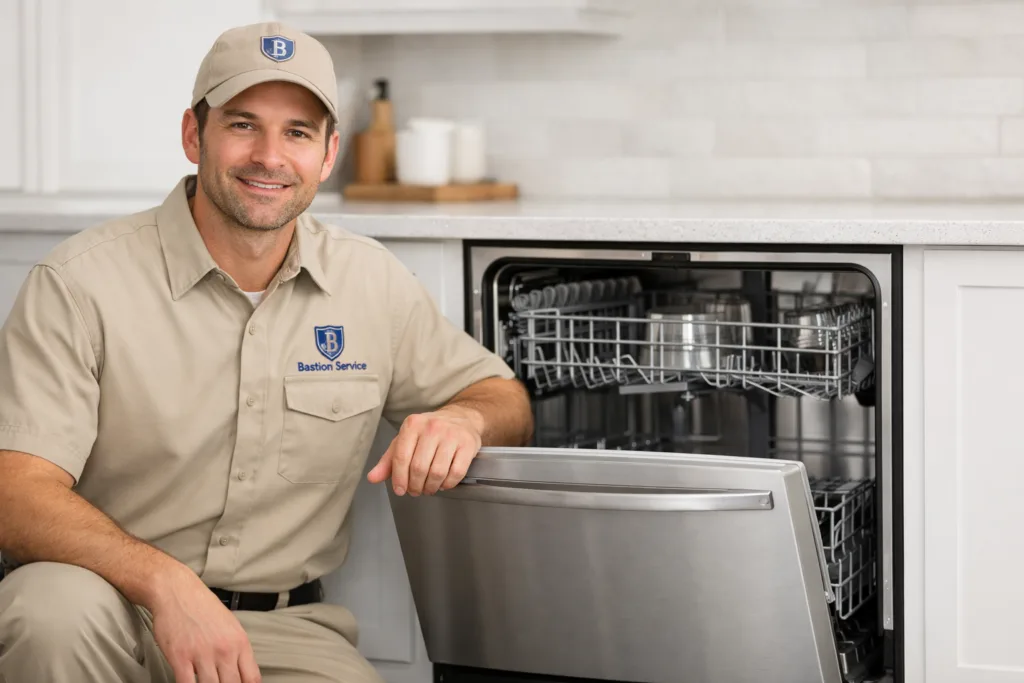
Dishwasher problems rarely stay limited to one inconvenience. A machine that starts leaving residue on glasses may soon begin running longer cycles, draining poorly, or developing odors in the tub. With Blomberg models, the most useful way to approach the issue is by matching the symptom to the system that is no longer working as it should.
For homeowners in Brentwood, that usually means looking past the single visible complaint and considering the full pattern: how the cycle sounds, whether the water heats normally, whether the tub empties fully, and whether the problem happens every time or only on certain settings. Those details help narrow the repair path and avoid replacing parts based on guesswork.
Common Blomberg dishwasher symptoms and what they often suggest
Many dishwasher failures begin with small changes in day-to-day performance. Plates no longer come out fully clean, the machine hums longer than usual before draining, or moisture remains on dishes at the end of the cycle. While these symptoms can seem unrelated, they often connect to wash circulation, draining, heating, fill problems, or electronic control issues.
Standing water in the bottom of the tub
If the dishwasher finishes a cycle and water remains in the sump area, the problem may involve a restricted drain path, a clogged filter section, a failing drain pump, or a control issue that prevents the drain sequence from completing. In some cases, the unit may partially drain but leave enough water behind to create odors and reduce wash quality on the next load.
This is one of the more important symptoms to address early. Repeated use with incomplete draining can add strain to the pump and may lead to additional problems with cleaning performance.
Dishes come out dirty, cloudy, or gritty
Poor cleaning results do not always mean the dishwasher simply needs better loading. A Blomberg dishwasher may leave food residue behind because spray arms are obstructed, circulation pressure is weak, water fill is low, detergent is not dispensing correctly, or the water is not reaching the proper wash temperature.
If glasses look cloudy, dishes feel greasy, or particles remain on plates after a full cycle, the issue may be tied to wash action rather than detergent alone. When filter cleaning and proper loading do not improve results, internal component testing is usually the next step.
Leakage around the front or underneath
A leak can come from more than one place. Door gasket wear, door alignment problems, oversudsing, damaged hoses, or internal pump and seal failures can all allow water to escape. Some leaks only appear during specific portions of the cycle, which is why the timing of the leak matters.
Even a small recurring drip deserves attention. Water around the dishwasher base can affect nearby flooring, cabinet materials, and the area beneath the appliance long before the leak becomes obvious.
Cycle stops mid-way or the dishwasher will not start
When the machine does not respond to the control panel, shuts off unexpectedly, or stalls partway through a wash, possible causes include latch issues, power supply interruptions, interface faults, wiring problems, sensor errors, or control board failure. These problems can look similar from the outside, but the repair approach changes significantly depending on which function has actually failed.
Intermittent starting problems are especially worth checking because they often become more frequent over time rather than resolving on their own.
Low rinse temperature or poor drying
If dishes are still wet at the end of the cycle or the interior seems cooler than normal, the dishwasher may not be heating properly. That can affect both sanitation and drying performance. On some calls, what seems like a drying complaint turns out to be part of a larger heating, sensor, or control problem.
Because wash temperature also influences how well detergent dissolves and removes soil, low heat can show up as both cleaning and drying trouble.
Buzzing, grinding, or louder wash noise
Unusual sounds often point to something mechanical. A drain pump may be obstructed, a wash motor may be wearing down, or a spray arm may be hitting an item in the rack. A harsh grinding noise is not something to ignore, particularly if it appears with weak cleaning or drain complaints.
Changes in sound are often one of the earliest signs that a moving part is under strain.
Basic checks homeowners can try first
Before scheduling repair, a few routine checks may help rule out simple causes:
- Clean the filter and remove debris from the accessible sump area.
- Check that spray arms turn freely and are not blocked by large items.
- Confirm the dishwasher is being loaded so water can reach all surfaces.
- Use the correct detergent and avoid excess soap that can create suds and leaking.
- Make sure the drain hose is not visibly kinked behind the unit.
If the same symptom returns after these steps, the issue is more likely tied to a failed component or control problem rather than routine maintenance.
When the dishwasher should be taken out of use
Some dishwasher problems are mostly inconvenient, while others can lead to larger household damage if ignored. It is usually best to stop using the appliance if you notice any of the following:
- Water leaking onto the floor
- A burning smell
- Repeated breaker trips
- Persistent standing water that does not clear
- The machine stopping mid-cycle again and again
- Unusual noise that is getting worse
Continuing to run the dishwasher under these conditions can worsen the original failure and increase the chance of water or electrical damage in the kitchen.
Why symptom patterns matter with Blomberg dishwasher repair
Two dishwashers can show the same complaint and require entirely different repairs. For example, poor wash results may stem from weak circulation, low fill, or inadequate heating. A front leak may involve the door seal, but it can also be caused by overfilling, spray deflection, or an internal leak moving toward the front of the cabinet.
That is why a symptom-based diagnosis is more helpful than assuming the most common part has failed. In Brentwood homes, where homeowners are often deciding between fixing the current machine or moving on from it, accurate testing helps keep that decision grounded in the actual condition of the appliance.
Repair or replace: how to make the call
Not every dishwasher problem means replacement is the better option. A repair often makes sense when the unit is otherwise in good condition and the failure is limited to a specific pump, latch, seal, heater-related component, or control issue. In many cases, restoring one failed function returns the machine to normal daily use.
Replacement becomes more likely when multiple systems are showing wear at the same time, when leaks have already caused surrounding damage, or when repair cost is too close to the value of keeping the current dishwasher in service. Age matters, but condition matters just as much. A newer machine with one isolated fault is a very different situation from an older unit with repeated service history and declining performance across several cycles.
What a useful service visit should clarify
A productive dishwasher repair appointment should answer a few practical questions clearly:
- Which function has actually failed
- Whether the problem is isolated or part of broader wear
- What continued use may risk
- Whether repair is likely to restore normal operation
- Whether replacement should be considered instead
For a Blomberg dishwasher in Brentwood, that kind of straightforward evaluation is often what helps a homeowner move forward without wasting time on trial-and-error part swaps.
Focused help for recurring dishwasher problems
If your dishwasher is consistently leaving dishes dirty, failing to drain, leaking, running with low rinse temperature, or stopping before the cycle finishes, the problem usually will not improve with continued use. Bastion Service helps homeowners in Brentwood evaluate Blomberg dishwasher issues based on the symptom, the condition of the appliance, and the most sensible repair path.
The goal is to determine what is wrong, what should be addressed first, and whether the machine is still a good candidate for repair.