Dishwasher problems often start small: a little water left at the bottom, glasses that look cloudy, or a cycle that suddenly seems much longer than usual. With Electrolux models, those early signs can point to drainage restrictions, circulation problems, heating issues, or control faults. Looking at the full symptom pattern helps narrow down the cause before a minor performance problem turns into a leak, odor issue, or complete cycle failure.
How Electrolux dishwasher problems usually show up
Most homeowners notice trouble in one of a few ways. The dishwasher may still turn on but stop cleaning well, or it may complete a cycle without actually draining or drying properly. In other cases, the machine may not start at all, may shut off mid-cycle, or may leave visible moisture around the door or under the unit.
Because several parts work together during each wash cycle, one faulty component can create symptoms in more than one area. A circulation issue, for example, can affect cleaning results and drying. A drain problem can leave standing water and also cause odors. That is why the most useful repair path starts with symptom-based testing rather than guessing from one visible clue.
Common Electrolux dishwasher symptoms and what they can mean
Water left in the tub after the cycle
If your Electrolux dishwasher is not draining fully, the cause may be a clogged filter, restricted drain hose, blocked air gap, failing drain pump, or an electrical issue that prevents the drain portion of the cycle from finishing. Sometimes the machine sounds normal, but the drain pump is weak or intermittent and cannot clear the tub consistently.
Standing water should not be ignored. It can lead to odors, residue buildup, and added strain on internal parts. If the same issue returns after basic cleaning, it usually points to a fault that needs closer inspection.
Dishes come out dirty, gritty, or cloudy
Poor wash results usually come from weak water circulation, clogged spray arms, low water fill, detergent dispenser problems, or reduced wash motor performance. If heavier items on the bottom rack remain dirty while lighter items on the top rack look better, that can suggest an uneven spray pattern or circulation problem.
Cloudiness and residue are not always caused by detergent alone. If the dishwasher is not heating correctly or not moving enough water through the spray arms, dishes may come out looking washed but not truly clean.
Leaks around the door or under the unit
A leaking dishwasher may have a worn door gasket, a misaligned door, a cracked sump area, a loose hose connection, or an overfill condition. Some leaks only appear during certain parts of the cycle, which can help identify whether the problem is tied to filling, washing, or draining.
Even a slow leak matters. Repeated moisture exposure can affect flooring, baseboards, and nearby cabinetry in a Brentwood kitchen, especially when the leak is small enough to go unnoticed between cycles.
Dishwasher will not start
When the unit does nothing after you press start, the issue may involve the door latch, control panel, power supply, wiring, or main control board. A dishwasher that appears to have power but will not begin washing may be failing to register that the door is securely closed.
If the controls are inconsistent, lighting flashes unusually, or buttons respond only sometimes, the problem may be in the user interface or the control system rather than a simple mechanical failure.
Cycle stops mid-wash
An Electrolux dishwasher that pauses, shuts down, or seems stuck may be reacting to a sensor reading, heating problem, drain fault, or control issue. Mid-cycle failures can be tricky because the machine may restart later, making the problem seem temporary even when a component is beginning to fail.
Repeated interruptions usually mean the dishwasher is not completing one phase of the cycle correctly. Forcing more cycles through the machine often makes diagnosis harder and can add wear to already stressed parts.
Dishes are wet at the end of the cycle
Poor drying can result from low rinse temperature, a heating problem, a sensor issue, rinse aid system trouble, or a control fault that prevents the dishwasher from reaching proper drying conditions. If the dishwasher also leaves food residue behind, the same heating issue may be affecting both washing and drying performance.
Drying complaints are worth checking when they appear suddenly. A gradual decline may look like normal variation at first, but it can signal that a heater or related control component is no longer working as intended.
Unusual noises during operation
Grinding, humming, rattling, or louder-than-normal wash sounds can come from foreign objects in the pump area, failing motor components, spray arm interference, or changes in water movement inside the machine. Not every noise means a major repair, but a new sound that repeats with each cycle should be taken seriously.
If noise appears together with poor cleaning or drainage, the cause is more likely to involve a pump or circulation component than a simple loading issue.
What homeowners can check before scheduling repair
There are a few safe, basic checks that can help rule out simple causes:
- Clean visible debris from the filter area.
- Make sure spray arms can spin freely.
- Check that large dishes are not blocking detergent release.
- Confirm the door is closing firmly and latching properly.
- Look for obvious kinks in the drain hose if accessible.
- Watch for repeat patterns, such as leaking only during drain or stopping at the same point in every cycle.
If the problem continues after those basic checks, the issue is more likely to involve an internal component, wiring, sensor, or control problem rather than routine maintenance.
When repair is usually the right choice
Many Electrolux dishwasher issues are repairable when the failure is limited to one system, such as a drain pump, inlet valve, door latch, circulation component, heater, seal, or control-related part. Repair often makes sense when the dishwasher is otherwise in solid condition and the problem has not spread into multiple systems.
It is usually worth scheduling service when:
- the same symptom keeps returning
- the unit leaks even after basic cleaning and inspection
- water remains in the tub after multiple cycles
- the dishwasher stops responding or shuts off mid-cycle
- wash performance has clearly dropped
- the machine is making new noises during normal operation
When replacement may be more practical
Replacement becomes a more serious consideration when the dishwasher has multiple faults at once, a history of repeat service, significant internal wear, or visible water damage that affects overall reliability. A machine with both control problems and mechanical wear may not be the best candidate for continued repair, especially if performance has been declining for a while.
The decision usually comes down to age, condition, repair scope, and whether the dishwasher still fits the household’s needs. One failed part is very different from a machine with several systems beginning to fail together.
Why symptom timing matters
One of the most helpful details a homeowner can notice is when the symptom happens. A leak at the start of the cycle points to different causes than a leak during draining. A dishwasher that fills but never washes suggests a different path than one that washes but never drains. A unit that works fine for short cycles but fails on longer ones may be dealing with a heating or control issue.
In Brentwood homes, this kind of detail helps narrow the repair path quickly and reduces the chances of replacing parts that are not actually causing the problem.
What to avoid when the dishwasher is acting up
When an Electrolux dishwasher is showing repeated problems, a few habits can make the situation worse:
- running cycle after cycle to see if the issue clears on its own
- ignoring a small leak near cabinets or flooring
- continuing to use the machine with standing water inside
- forcing the door shut if the latch is not engaging correctly
- assuming detergent changes will solve a mechanical wash problem
If the unit trips power, smells hot, or becomes unresponsive, it is best not to keep testing it through repeated use.
Service that helps you make the right decision
For homeowners dealing with Electrolux dishwasher repair in Brentwood, the goal is not just getting the machine running again for one cycle. It is understanding which component failed, whether related issues are developing, and whether the repair is likely to restore reliable daily use. That makes it easier to decide between fixing a single problem now or moving on from a dishwasher that is nearing the end of its useful life.
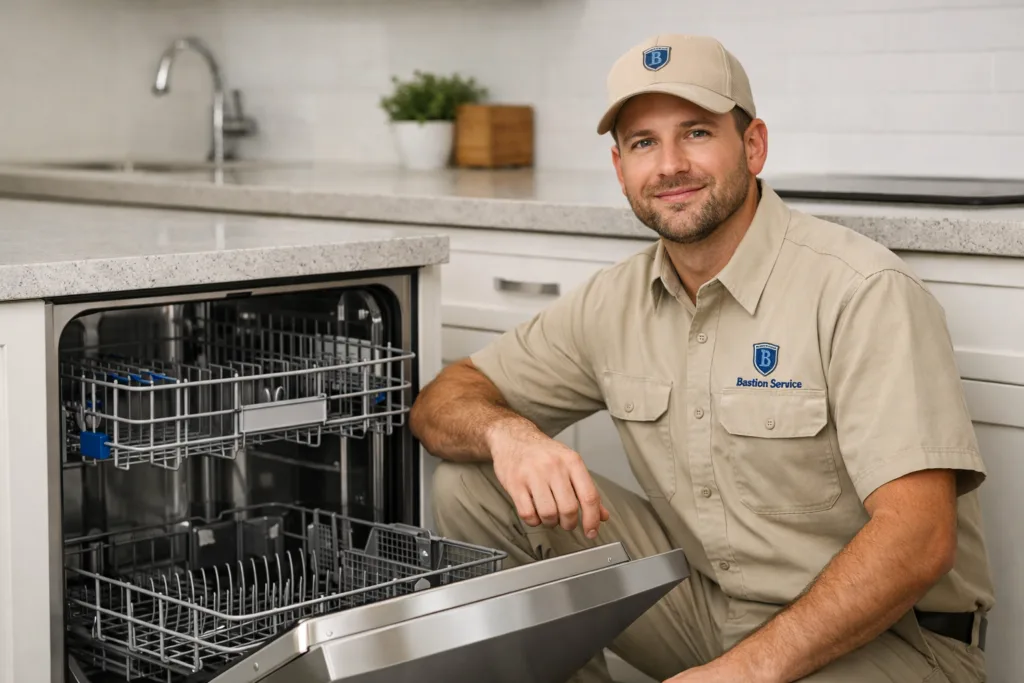
Bastion Service helps Brentwood homeowners sort through drainage issues, poor wash results, leaks, low rinse temperature, pump trouble, and cycle failures so the next step is based on the actual condition of the appliance, not trial and error.