
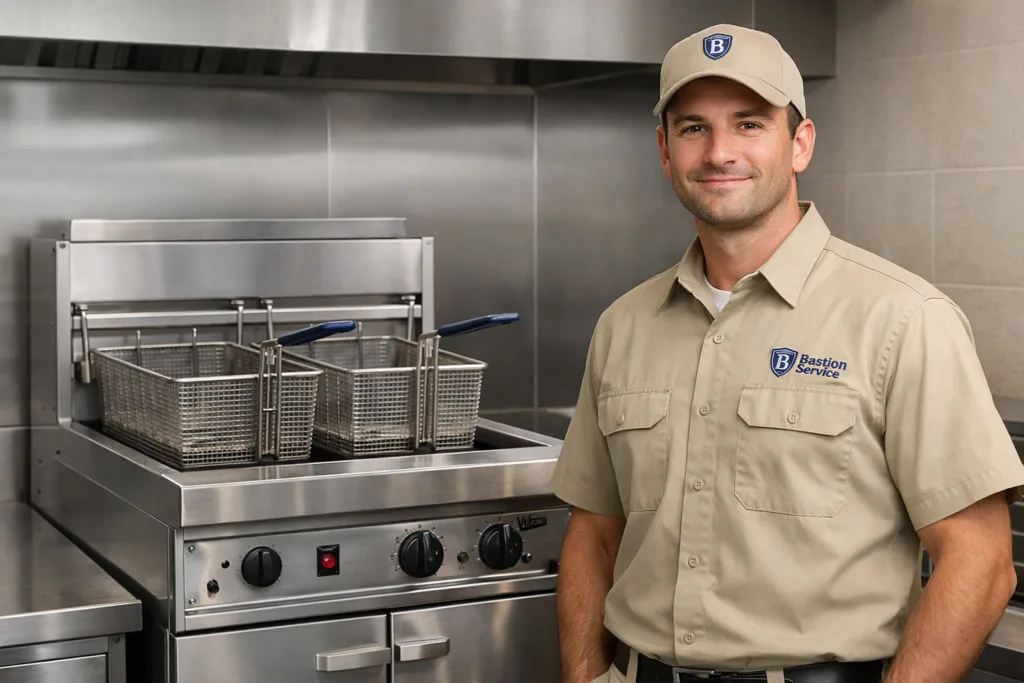




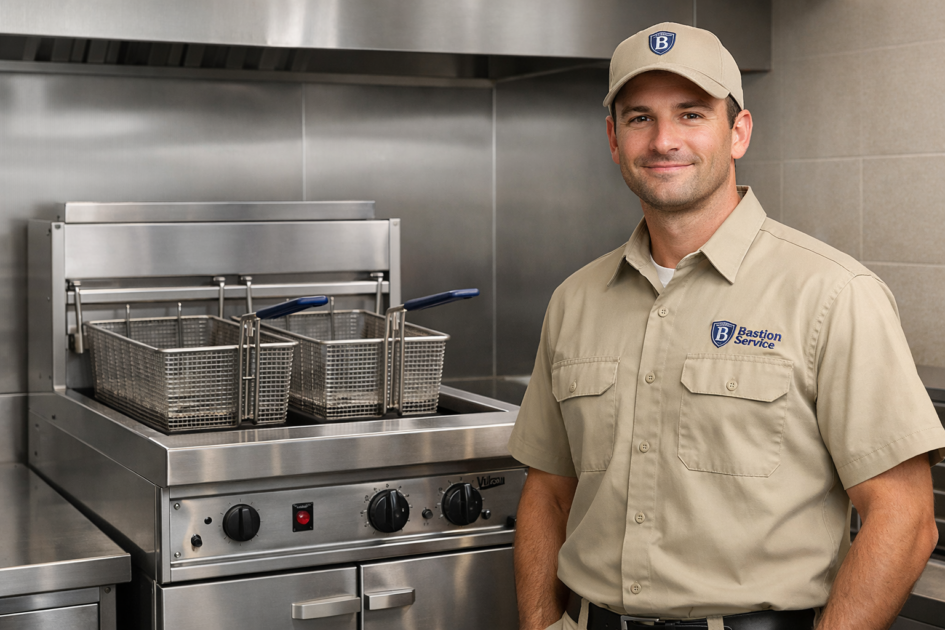
When a Vulcan fryer starts drifting off temperature, recovering slowly, or shutting down during service, output and food quality can decline quickly. For businesses in West Los Angeles, the best next step is to schedule service based on the exact symptom pattern rather than guessing at parts. Bastion Service helps identify whether the problem is tied to heat production, controls, ignition, safety components, or wear that is starting to affect daily kitchen performance.
Related commercial service paths in West Los Angeles include Vulcan Commercial Repair in West Los Angeles, Commercial Fryer Repair in West Los Angeles, and Vulcan Oven Repair in West Los Angeles.
Common Vulcan fryer symptoms and what they may indicate
Fryer not heating or not reaching set temperature
If the fryer will not heat, heats only part of the time, or stalls below the programmed setting, the fault may involve the temperature probe, thermostat functions, high-limit components, gas ignition parts, heating elements, or incoming power or gas conditions. A fryer that runs too cool can also create product inconsistency, longer cook times, and unnecessary oil absorption.
Slow recovery during peak demand
Recovery problems usually appear when baskets are loaded back to back and the fryer cannot return to target temperature fast enough. This can point to weak heating performance, sensor inaccuracy, burner issues, partial restrictions, scale buildup, or component wear that reduces output. In a busy kitchen, slow recovery often affects more than one station because ticket flow starts backing up around the fryer.
Overheating or wide oil temperature swings
If oil temperature overshoots, drops suddenly, or moves unpredictably, the fryer may have a control issue, probe problem, cycling fault, or safety-related component beginning to fail. These symptoms can shorten oil life and make cook results inconsistent from batch to batch. Staff may start compensating by changing times or loading patterns, but that does not solve the equipment problem.
Ignition failures or burner shutdowns
On gas Vulcan fryers, ignition trouble may show up as no flame, delayed ignition, intermittent burner operation, or shutdown after the unit has been running for a while. Common causes include flame-sensing problems, ignition component failure, gas valve issues, venting concerns, or control faults. Intermittent ignition problems should be checked promptly because they tend to become more disruptive during active service periods.
Oil leaks, drain valve issues, or filtration-related problems
Leaks around the drain area, stiff valve operation, or filtration trouble can create cleanup, safety, and downtime issues fast. These problems may come from worn seals, damaged fittings, valve wear, or service conditions that have developed over time. If oil handling has become messy, inconsistent, or difficult for staff, the fryer should be inspected before a small leak or restriction turns into a larger interruption.
Why accurate diagnosis matters
Fryer symptoms often overlap. A unit described as not heating may actually be dealing with an ignition issue, a failing sensor, a tripped safety condition, or an electrical or gas supply problem outside the main control path. Replacing parts without confirming the root cause can extend downtime and increase cost without restoring stable performance.
That is especially important for Vulcan fryers used continuously in daily production. Businesses in West Los Angeles often need repair decisions that account for service schedules, menu dependency, and whether the unit should remain offline until the fault is corrected. Symptom-based testing helps determine what failed, what related parts should be checked, and whether the fryer is ready to return to use safely.
Signs the fryer should be serviced soon
Schedule repair when staff notice repeated temperature drift, longer recovery times, ignition hesitation, unexpected shutdowns, visible leaks, unusual noises, or controls that do not respond normally. If operators have started adjusting settings often just to get through a shift, that usually means performance has already changed enough to justify service.
- Food is coming out lighter, darker, or less consistent than usual
- Cook times are increasing without a menu or prep change
- The fryer struggles most during busy periods
- The unit restarts after cooling down, then fails again
- Oil quality seems to break down faster than expected
- Staff are avoiding one fryer and relying on another unit instead
Addressing these symptoms early can help reduce unplanned downtime and make the repair easier to evaluate while the problem is still reproducible.
When continued use may make the problem worse
A fryer that is overheating, leaking oil, failing to maintain temperature, or shutting down unpredictably should not simply be pushed through another service period. Continued operation under those conditions can damage additional components, waste oil, disrupt production, and create avoidable safety concerns for staff.
For kitchen managers in West Los Angeles, the key question is not just whether the fryer still powers on. The better question is whether it is heating consistently, recovering correctly, and operating in a way that supports normal output. A unit that is only partly functional often costs more in lost efficiency than a scheduled repair visit.
Repair versus replacement considerations
Many Vulcan fryer problems are repairable when the main structure of the unit is still in solid condition and the failure is limited to serviceable components. Burner faults, ignition issues, controls problems, probe failures, valve issues, and other localized defects can often be corrected once the source of the problem is confirmed.
Replacement becomes a more serious option when the fryer has repeated major failures, significant tank or cabinet deterioration, ongoing reliability issues, or repair needs that continue to stack up over time. The right decision depends on the actual condition of the fryer, not just the latest symptom. A proper evaluation helps separate a one-time repair from a broader equipment lifecycle problem.
How to prepare for a fryer repair visit
Before service is scheduled, it helps to document what staff are seeing during operation. Details about when the problem appears can make diagnosis faster and more accurate.
- Note whether the issue happens at startup, during steady use, or only under heavy load
- Record any error messages, shutdown behavior, or ignition irregularities
- Track whether the fryer is running too hot, too cool, or cycling unevenly
- Identify leaks, drain valve concerns, or filtration problems
- Share whether the symptom is constant or intermittent
This information helps connect the complaint to real operating conditions instead of relying on a general description like not working.
Service support for businesses in West Los Angeles
Vulcan fryer repair should be handled with a service-first approach that focuses on downtime, production impact, and the most practical path back to normal operation. Businesses in West Los Angeles benefit from repair scheduling that addresses what failed, whether the fryer should stay offline, and what steps are needed to restore stable cooking performance. When the symptom pattern is clear and service is scheduled promptly, the repair process is more focused and the kitchen can plan around the interruption with fewer surprises.


