




Equipment problems on a busy line rarely stay small for long. A Vulcan oven that drifts off temperature, a range burner that struggles to light, or a fryer that recovers too slowly can affect ticket times, food consistency, and staff workflow across the shift. For businesses in West Los Angeles, repair service is most useful when it focuses on the actual symptom pattern, the urgency of the downtime, and whether the unit can reasonably stay in use until service is completed.
For specific equipment paths in West Los Angeles, review Vulcan Oven Repair in West Los Angeles, Vulcan Range Repair in West Los Angeles, and Vulcan Fryer Repair in West Los Angeles.
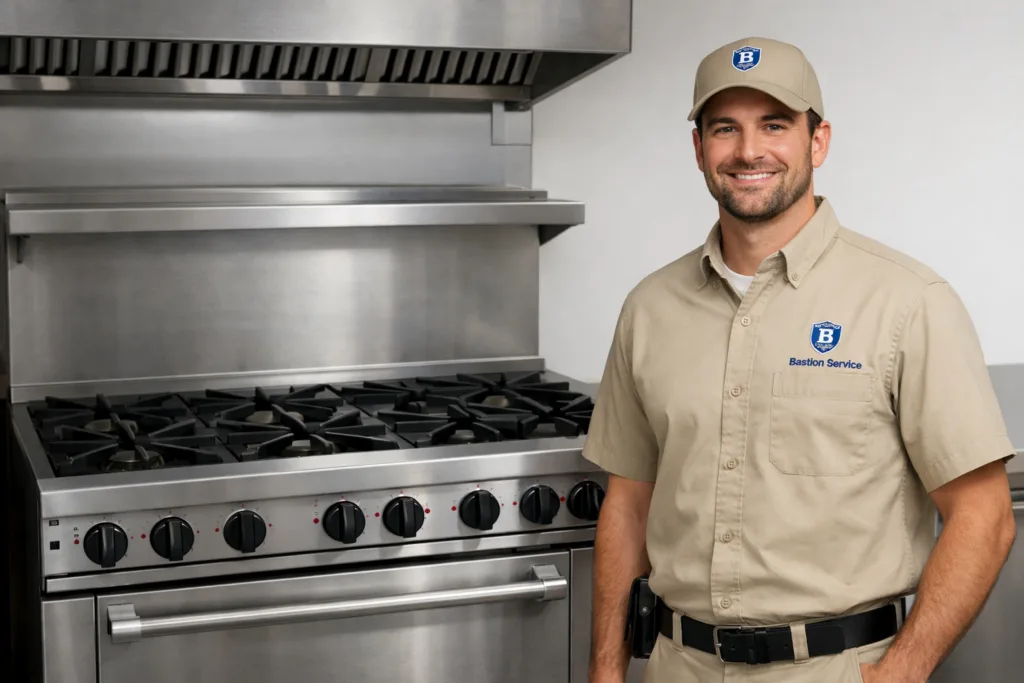
Bastion Service works with Vulcan cooking equipment used in kitchens and food-service operations where dependable heat and steady output matter every day. For ovens, ranges, and fryers, the goal is not just to restore operation, but to identify what is causing the disruption, what the repair is likely to involve, and how to schedule service with the least avoidable interruption.
Vulcan cooking equipment problems that often lead to service calls
Most repair calls begin with a symptom that operators can see during normal use. In many cases, the issue starts as a performance complaint before it becomes a full shutdown. Common examples include:
- Long preheat times or delayed heat-up
- Burners that do not ignite reliably
- Temperature that runs high, low, or inconsistently
- Fryer recovery that slows down during volume cooking
- Controls that stop responding or behave unpredictably
- Equipment that shuts down during use
- Weak flame, uneven heating, or reduced output
- Operational leaks, unusual smells, or abnormal burner behavior
These symptoms matter because they often point to more than one possible failure. What appears to be a simple heating issue could involve ignition components, temperature sensing, controls, valves, switches, burners, or electrical faults. That is why repair planning should follow diagnosis rather than guesswork.
How fryer, oven, and range symptoms affect daily production
Fryer problems
When a fryer struggles to recover between batches, holds the wrong oil temperature, or locks out during operation, the result is usually immediate: slower output, inconsistent product quality, and pressure on other stations. Slow recovery can also cause teams to change cooking patterns just to keep service moving, which often hides the real equipment problem until it gets worse.
Oven problems
Ovens with uneven heat, hot spots, long preheat times, or drifting temperature can create waste and inconsistency even if they still appear to be running. If staff have to rotate product more often, adjust cook times manually, or avoid certain racks or sections, the unit is no longer performing as expected and should be evaluated.
Range problems
Range issues often show up as weak burners, irregular flame, delayed ignition, or sections that no longer provide normal output. On an active line, even one unstable top section can disrupt sequencing, force menu workarounds, and reduce the speed of service. If a burner only lights intermittently or heat output no longer matches demand, repair should be scheduled before that section becomes unusable.
What Vulcan cooking equipment problems do you troubleshoot?
Service typically begins with the operating complaint, then moves into the systems that can cause it. For Vulcan cooking equipment, troubleshooting often includes:
- Ignition failures and repeated startup problems
- Weak, uneven, or unstable heat
- Temperature control faults and inaccurate set points
- Burners that do not stay lit or do not light evenly
- Slow fryer recovery and poor heat maintenance
- Oven performance issues such as uneven baking or poor preheat
- Range burner output problems and flame irregularity
- Control issues, shutdowns, and intermittent lockouts
- Safety-related operating concerns that affect continued use
Because the same symptom can come from different causes, troubleshooting is used to narrow the problem to the actual failed component or system rather than replacing parts based only on appearance.
Why symptom-based diagnosis matters before parts are ordered
In kitchens, it is tempting to assume the visible symptom tells the whole story. A unit that will not heat may seem like an ignition issue. A fryer that overheats may seem like a thermostat issue. An oven with long preheat times may seem like a simple wear problem. In practice, those symptoms can overlap with control faults, sensor issues, gas flow problems, burner wear, limit-device faults, or electrical failures.
A proper diagnosis helps answer the questions operators actually care about: whether the unit is safe to continue using, whether the issue is isolated or likely to spread, whether parts are likely to be needed, and whether repair should be treated as urgent or planned around production. That information supports better scheduling and reduces the chance of repeat downtime from an incomplete repair approach.
Warning signs that should not be ignored
Some equipment issues can wait for a scheduled service window. Others should be addressed before the unit is treated as reliable for normal production. Warning signs include:
- Delayed ignition or repeated failed lighting attempts
- Burners that cycle erratically or do not hold flame correctly
- Temperature swings that affect food quality
- Shutdowns in the middle of operation
- Recovery loss during peak demand
- Control panels or thermostatic functions that respond inconsistently
- Performance changes accompanied by unusual sounds, odors, or visible operating changes
Continued use under these conditions can increase wear on related components, create avoidable production delays, and make the final repair more involved. For managers, the key question is not simply whether the equipment still turns on, but whether it can support service predictably enough to justify keeping it in operation.
Repair decisions for businesses in West Los Angeles
Not every decline in performance means a unit should be replaced. Many Vulcan oven, range, and fryer problems are repairable when addressed before multiple systems are affected. Early service is often the difference between a contained repair and a larger interruption that affects scheduling, staffing, and output.
Replacement usually becomes part of the discussion when the unit has repeated failures, reliability has dropped below operational needs, or repair scope is growing across several systems at once. Even then, the decision should be based on the condition of the equipment and the specific failure pattern rather than on one difficult shift.
What to expect when scheduling service
When a repair visit is scheduled, the most useful information is usually the symptom history: whether the problem is constant or intermittent, whether it appears during startup or under load, how long it has been happening, and whether the issue affects heat, ignition, recovery, controls, or shutdown behavior. That context helps narrow the likely causes and supports better repair planning.
For businesses in West Los Angeles, early scheduling is often the best move when a unit is still operating but no longer performing normally. A service visit can help determine whether the equipment should remain in use, what repair path makes the most sense, and how to reduce the risk of a larger outage during service hours. If your Vulcan cooking equipment is affecting production, delaying starts, or failing to hold consistent performance, the practical next step is to schedule repair and get the problem evaluated before downtime expands.


