
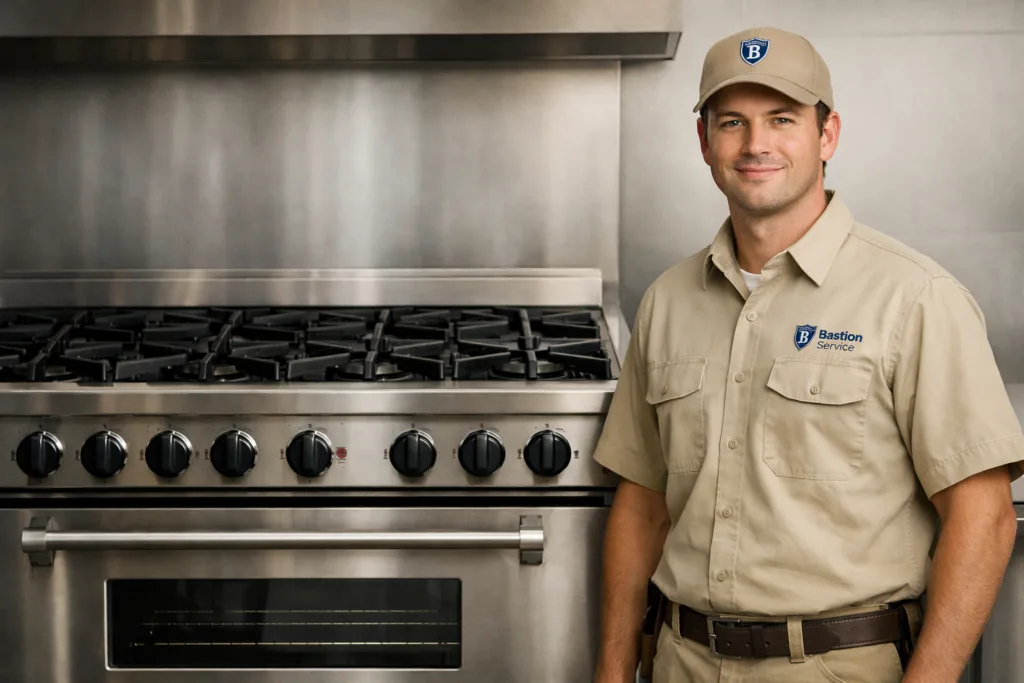




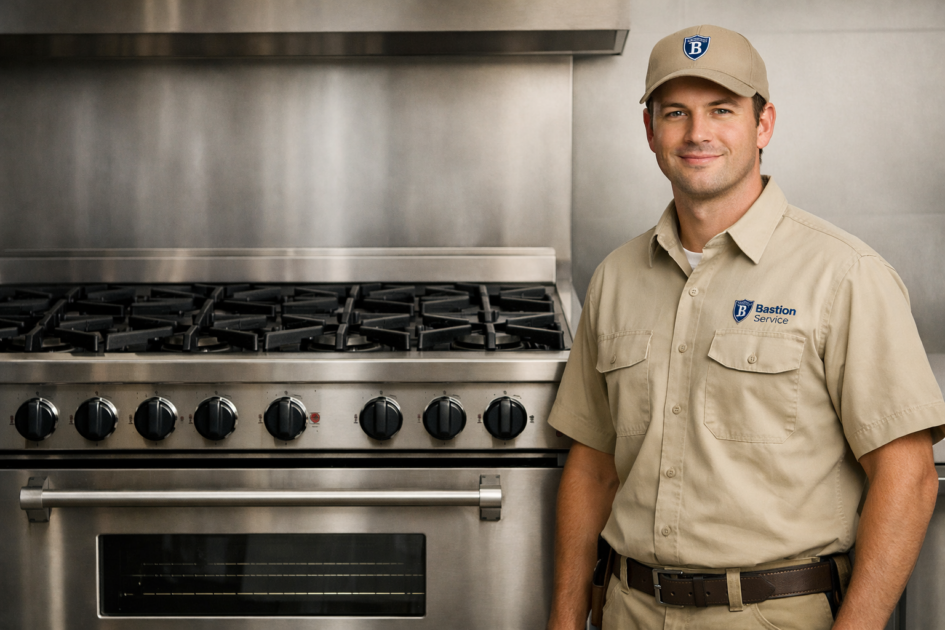
Range problems can slow a kitchen down long before the equipment stops working entirely. If a Vulcan unit is lighting inconsistently, struggling to maintain burner output, or failing to heat the oven section correctly, service is usually most effective when the symptoms are documented and tied to actual operating conditions. Bastion Service works with businesses in West Los Angeles to diagnose Vulcan range faults, schedule repair around workflow when possible, and help reduce avoidable downtime.
Related commercial service paths in West Los Angeles include Vulcan Commercial Repair in West Los Angeles, Vulcan Oven Repair in West Los Angeles, and Vulcan Fryer Repair in West Los Angeles.
Why a Vulcan Range May Stop Lighting, Heating, or Holding Temperature
A Vulcan range can show the same basic symptom for several different reasons. A burner that will not light may point to ignition trouble, blocked ports, gas flow restriction, or a control problem. An oven that runs too cool or too hot may involve temperature regulation, sensor drift, ignition failure, or uneven heat delivery inside the cavity. When a unit seems usable but performance changes through the day, the issue may be tied to components that weaken under normal kitchen load.
That is why symptom-based diagnosis matters. Instead of assuming one failed part, a service visit should look at startup behavior, flame quality, control response, heat consistency, and whether the problem affects one section or the whole range. This helps determine whether the repair is likely to be isolated and straightforward or part of a larger reliability issue.
Common Vulcan Range Symptoms in Daily Kitchen Use
Burners that do not light or take too long to ignite
Slow ignition often shows up as repeated clicking, delayed flame, or a burner that lights only after several attempts. In some cases the burner may ignite only when nearby sections are already hot, which can suggest a component that is becoming less reliable during service. Grease buildup, clogged burner ports, worn ignition parts, alignment issues, or gas delivery problems can all contribute.
For kitchen staff, this usually means slower line setup, repeated relighting attempts, and inconsistent station performance. Even when the burner eventually lights, unreliable ignition is a repair issue rather than a normal operating quirk.
Weak flame or reduced heat output
If the flame looks smaller than normal, responds poorly to adjustment, or struggles to recover during heavy use, the range may not be delivering the heat needed for consistent production. This can affect sauté work, pan recovery time, and overall cooking speed. Operators may start compensating by moving pans, extending cook times, or avoiding specific burners.
Weak output can be related to burner wear, partial blockage, gas flow problems, regulator concerns, or valve issues. The important distinction is whether the problem is isolated to one burner or appearing across multiple sections, because that often changes the repair path.
Uneven heating across the cooktop
When some burners run normally and others cook noticeably hotter or cooler, kitchens often lose confidence in timing and consistency. Hot spots, uneven flame pattern, or unstable heat delivery can point to burner condition problems, contamination, or controls that are no longer responding accurately. A range in this condition may still be operating, but it is no longer supporting predictable output.
Oven section not reaching temperature
On a Vulcan range with an oven base, slow preheat, poor recovery, or failure to reach set temperature can interrupt prep and batch cooking. Staff may notice longer bake times, uneven browning, or food that looks underdone even though the controls appear set correctly. Possible causes include ignition faults, thermostat problems, sensor issues, or heat regulation components that are not working within range.
Oven section overheating or cycling unpredictably
Overheating is just as disruptive as low heat. If product is finishing too quickly, scorching, or showing inconsistent results from one cycle to the next, the range may have a control or temperature regulation fault. This kind of problem often leads staff to keep making manual adjustments, which can temporarily mask the issue without resolving it.
Knob, valve, or control response problems
Controls that feel loose, bind during adjustment, or produce erratic flame response should be inspected. Delayed response when changing settings can indicate wear in valve or control components. Over time, these issues can become harder starts, unstable heat, or sections that no longer respond predictably during active use.
What a Service Visit Should Evaluate
For a business in West Los Angeles, range repair is not just about whether the unit powers on. The meaningful question is how the equipment performs under real production conditions. A proper evaluation should consider:
- How the range behaves at startup
- Whether ignition is immediate, delayed, or intermittent
- Flame strength and stability at different settings
- Burner-to-burner consistency
- Oven temperature accuracy and recovery
- Control and valve response during use
- Whether one failure is causing staff to work around the unit in ways that affect output
This approach helps separate a single failed component from a broader wear pattern that could lead to recurring problems.
When to Schedule Repair Instead of Waiting
It is usually time to schedule service when the range is still running but no longer behaving predictably. Waiting tends to increase disruption, especially if staff are already adjusting procedures to keep production moving. Early service is worth considering when you notice:
- Repeated ignition attempts
- Clicking without reliable flame
- Burners dropping output during a shift
- Oven temperatures drifting above or below normal
- One section of the range being avoided by staff
- Controls that no longer respond normally
- Longer cook times with no menu or process change
Intermittent faults are especially important to address. They often appear manageable for a period, then turn into full failure during the busiest part of the day.
Signs Continued Use May Create Bigger Problems
Some kitchens try to work around a failing range for as long as possible, but certain symptoms make that risky. Continued use can increase wear when the unit has unstable ignition, clearly inaccurate heat, or burner performance that changes unexpectedly. Repeated relighting attempts, over-adjusting controls, and shifting production away from problem sections all point to an equipment issue that is already affecting operations.
If there is a persistent gas smell or any concern about unsafe operation, stop using the range and follow appropriate gas safety procedures before arranging appliance repair. Safety issues should always be handled first.
Repair or Replacement: How Businesses Usually Decide
Many Vulcan range issues are worth repairing when the fault is confined to a specific system and the rest of the unit remains in solid operating condition. That is often the case with isolated ignition problems, limited control failures, or burner-related issues caught before they spread into broader performance decline.
Replacement becomes a more serious consideration when the range has a pattern of repeated failures, several sections with different symptoms, or a history of downtime that keeps returning. For a kitchen in West Los Angeles, the decision is usually less about one invoice and more about whether the equipment can return to stable daily use after service.
How to Prepare for a Faster Diagnosis
Before scheduling service, it helps to gather a few practical details from the team using the range every day. The more specific the symptom history, the easier it is to narrow down likely causes.
- Which burners or oven sections are affected
- Whether the issue happens all the time or only intermittently
- What staff see during startup, such as clicking, delayed ignition, or weak flame
- Whether the problem appears more often when the kitchen is busy
- How long the unit has been showing the symptom
- Any recent changes in performance, heat output, or cook times
These details help turn a vague complaint into a more targeted repair plan.
Service-Focused Support for West Los Angeles Kitchens
When a Vulcan range starts interfering with prep, line speed, or temperature consistency, the next step should be a service call built around the actual symptom pattern, operating impact, and urgency of the outage. For businesses in West Los Angeles, the goal is not just to identify what failed, but to move quickly toward the repair decision that restores reliable kitchen performance with the least disruption.


