
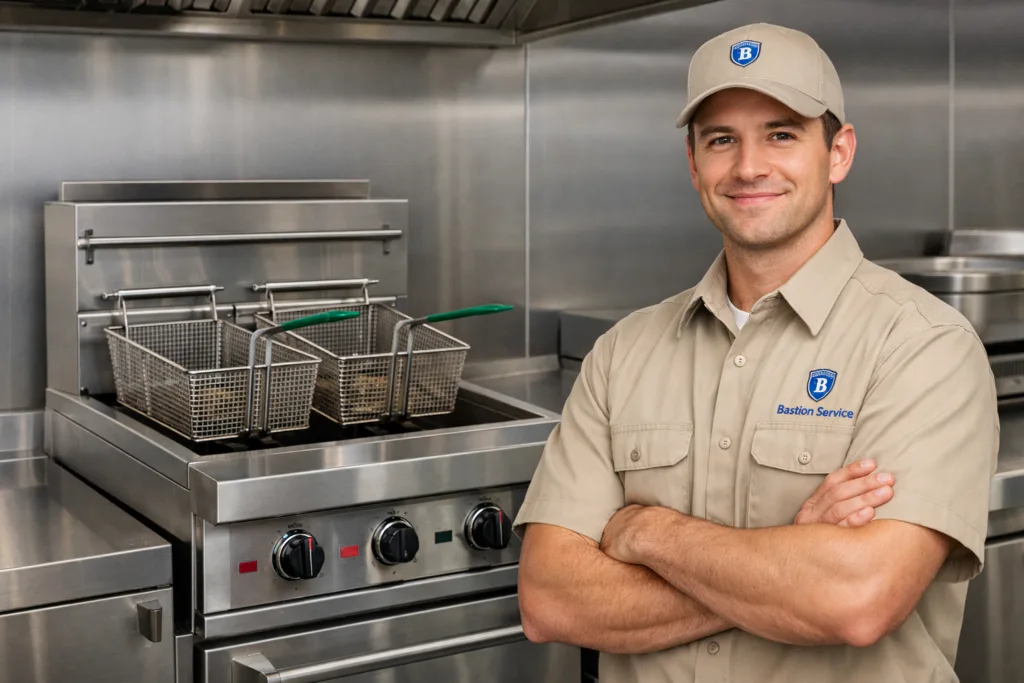




When a Wolf fryer starts missing temperature, short-cycling, or failing during a rush in West Los Angeles, the priority is to identify the fault path before parts are ordered or service time is spent in the wrong area. Similar symptoms can come from very different causes, including ignition trouble, burner weakness, control failure, sensor drift, or safety-limit shutdowns. For kitchens that depend on steady output, the right diagnosis supports faster scheduling, a more accurate repair scope, and fewer repeat interruptions.
Related commercial service paths in West Los Angeles include Wolf Commercial Repair in West Los Angeles, Commercial Fryer Repair in West Los Angeles, and Wolf Oven Repair in West Los Angeles.
Why a Wolf fryer may stop heating or recover too slowly
No-heat and slow-recovery complaints are some of the most disruptive fryer problems because they affect both production speed and product consistency. In many cases, the unit may appear to start normally but fail later in the cycle, or it may heat only partway and never reach a stable cooking range.
Common causes include:
- Ignition sequence failures that prevent proper startup
- Weak or inconsistent burner operation
- Faulty temperature sensing or thermostat drift
- Control board or relay problems affecting heat calls
- High-limit or safety circuit issues interrupting operation
- Restricted heat transfer from buildup or wear inside the system
In a working kitchen, these faults often show up as longer cook times, product color inconsistency, batch delays, or staff having to compensate with extra waiting between loads. If the fryer heats eventually but cannot keep up once demand increases, the issue may be more about recovery performance than a complete heating failure.
Symptoms that usually point to a service issue
Certain operating patterns are strong indicators that a repair visit is the better next step rather than continued trial and error by staff.
- Fryer will not heat at all: often tied to ignition, electrical supply, control, or safety-circuit faults.
- Oil heats slowly: may indicate burner weakness, sensor error, thermostat problems, or internal performance loss.
- Temperature swings during use: commonly linked to controls, sensing, cycling faults, or unstable heating performance.
- Repeated resets or shutdowns: can point to overheating, high-limit response, or a deeper fault that should not be ignored.
- Good startup but poor recovery between batches: often suggests output or control issues that become more obvious under real production demand.
What temperature inconsistency can mean during daily operation
When a Wolf fryer runs too hot, too cool, or fluctuates around the set point, the problem is not only food quality. Temperature instability can also increase oil stress, create uneven cook results, and lead to nuisance shutdowns that interrupt service. In West Los Angeles, businesses that rely on consistent fryer output often notice this issue first through workflow problems rather than a complete equipment stop.
Examples of temperature-related complaints include:
- Food coming out darker or lighter than expected from one batch to the next
- Longer ticket times because staff cannot trust normal cook cycles
- Oil overheating and forcing operational slowdowns
- Erratic cycling that makes the fryer feel unpredictable
- Recovery that gets noticeably worse during busy periods
These symptoms can come from a drifting sensor, an inaccurate thermostat, relay issues, burner performance problems, or a control system that is no longer responding correctly. The important service decision is to confirm whether the fault is isolated to one component or reflects a broader operating problem inside the fryer.
Ignition, burner, and shutdown problems that should not be delayed
A fryer that clicks repeatedly, fails to light reliably, lights and drops out, or shuts itself down during use should be evaluated promptly. Repeated startup attempts waste time, disrupt prep and service timing, and can make the original complaint harder to track if the failure becomes intermittent.
Shutdown issues deserve special attention when the fryer:
- Trips a safety limit more than once
- Needs frequent resetting to keep operating
- Starts normally when cold but fails after warming up
- Locks out during active use
- Shows signs of overheating or unstable operation
These patterns may involve the high-limit circuit, heat-control faults, burner instability, or a condition that is pushing the fryer outside normal operating range. Continued use can increase downtime if the unit is forced through another shift without resolving the underlying cause.
How fryer problems affect kitchen output
Fryer faults rarely stay limited to one symptom. A heating or control problem typically spreads into production issues that affect the whole line. Businesses in West Los Angeles may see fryer trouble first as a staffing and timing problem: slower ticket flow, uneven batch performance, backup at surrounding stations, or reduced confidence in repeatable cook times.
Service becomes more urgent when the fryer is causing:
- Reduced throughput during rush periods
- Inconsistent product quality between baskets
- Extra oil waste due to overheating or poor control
- Workarounds that strain staff and slow service
- Unplanned downtime that affects the day’s menu output
This is why symptom-based repair is more useful than replacing parts based on assumption alone. A unit with slow recovery may need very different work than a unit that overheats, even if both are described simply as “not holding temp.”
When to schedule Wolf fryer repair in West Los Angeles
It makes sense to schedule service when the fryer shows a repeating pattern rather than a one-time irregularity. If startup problems, missed temperature, unusual cycling, or safety shutdowns are starting to affect normal operation, early intervention is usually easier than waiting for a complete failure during a busy shift.
Typical reasons to book service include:
- The fryer no longer reaches or maintains normal cooking temperature
- Recovery has become noticeably slower
- The unit shuts down unexpectedly
- Staff must reset or restart the fryer to finish service
- Cooking results are inconsistent despite normal procedures
- Heat performance changes from day to day
Bastion Service helps businesses in West Los Angeles evaluate these symptom patterns, narrow the cause, and determine whether the next step is a direct repair, follow-up parts work, or a broader discussion about equipment condition.
Repair versus replacement considerations
Not every fryer problem points to replacement. In many cases, repair is the practical choice when the failure is limited to a definable component group and the rest of the unit remains in solid working condition. Replacement becomes more likely when faults are recurring, downtime history is extensive, or multiple major issues are appearing at once.
Useful factors in that decision include:
- Whether the current complaint is isolated or part of a recurring pattern
- The condition of controls, burners, safety components, and structural elements
- How often the fryer has needed service recently
- Whether repair can reasonably return the unit to steady daily use
- How much production risk is created by keeping the current fryer in service
For many kitchens, the question is not simply whether a repair is possible, but whether it restores reliable operation without creating another interruption in the near term.
What to have ready before a service visit
A little preparation can help move the appointment along and make the symptom pattern easier to verify. Staff do not need to diagnose the fryer, but a few basic observations can be helpful.
- When the problem happens: startup, warm-up, idle periods, or heavy use
- Whether the fryer fails completely or only under load
- Any recent resets, shutdowns, or temperature changes
- Whether the issue affects every batch or only some cycles
- Any unusual sounds, smells, or repeated ignition attempts
If the fryer has become unreliable, it is also helpful to note how the issue is affecting production so scheduling and repair timing can be planned around actual kitchen impact.
Service focused on restoring stable fryer performance
Wolf fryer repair in West Los Angeles is most effective when the visit is centered on symptom verification, fault isolation, and the repair path that best fits the unit’s condition. Whether the problem is no heat, temperature drift, poor recovery, burner trouble, or repeated shutdowns, the goal is to get the fryer back to dependable operation with minimal disruption to daily workflow. If your kitchen is seeing ongoing fryer issues, scheduling service before the next busy period is often the most practical next step.


