
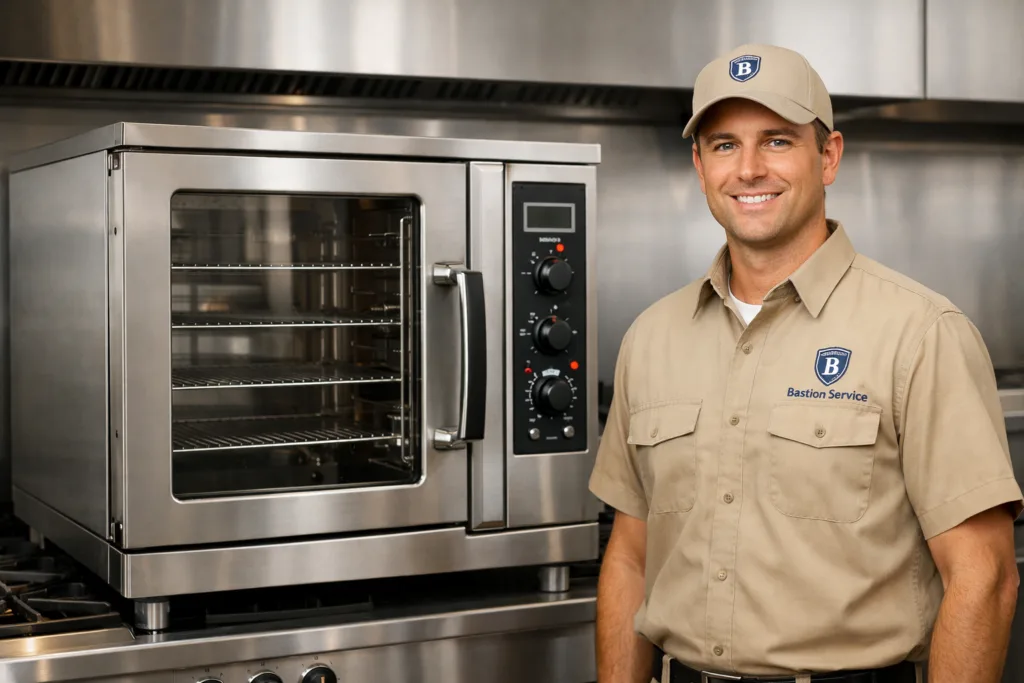




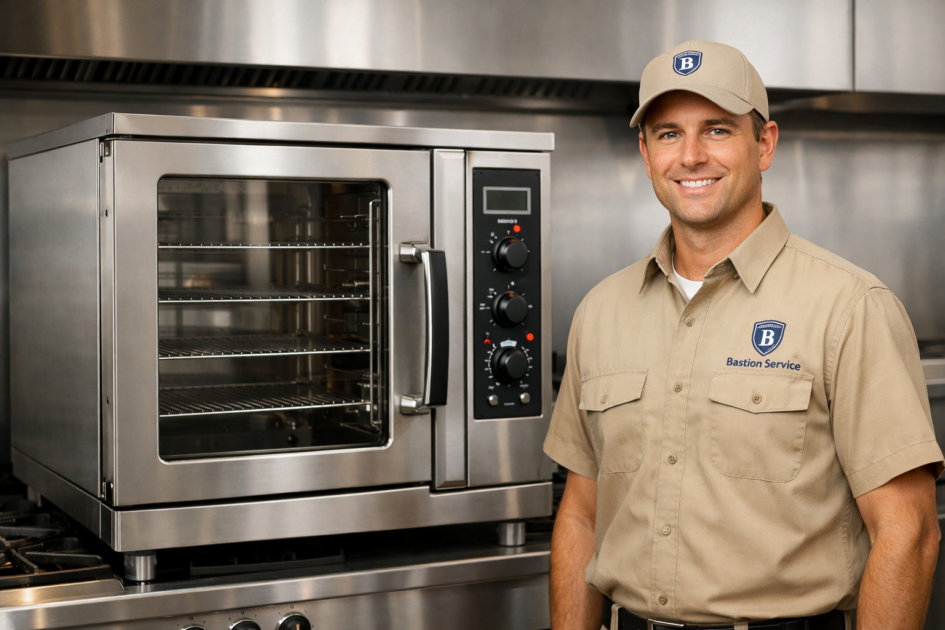
When a Vulcan oven starts falling behind during prep or service in West Los Angeles, the main priority is usually getting back to stable heat with as little disruption as possible. The most effective repair calls begin with the exact symptom pattern: whether the oven is not heating at all, heating unevenly, preheating slowly, cycling erratically, or shutting down after it reaches temperature. Bastion Service works with businesses in West Los Angeles to diagnose these failures, identify what is actually causing the performance drop, and schedule the repair path that best protects workflow.
Related commercial service paths in West Los Angeles include Vulcan Commercial Repair in West Los Angeles, Commercial Oven Repair in West Los Angeles, and Vulcan Range Repair in West Los Angeles.
How Vulcan oven problems typically show up in daily operations
Oven failures do not always begin with a full no-heat condition. In many kitchens, the first warning sign is a smaller shift in performance that gradually affects timing, batch consistency, and staff workload. A unit may still turn on, but recovery slows, product finishes unevenly, or temperature stability starts drifting enough that employees adjust settings to compensate.
Those early signs matter because they often point to issues with ignition components, temperature sensing, controls, airflow, heating elements, gas delivery, or worn door hardware. A repair decision is easier and usually less disruptive when the problem is addressed before the oven drops out completely during a busy period.
Common Vulcan oven symptoms and what they may indicate
Not heating or taking too long to heat
If the oven powers on but does not build heat normally, the fault may involve igniters, burners, heating elements, relays, sensors, thermostat problems, control board issues, or gas-related interruptions on gas models. Slow preheat is often treated as a minor inconvenience, but in a working kitchen it can throw off prep schedules, extend ticket times, and reduce confidence in the equipment.
Partial heat can also be misleading. A unit that gets warm but never reaches the set temperature may still appear usable, even though it is no longer producing consistent results. That is usually a sign to stop guessing and have the oven evaluated based on measured performance, not just whether it turns on.
Uneven cooking, hot spots, or inconsistent browning
When one rack cooks faster than another, or the same recipe starts coming out differently from batch to batch, the issue may be related to calibration drift, a weak sensor, airflow restriction, convection fan trouble, worn door seals, or a heat-distribution problem inside the cavity. Uneven heat is one of the most costly oven symptoms because it creates waste before the equipment is fully down.
In high-use environments, staff often adapt by rotating pans more often or changing cook times. Those workarounds may keep production moving temporarily, but they also make it harder to see how much the oven has drifted from normal operation.
Temperature swings during cooking
An oven that overshoots, drops below the set point, or fluctuates more than expected can affect both quality and timing. Possible causes include sensor problems, thermostat inaccuracies, control failures, cycling issues, or heat loss from a door that is no longer sealing properly. When temperature swings become frequent, the unit may still look operational while delivering unreliable output.
This type of problem often gets worse under repeated use, especially when the oven is opened often during active service. If the temperature no longer recovers predictably, repair should be scheduled before the instability affects more than one shift.
Ignition problems, delayed startup, or random shutdowns
Gas ovens that hesitate before lighting, require repeated attempts to start, or shut down unexpectedly may have ignition-system wear, flame-sensing issues, gas-valve problems, safety-switch faults, or control-related failures. Intermittent shutdowns are especially important because they can be difficult to identify unless the service visit follows the actual operating sequence of the oven.
If the problem appears only after the oven is hot, only during longer production runs, or only after multiple open-and-close cycles, that pattern should be noted before service is scheduled. Symptom timing can narrow the diagnosis significantly.
Door problems, heat loss, and poor recovery
A door that does not close evenly or a gasket that no longer seals can cause heat loss that looks like a heating problem. The oven may run longer, recover more slowly, and struggle to hold stable temperatures. Hinges, latches, alignment, and gasket wear all affect performance more than many operators expect.
These issues are easy to overlook because the oven still produces heat, but they can increase strain on other components and make temperature complaints seem more complicated than they are.
Why accurate diagnosis matters before parts are replaced
Many Vulcan oven symptoms overlap. Slow preheat, for example, can come from weak heat production, poor airflow, sensor error, control trouble, or heat escaping through the door assembly. Replacing one part based only on the most visible symptom can delay the actual fix and extend downtime.
A useful service visit should determine whether the failure is isolated or whether multiple wear-related issues are affecting the oven at the same time. That is especially important for businesses in West Los Angeles that rely on steady output and cannot afford repeated interruptions for trial-and-error repairs.
When to schedule Vulcan oven repair in West Los Angeles
Service should be scheduled when the oven shows repeated temperature errors, slow or inconsistent preheat, ignition delays, uneven baking, random resets, abnormal noises, visible door wear, or shutdowns during use. Even if the unit is still running, unreliable performance usually means productivity is already being affected.
- Cook times are getting longer without a menu change
- Staff keep adjusting settings to get normal results
- The oven heats differently at different times of day
- Recovery after opening the door is slower than before
- Shutdowns or restarts are becoming more frequent
- Product quality changes from one batch to the next
These signs suggest the oven is no longer operating consistently enough to trust in a busy kitchen.
When continued use can lead to more downtime
Keeping a struggling oven in rotation may seem easier than taking it out of service, but some faults become more expensive when the equipment continues operating under stress. Repeated ignition failure can wear related components, overheating can affect controls, and ongoing airflow or door-seal problems can increase run time throughout the system.
If the oven only works when staff compensate for it, the problem is already affecting labor and output. At that point, delaying service often shifts the cost from one repair visit to a bigger interruption later.
Repair or replacement: how businesses usually evaluate the decision
Repair is often the practical option when the issue is clearly identified, the oven remains structurally sound, and the rest of the unit supports reliable operation once the failed components are addressed. Replacement becomes a stronger consideration when breakdowns are frequent, multiple systems are failing together, or the oven no longer supports the production demands of the kitchen even when restored.
The decision is usually less about one part price and more about total operating impact: downtime, batch consistency, labor disruption, and whether the unit can return to predictable service after repair.
How to prepare for a service visit
Before the appointment, it helps to note what the oven is doing and when the problem occurs. Details that can speed diagnosis include whether the issue happens during preheat or after the oven is hot, whether it affects every cycle or only some, whether there are error messages, and whether the problem started suddenly or developed over time.
- The exact symptom: no heat, weak heat, uneven heat, shutdown, or ignition delay
- Whether the oven is gas or electric
- How long the issue has been happening
- Whether staff notice it more during heavy use
- Any recent changes in performance, noise, or temperature accuracy
Good symptom notes help connect the repair visit to the real operating problem instead of a broad guess about what might be wrong.
For West Los Angeles businesses, the goal is not simply to get the oven running again for the moment, but to restore stable performance that supports daily production. When a Vulcan oven begins missing temperature, heating unevenly, or dropping out during use, timely service can reduce waste, protect scheduling, and prevent a manageable fault from turning into a larger shutdown.


