
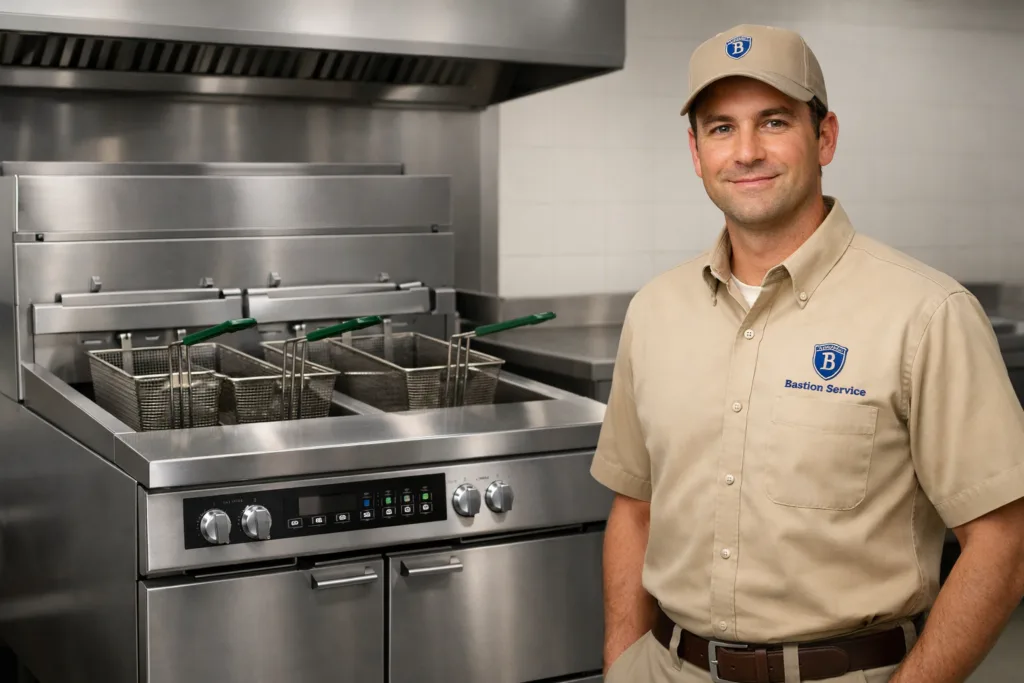




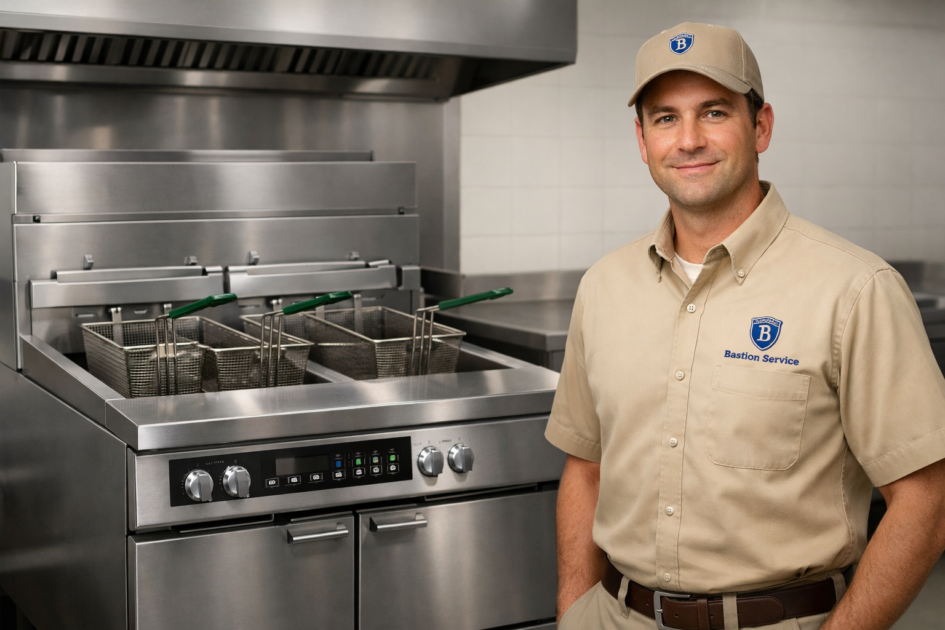
When a Frymaster fryer starts missing temperature, recovering slowly, locking out, or producing uneven cook results, the next step should be service based on the actual failure pattern rather than guesswork. In West Los Angeles, fryer downtime can affect ticket flow, oil use, labor pacing, and food consistency across the line. Bastion Service works with businesses in West Los Angeles to identify the source of the problem, explain what is causing the disruption, and schedule repair based on urgency, operating risk, and the condition of the unit.
Related commercial service paths in West Los Angeles include Frymaster Commercial Repair in West Los Angeles, Commercial Fryer Repair in West Los Angeles, and Pitco Fryer Repair in West Los Angeles.
Common Frymaster fryer problems that call for service
Not heating or not reaching set temperature
If the fryer will not heat, takes too long to warm up, or stalls below the target temperature, the issue may involve ignition components, a temperature probe, the high-limit circuit, the controller, wiring faults, or burner performance problems. Staff may first notice longer cook times or product coming out pale and inconsistent. In many cases, the fryer is still running, but not running correctly enough to support normal output.
Slow recovery during heavier demand
Recovery issues often become obvious during rush periods. A fryer may seem acceptable when lightly loaded, then struggle once basket volume increases. That symptom can point to weak heat output, calibration drift, restricted airflow, buildup affecting heat transfer, or wear in components that only shows up under sustained demand. Slow recovery usually leads to longer ticket times and inconsistent product color even before the fryer stops working completely.
Oil temperature swinging too high or too low
Temperature instability is not just a cooking issue. When oil runs hotter or cooler than expected, product quality drops, oil life can shorten, and staff may start changing cook times to compensate. On a Frymaster fryer, temperature swings can be tied to sensing problems, control faults, intermittent heating behavior, or shutdown conditions that are starting to develop into a larger failure.
Ignition failure, lockouts, or repeated resets
If the fryer tries to start and fails, shuts itself down after ignition, or requires repeated resetting, the full sequence of operation needs to be checked. A lockout can involve flame sensing, ignition parts, gas-related performance, safety circuits, or the control system. Repeated restarts may keep the unit limping along for a shift, but they rarely solve the cause and often lead to more disruptive downtime later.
Error codes or controller-related faults
When the control displays a fault or behaves unpredictably, the code is only the starting point. Some faults are tied to a specific failed part, while others reflect a broader issue with sensing, communication, power supply, or operating conditions. The most useful repair path is confirming whether the control is reporting the real cause or reacting to another problem elsewhere in the fryer.
Leaks, drain issues, or filtration problems
Oil leaks, valve wear, drainage problems, and filtration issues should be addressed early. Even a small leak can create safety concerns, cleanup problems, and interruptions during busy periods. If oil is not draining or filtering correctly, routine maintenance takes longer and staff may avoid using key functions of the fryer, which can lead to additional wear and operating problems.
Why symptom-based diagnosis matters
Two fryers can be described by staff as “not heating right” and still need very different repairs. One may have a sensor issue causing incorrect temperature feedback, while another may have an ignition or burner problem that limits heat output. A fryer that occasionally trips a safety limit is not the same repair decision as a fryer that cannot recover under load. Looking at the symptom pattern, recent behavior, and operating conditions helps separate isolated failures from signs of a broader reliability issue.
This is especially important for kitchens trying to decide whether the fryer can remain in service temporarily, whether it should be taken offline right away, and whether the present repair is likely to stabilize the unit or only buy limited time. A focused inspection gives managers a clearer basis for approving repair work and planning around downtime.
Signs the fryer should be scheduled for repair now
- The fryer heats inconsistently or takes much longer than usual to recover
- Product color and cook times have become difficult to control
- The unit shows recurring fault codes or startup failures
- Staff are resetting the fryer to keep it running
- Oil temperature appears to swing without explanation
- The fryer shuts down during production
- There is visible oil leakage or a drain-related problem
- Output is being maintained only by lowering basket loads or changing normal process
These are usually signs that the equipment is no longer operating predictably. Continuing to run the fryer in that condition can increase wear, affect food consistency, and turn a contained repair into a more expensive outage.
What a service visit should help determine
For businesses in West Los Angeles, fryer service is not just about restoring heat. The important questions are whether the fault is isolated, whether any related components are at risk, whether the fryer can safely stay in rotation, and what repair path makes operational sense. A useful diagnosis should help answer:
- What failed and what symptom confirms it
- Whether the issue is electrical, ignition-related, temperature-related, or tied to oil handling
- Whether the current problem is likely to repeat without additional correction
- How the fault is affecting cooking performance and recovery
- Whether limited operation is reasonable before repair is completed
Repair or replace?
Many Frymaster fryer problems are worth repairing when the main structure of the unit is sound and the failure is limited to controls, ignition parts, sensors, valves, or other serviceable components. Replacement becomes a more serious discussion when the fryer has repeated unresolved breakdowns, multiple systems failing at once, extensive wear from high cycle use, or repair costs that no longer line up with the expected remaining life of the equipment.
The right decision usually depends on the fryer’s age, how hard it has been used, whether recent service history shows a pattern, and how much disruption the kitchen can absorb. If the fryer has become a repeated source of slowdowns, shutdowns, or unstable cooking results, diagnosis helps management compare near-term repair value against longer-term reliability.
How to prepare before fryer repair is scheduled
Before service, it helps to note exactly what the fryer is doing and when the problem shows up. Useful details include whether the issue happens at startup or during a rush, whether the fryer fully loses heat or just recovers slowly, whether any code appears on the control, and whether the problem affects one vat or the full unit. That information can speed up troubleshooting and make the service visit more productive.
If the fryer is leaking, shutting down unexpectedly, or showing major temperature instability, staff should avoid forcing continued operation just to finish a shift. Short-term workarounds often make diagnosis harder and may increase risk to nearby components.
Fryer repair focused on uptime in West Los Angeles
When a Frymaster fryer starts affecting output, consistency, or normal kitchen flow, timely service helps prevent a manageable fault from becoming a longer interruption. For businesses in West Los Angeles, the priority is understanding the symptom, confirming the cause, and moving quickly toward the repair decision that best protects daily operations. If the fryer is not heating properly, struggling to recover, locking out, or showing unstable oil temperature behavior, scheduling service early is usually the most practical next step.


