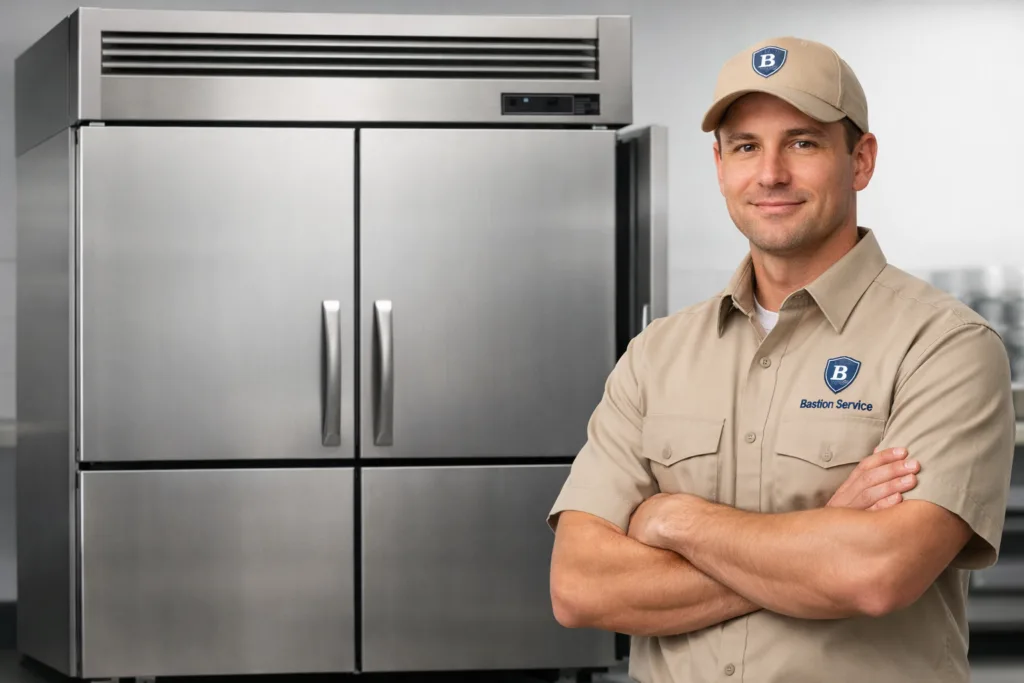




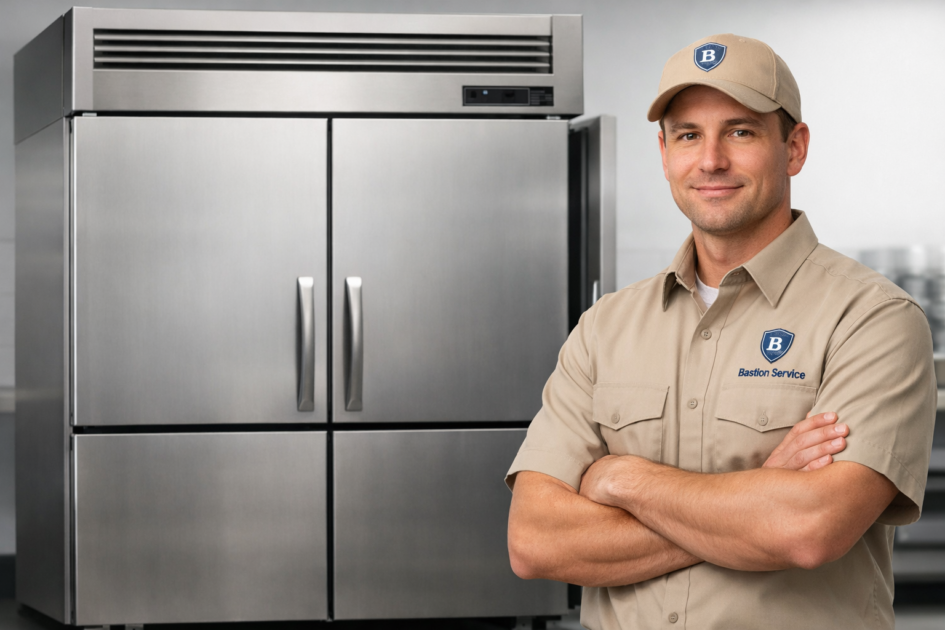
When a Turbo Air refrigerator begins running warm, icing up, leaking, or cycling abnormally, the immediate concern is usually uptime. In kitchens, prep areas, storage rooms, and other fast-moving workspaces, even a single refrigeration problem can disrupt product holding, staff routines, and daily service. Bastion Service provides Turbo Air refrigerator repair for businesses in Torrance with a symptom-first approach that helps identify what is actually failing before the unit is pushed further or parts are replaced unnecessarily.
Related commercial service paths in Torrance include Turbo Air Commercial Repair in Torrance, Commercial Refrigerator Repair in Torrance, and Turbo Air Freezer Repair in Torrance.
A useful service visit should answer a few practical questions quickly: Is the cabinet safe to keep using, what symptom is driving the performance issue, and what repair path makes the most sense based on the condition of the equipment? That matters because a warm box, frost buildup, or unusual noise can come from several different faults, and the right next step depends on how the refrigerator is behaving under normal operating conditions.
Common Turbo Air refrigerator problems that affect daily operations
Cabinet not holding temperature
If the refrigerator is not staying at its set temperature, there may be a problem with condenser airflow, evaporator fan operation, controls, sensors, door sealing, or the sealed system. In some cases, the unit cools eventually but takes too long to recover after the doors are opened. In others, temperatures drift throughout the day and staff start adjusting settings just to keep the cabinet usable. Those patterns usually mean the issue is deeper than a simple setting change.
Why is my Turbo Air refrigerator not holding temperature? The answer often comes down to restricted airflow, a control or sensor problem, worn gaskets, frost blocking circulation, or a refrigeration component that is no longer performing correctly. Because several failures can produce the same symptom, diagnosis matters before deciding on parts or continued use.
Frost or ice buildup inside the unit
Frost on interior panels, around the evaporator area, or near the door opening often signals an airflow or moisture problem. A door that is not sealing properly can pull humid air into the cabinet. A defrost issue can allow ice to accumulate where it restricts circulation. Repeated openings during busy periods can make the symptoms worse, but frost that keeps returning usually points to a condition that needs repair.
Ice buildup is not just cosmetic. It can reduce airflow across the evaporator, lengthen run times, and make the refrigerator appear inconsistent even when the root problem is fairly specific. If frost returns soon after being cleared, that is a strong sign the unit should be evaluated rather than simply reset and put back into full use.
Water leaking onto the floor or inside the cabinet
Leaks can come from blocked drains, excess condensation, frost melt, or door-related moisture intrusion. In business settings, standing water creates cleanup issues and slip hazards, but it can also be a clue that the refrigerator is not managing humidity and drainage normally. What looks like a drain problem may also be connected to icing, poor airflow, or a door that is no longer closing consistently.
Noisy operation or unusual cycling
A Turbo Air refrigerator that suddenly sounds different should be taken seriously, especially when noise is paired with temperature instability. Rattling can point to loose hardware or vibration. Fan noise may suggest motor wear, blade interference, or ice affecting rotation. Buzzing, hard starts, or repeated short cycles can indicate electrical or compressor-related stress. Changes in sound often show up before a complete cooling failure, so they are worth addressing early.
What technicians look at during diagnosis
Refrigeration problems are easier to solve when the unit is evaluated as a system rather than by symptom alone. During diagnosis, the important checks usually include cabinet temperature, recovery time, fan operation, condenser condition, evaporator airflow, frost pattern, drain condition, control response, and door seal performance. Looking at all of these together helps separate a maintenance-related issue from a failing component.
This also helps determine urgency. A refrigerator that is slightly off temperature because airflow is restricted is a different situation from a unit showing signs of control failure or sealed-system trouble. For businesses in Torrance, that distinction affects whether the equipment can be managed briefly, needs prompt repair scheduling, or should be taken out of service to avoid product risk.
Symptoms that usually mean service should be scheduled soon
- Cabinet temperature stays above target or drifts throughout the day
- The unit runs constantly and still struggles to recover
- Frost or condensation keeps returning after cleanup
- Doors do not close or seal the way they should
- Water is collecting inside the box or on the floor
- Fan noise, buzzing, clicking, or rattling has changed noticeably
- Staff are repeatedly adjusting controls to compensate for unstable cooling
These signs usually do not improve with continued use. In many cases, delay increases energy use, puts more strain on major components, and makes day-to-day temperature management less predictable.
When continued operation can make the problem worse
If the refrigerator is already running long cycles, struggling to pull down temperature, or moving less air because of ice buildup, using it heavily can accelerate wear. A unit that cannot recover normally after door openings may run nearly nonstop, which can turn a manageable issue into a larger repair. The same is true when condenser airflow is poor or a fan motor is failing. Forcing the cabinet to keep up with normal demand under fault conditions often compounds the original problem.
Leaks, tripped circuits, repeated restart attempts, and obvious temperature loss should also be treated as warning signs. In those situations, a repair decision is usually better made before the refrigerator is returned to routine full-load use.
Repair or replace: how businesses usually decide
Repair is often the right move when the fault is isolated and the cabinet itself is still in solid condition. Door gaskets, fan motors, controls, sensors, drains, and airflow-related problems are common examples where a targeted repair can restore stable operation. When the issue is identified early, the outcome is often more straightforward.
Replacement becomes more likely when the refrigerator has recurring performance problems, multiple failing components, declining reliability, or cabinet wear that makes future service harder to justify. The key question is not simply whether the unit can be repaired, but whether the repair is likely to restore the kind of dependable performance the business needs. A good assessment should make that decision clearer based on current symptoms, repair scope, and expected results after service.
How to prepare for a Turbo Air refrigerator service visit
Before service, it helps to note the actual symptom pattern rather than just the headline complaint. Useful details include how long the refrigerator has been running warm, whether the problem is constant or intermittent, if frost returns after defrosting, whether noise appears at startup or during operation, and whether the issue started after cleaning, moving the unit, or a busy service period. If staff have been adjusting controls to compensate, that is worth mentioning too.
It is also helpful to clear access to the unit and identify whether the problem affects stored product, prep workflow, or a specific part of the day. Those details can make diagnosis more efficient and help determine the most practical repair scheduling decision.
Service-focused next steps for businesses in Torrance
If your Turbo Air refrigerator is showing temperature instability, airflow problems, recurring frost, leaks, or unusual cycling, the best next step is to schedule service based on the actual symptom pattern rather than wait for a full cooling failure. The goal is to identify the cause, explain the repair options clearly, and help you decide whether the unit should remain in use, be repaired promptly, or be reevaluated for replacement. For businesses in Torrance, that kind of focused refrigerator service can reduce downtime, protect stored product, and make the next decision easier before the problem spreads.