
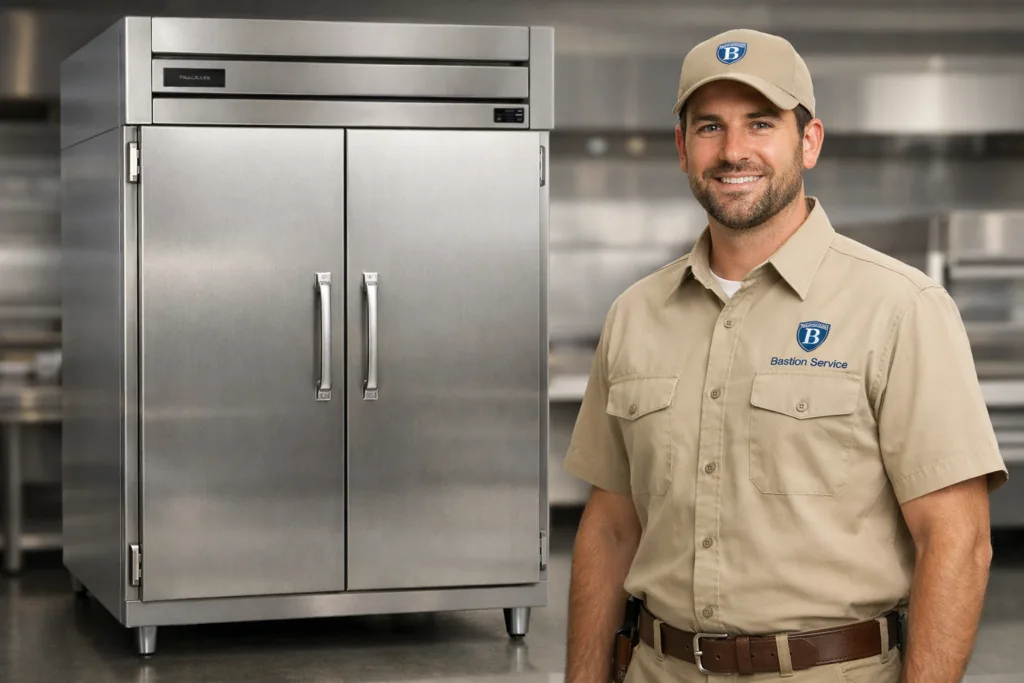




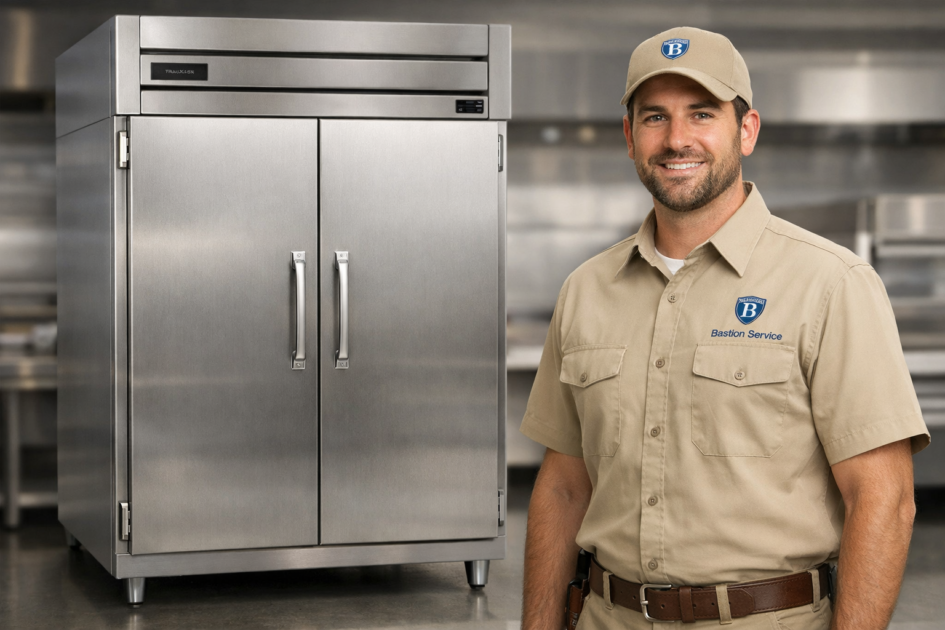
Unexpected refrigerator problems can interrupt prep, put stored product at risk, and create avoidable downtime for businesses in Torrance. When a Traulsen unit starts running warm, icing over, leaking, or cycling abnormally, service is most effective when the symptom pattern is checked against airflow, controls, defrost function, door seal condition, and overall cooling performance before any repair is approved.
Related commercial service paths in Torrance include Traulsen Commercial Repair in Torrance, Commercial Refrigerator Repair in Torrance, and Traulsen Freezer Repair in Torrance.
Bastion Service works on Traulsen refrigerator issues in Torrance with a service-first approach focused on diagnosis, repair planning, parts needs, and realistic scheduling. That matters because two units with the same visible symptom can require very different repairs depending on whether the fault is tied to fans, sensors, control components, drain issues, compressor performance, or restricted heat transfer.
Signs a Traulsen refrigerator needs service
Cabinet temperature is rising or unstable
If the refrigerator is not holding its set temperature, the problem may involve dirty condenser coils, weak evaporator airflow, failing fan motors, sensor drift, control board issues, or worn door gaskets allowing warm air into the cabinet. In some cases, the system may also be struggling with a refrigerant or compressor-related problem. Temperature swings are especially important to address early because the unit may still appear to cool while already falling out of a reliable operating range.
Frost buildup is reducing airflow
Ice on the evaporator area, frost around interior panels, or poor circulation inside the cabinet often points to a defrost failure, air leak, fan issue, or a control problem that is preventing the unit from cycling correctly. Once airflow starts dropping, product temperatures can become uneven from shelf to shelf, and the refrigerator may run much longer than normal trying to recover.
Water is leaking onto the floor or inside the cabinet
Water under a Traulsen refrigerator can come from a blocked drain, defrost water not clearing properly, excess condensation from poor door sealing, or an airflow imbalance that causes unexpected moisture and icing. Even when the leak seems minor, it can quickly become a sanitation concern, a slip hazard, or a clue that the refrigerator is no longer managing temperature and moisture correctly.
The unit runs constantly or short cycles
A refrigerator that rarely shuts off may be fighting warm air intrusion, restricted condenser airflow, weak cooling output, or internal circulation problems. Short cycling can indicate electrical faults, control issues, start component failure, or compressor stress. Either pattern is worth checking promptly because run-time changes often show up before a complete cooling failure.
Noise levels have changed
Buzzing, rattling, clicking, fan scraping, or louder-than-normal compressor operation should not be ignored. Noise changes can point to a failing motor, loose components, airflow restriction, or hard-start behavior. In a busy kitchen or storage area, these sounds are often the earliest warning that a repair should be scheduled before the refrigerator stops working during active hours.
Why a symptom-based diagnosis matters
Traulsen refrigerators can show similar symptoms for very different reasons. A warm cabinet might be caused by a relatively straightforward fan or gasket issue, but it can also be linked to deeper cooling system problems. Frost may come from a door left slightly open, yet it can also signal a defrost fault or an airflow problem that keeps repeating until the underlying cause is corrected.
That is why repair decisions should be based on how the unit is actually performing under load, how evenly it holds temperature, whether the evaporator is moving air correctly, and how the controls respond during operation. For Torrance businesses, that kind of testing helps reduce unnecessary parts replacement and gives a better picture of expected downtime.
Why is my Traulsen refrigerator not holding temperature?
The most common reasons include weak condenser performance, blocked or dirty coils, failed evaporator or condenser fan motors, faulty temperature sensors, control issues, damaged door gaskets, frequent warm air infiltration, or a cooling system that is no longer producing enough capacity. In some cases, the refrigerator may also be overloaded or arranged in a way that limits airflow through the cabinet.
The key point is that “not holding temperature” is a symptom, not a complete diagnosis. A unit that goes warm only during busy periods may have a different problem than one that stays warm all day, and a refrigerator with top-to-bottom temperature differences may indicate airflow trouble rather than a complete loss of cooling. Service is more effective when those patterns are identified before repair begins.
Issues that often become more expensive when delayed
- Repeated icing that blocks evaporator airflow
- Door gasket damage that causes constant heat infiltration
- Fan motors slowing down or stopping intermittently
- Drain problems leading to recurring leaks and interior ice
- Compressor start issues that worsen with continued operation
- Controls or sensors causing erratic cycling and poor recovery
When these conditions are left alone, the refrigerator usually compensates by running harder and longer. That can increase wear on major components and turn a repair that was once manageable into a broader failure affecting temperature stability, recovery time, and equipment availability.
When to schedule service instead of waiting
It makes sense to schedule repair when the cabinet starts showing recurring alarms, slow recovery after door openings, uneven shelf temperatures, visible frost, unexplained water, or changes in run time and sound. A Traulsen refrigerator does not need to be fully down to justify service. Partial cooling failures are common, and they often create the most disruption because the unit appears usable while no longer protecting product consistently.
Waiting is riskier when the refrigerator cannot return to set temperature, the evaporator is icing over, the compressor is having trouble starting, or the unit is overheating around the condenser area. Those are signs the system may be moving from reduced performance into a full breakdown pattern.
Repair or replace?
Many Traulsen refrigerator problems are repairable, especially when the issue is tied to fan motors, controls, sensors, drains, gaskets, switches, or similar serviceable parts. Replacement becomes a more serious consideration when the refrigerator has ongoing repeat failures, major cooling system damage, advanced wear across multiple components, or a repair cost that no longer fits the age and role of the unit.
For businesses in Torrance, the decision should be based on more than whether the unit can be made cold again today. The better question is whether the repair supports stable operation going forward and makes sense for a refrigerator that is needed every day.
What to have ready before the service visit
- Model and serial information, if available
- A description of the main symptom and when it started
- Whether the problem is constant or happens only at certain times
- Any recent alarm codes, temperature readings, or unusual sounds
- Notes about leaks, frost location, or airflow changes inside the cabinet
- Whether the unit is still partially cooling or fully down
Sharing these details helps speed up troubleshooting and makes it easier to prepare for the likely repair path. If the refrigerator is used for core daily operations, it is also helpful to note how the downtime is affecting storage, prep, or service so scheduling can be planned around the impact on the business.
Service focused on uptime in Torrance
Traulsen refrigerators are often used in demanding workspaces where frequent door openings, loading patterns, ambient heat, and sanitation routines all affect performance. Repair in Torrance should account for those real operating conditions rather than treating every warm cabinet or frost complaint as the same issue.
If your refrigerator is showing early warning signs or has already stopped holding temperature, the next step is to schedule service based on the specific symptoms the unit is showing now. Timely diagnosis can help limit downtime, protect stored product, and determine whether the right path is a targeted repair, a larger component replacement, or a broader equipment decision.


