
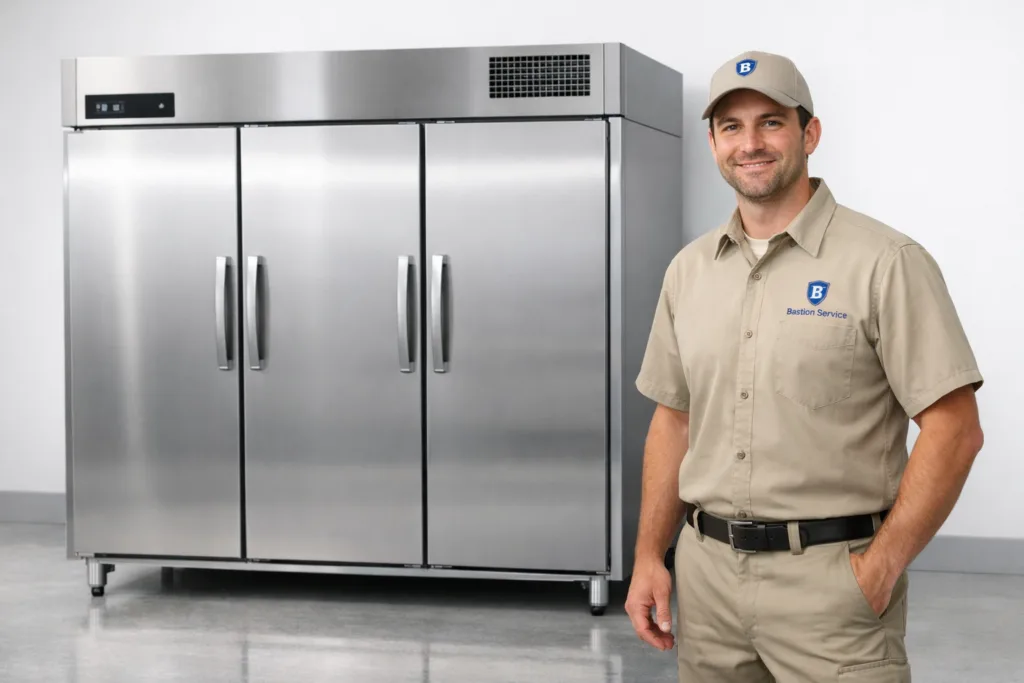




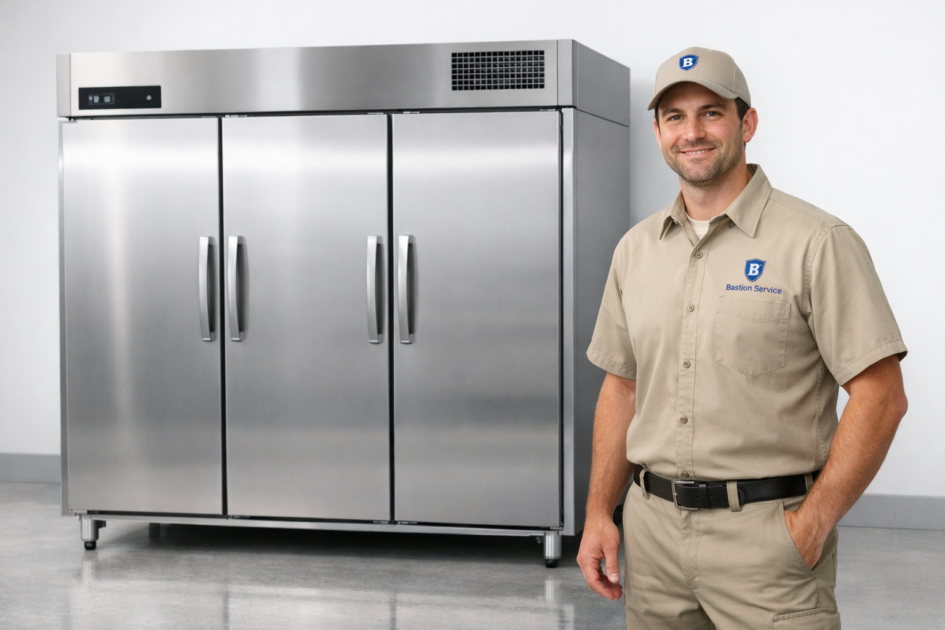
When Turbo Air refrigeration equipment starts affecting storage conditions or day-to-day workflow, the right response is to treat it as an operations issue as much as an equipment issue. A refrigerator or freezer that drifts warm, develops heavy frost, leaks onto the floor, or struggles to recover after normal door openings can put product, prep timing, and staff routines at risk. Bastion Service provides repair support in Torrance with symptom-based troubleshooting, repair scheduling, and clear guidance on whether a unit can stay in use while service is arranged.
For specific equipment paths in Torrance, review Turbo Air Refrigerator Repair in Torrance, Turbo Air Freezer Repair in Torrance, and Commercial Appliance Repair in Torrance.
For businesses in Torrance, that usually means looking beyond the obvious symptom. A warm cabinet may be caused by airflow restriction, fan failure, control problems, sensor issues, door sealing trouble, or declining refrigeration performance. A proper inspection helps determine what is actually failing, how urgent the problem is, and whether continued operation could lead to inventory loss or a larger breakdown.
What Turbo Air refrigeration equipment problems do you troubleshoot?
Service calls for Turbo Air refrigeration equipment typically involve refrigerator and freezer symptoms that interfere with stable temperature control, product protection, or normal recovery after loading and door traffic. In business settings, even one recurring symptom can signal a larger cooling problem if it is ignored too long.
- Cabinets running warm or failing to hold set temperature
- Freezers taking too long to pull down or recover
- Heavy frost, ice buildup, or recurring condensation
- Water leaks inside the cabinet or onto the floor
- Poor airflow, uneven cooling, or warm spots
- Unusual fan noise or changes in normal operation
- Long run times, short cycling, or nonstop operation
- Control, sensor, or alarm-related performance issues
These symptoms often overlap. A freezer with frost buildup may also show weak airflow. A refrigerator with a water leak may also have temperature instability. That is why repair decisions are usually best made after the full pattern is evaluated rather than treating each symptom separately.
Refrigerator symptoms that usually need repair attention
Warm sections, inconsistent temperatures, and product risk
If a Turbo Air refrigerator is colder in one area than another, or staff keep adjusting settings without improving cabinet temperature, the problem may involve circulation, controls, sensor response, door sealing, or component wear within the cooling system. In a busy kitchen or prep space, these issues can develop gradually before turning into an obvious failure.
Warning signs worth scheduling promptly include milk or produce temperatures that do not match the display, shelves that feel different from top to bottom, or a cabinet that seems to run constantly but still does not hold temperature. In those situations, continued use at full load can make recovery worse and increase strain on key components.
Airflow problems and fan-related complaints
Turbo Air refrigerators rely on consistent internal airflow to keep stored items within usable temperature range. When circulation drops, businesses may notice hot spots, weak cooling near the doors, blocked vents, or noise changes from the fan area. Sometimes airflow loss is caused by ice, debris, failing fan motors, or control issues that affect normal operation.
Airflow problems matter because they often show up before total cooling loss. A refrigerator may still appear to be working while cabinet performance becomes less stable during busy periods. Early repair can help prevent a partial cooling issue from becoming a full outage.
Water, condensation, and gasket-related problems
Water inside or around a refrigerator should not be treated as a minor nuisance in a business setting. Condensation around doors, recurring moisture on shelves, and leaks onto the floor can point to drainage trouble, door gasket wear, defrost-related issues, or temperature-control problems that need attention.
When these conditions repeat, they can affect nearby flooring, create sanitation concerns, and contribute to additional cooling loss. If moisture issues appear together with warm cabinet conditions, both symptoms should be evaluated as part of the same repair visit.
Freezer symptoms that should not be delayed
Slow recovery and soft product concerns
A Turbo Air freezer that takes too long to return to temperature after restocking or repeated door openings may be losing performance even if it still feels cold. Slow recovery often points to airflow restriction, evaporator issues, fan problems, door sealing faults, or broader refrigeration-system weakness.
Businesses in Torrance should move quickly when product texture changes, frost on stored items increases, or the cabinet seems colder near one section than another. Freezer problems can worsen quickly once recovery time starts slipping, especially when the unit is used heavily throughout the day.
Frost buildup, ice accumulation, and blocked circulation
Excess frost in a freezer is more than a housekeeping issue. Ice can interfere with doors, reduce storage space, block airflow, and force the equipment to run harder for longer periods. The underlying cause may involve gaskets, defrost components, airflow restrictions, or control-related faults.
Manual clearing may restore access temporarily, but repeated frost return usually means the cause is still active. If frost keeps building on interior surfaces or around key air passages, service is often the most efficient next step.
Cabinet noise and changes in normal operation
Buzzing, rattling, scraping, or fan noise from a freezer can indicate ice interference, motor wear, loose components, or strain caused by reduced airflow and extended run times. Noise alone does not always confirm the exact failure, but it is often one of the earliest signs that the freezer is operating outside normal conditions.
When unusual sounds appear together with rising temperatures, frost, or poor recovery, the equipment should be checked before a small mechanical issue develops into a larger cooling shutdown.
How these problems affect business operations
Turbo Air refrigerator and freezer issues do not stay isolated for long in active business environments. A single cabinet running warm may force product transfers, interrupt prep flow, delay service, or reduce confidence in stored inventory. A leaking unit can create cleanup demands and safety concerns. A freezer that no longer recovers properly can affect ordering and storage planning across an entire shift.
That is why symptom timing matters. If the problem appears during loading periods, after defrost cycles, overnight, or only during the busiest parts of the day, those details can help narrow the diagnosis and improve repair planning. The goal is not just to replace a part, but to restore stable operation in a way that fits actual equipment use.
When to schedule service instead of waiting
Some refrigeration issues give a short warning window before performance drops sharply. Scheduling sooner is usually the better choice when the equipment is still operating but showing signs that it is no longer doing so reliably.
- The cabinet temperature is drifting or hard to verify
- The unit runs longer than usual or seems unable to cycle normally
- Frost or condensation returns soon after being cleared
- Water leaks are recurring or spreading into the work area
- Fans sound different, airflow feels weak, or cooling is uneven
- The freezer is slower to recover after normal use
- Staff are making repeated setting changes without improvement
In these situations, delaying service can make it harder to protect product and easier for secondary issues to develop. It can also reduce scheduling flexibility if the unit fails completely during a high-demand period.
Repair versus replacement considerations
Not every Turbo Air problem leads to the same recommendation. Some repairs are straightforward and make good sense when the unit is otherwise stable. In other cases, repeated history, severe cooling decline, age-related wear, or broader system trouble may shift the conversation toward replacement planning.
A service assessment helps businesses compare the likely repair scope against the role that equipment plays in daily operations. For a critical refrigerator or freezer with little backup capacity, reliability and downtime impact may matter just as much as the immediate repair cost. Knowing whether the issue is isolated or part of a larger pattern helps owners and managers make a better decision.
What to expect from a service-focused visit
A useful repair visit should answer the questions that matter operationally: what symptom pattern points to the fault, whether the refrigerator or freezer can stay in limited use, what risks come with waiting, and what repair path is most appropriate. That includes evaluating temperature behavior, frost and moisture conditions, airflow performance, run patterns, and visible signs of component stress.
For businesses in Torrance, that kind of inspection helps with immediate planning as well as repair approval. It gives teams a better basis for deciding whether to move product, reduce loading, change how the unit is used temporarily, or prepare for downtime if the equipment should be taken out of service.
If your Turbo Air refrigeration equipment in Torrance is showing warm cabinet conditions, weak freezer recovery, recurring frost, leaks, or airflow-related cooling problems, the best next step is to schedule repair before those symptoms disrupt operations further. Timely diagnosis helps identify the cause, set repair priorities, and determine whether the unit should remain in service, be repaired promptly, or be evaluated for replacement based on reliability and downtime risk.


