
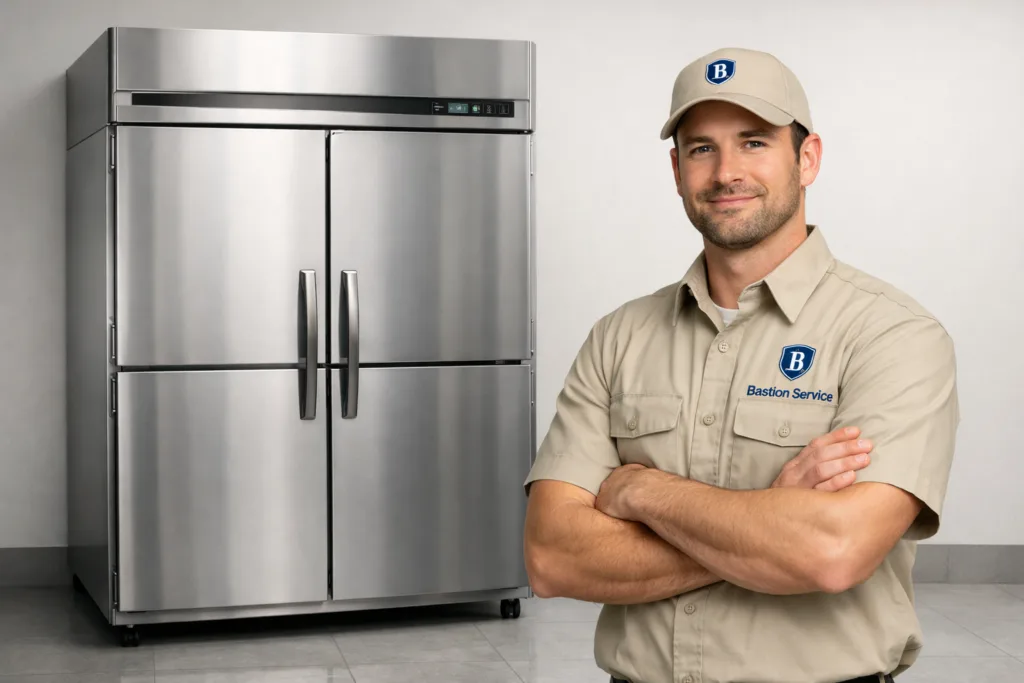




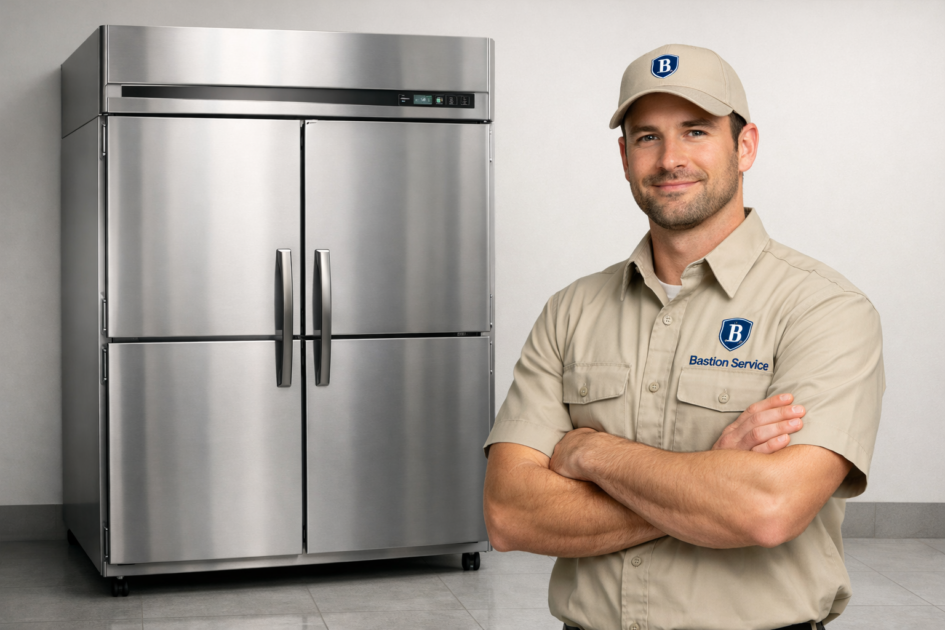
When a Hoshizaki refrigerator starts running warm, icing over, leaking, or cycling erratically, the best next step is service that identifies the actual failure before more product, time, or labor is lost. In Torrance, refrigeration problems can quickly disrupt prep flow, inventory protection, and daily kitchen or facility routines. Bastion Service works with businesses that need symptom-based diagnosis, repair scheduling, and a service plan that fits the condition of the unit rather than guesswork.
Related commercial service paths in Torrance include Hoshizaki Commercial Repair in Torrance, Commercial Refrigerator Repair in Torrance, and Hoshizaki Freezer Repair in Torrance.
What Hoshizaki refrigerator problems usually mean in day-to-day operation
Refrigerator issues often begin with a small change that staff notice before the unit fully fails. A cabinet may seem slightly warmer in the afternoon, recover more slowly after the door opens, build condensation around the frame, or make more noise than usual. Those early changes matter because they often point to airflow restriction, fan trouble, control faults, defrost problems, gasket leakage, drain issues, or strain in the sealed system.
For businesses in Torrance, the main concern is not just whether the refrigerator is still on, but whether it is holding usable temperature consistently under normal workload. A unit that appears to cool “well enough” can still be drifting out of range, running too long, or putting extra stress on major components.
Common symptoms and what they can indicate
Cabinet running warm or struggling to recover
If the refrigerator is not holding temperature, several causes are possible. Restricted condenser airflow, evaporator fan problems, sensor or control issues, refrigerant-system faults, and door sealing problems can all reduce cooling performance. In a busy work environment, this often shows up as soft product, repeated temperature adjustments, or a cabinet that cannot pull back down after routine openings.
This symptom should be addressed quickly because ongoing warm operation can lead to stock loss and can force the compressor to work harder than intended.
Temperature swings during the day
Some units do not fail all at once. Instead, they show unstable temperature patterns, with acceptable readings at one point and warmer conditions later. That can happen when airflow is inconsistent, controls are misreading cabinet conditions, frost is affecting circulation, or a component is weakening under load. Intermittent cooling problems are especially important to diagnose because they are easy to overlook until the refrigerator stops keeping up entirely.
Frost buildup inside the refrigerator
Frost on interior panels, around the evaporator area, or near the door opening usually means excess moisture is entering the cabinet or the unit is not clearing frost as it should. Worn gaskets, doors that do not close tightly, airflow restrictions, and defrost-related failures are common reasons. As frost builds, cooling efficiency drops and internal parts can become blocked or overworked.
Water leaks or excess condensation
Water inside or under the refrigerator may come from a clogged drain, poor condensation management, door leakage, or melting ice collecting where it should not. Even when the cabinet still feels cold, leaks should not be ignored. They can create sanitation problems, slip hazards, and damage around the equipment footprint.
Noisy operation, constant running, or short cycling
Rattling, buzzing, fan noise, hard starts, rapid on-and-off cycling, or a refrigerator that seems to run continuously can all point to underlying repair needs. Sometimes the issue is mechanical wear. In other cases, the refrigerator is simply struggling to reach setpoint because of airflow, control, or cooling-system trouble. When that happens, the noise is often a symptom of strain rather than a standalone problem.
Why a Hoshizaki refrigerator may not be holding temperature
Temperature loss is one of the most urgent refrigerator complaints because it can be caused by several different systems working poorly at the same time. A dirty condenser may reduce heat rejection. A weak evaporator fan may limit air movement inside the cabinet. A failed gasket may allow warm air infiltration. A faulty control or sensor may cause the refrigerator to cycle at the wrong times. In more serious cases, the cooling system itself may no longer be performing correctly.
That is why temperature complaints need more than a quick setting change. If staff keep lowering the thermostat just to maintain acceptable conditions, that usually points to an underlying fault rather than normal variation.
Signs the issue is getting worse
- Product temperatures are less stable than cabinet display readings suggest.
- The refrigerator runs longer than usual or rarely seems to rest.
- Frost, sweating, or pooled water returns after being cleaned up.
- Doors need extra force to close or do not seal evenly.
- Staff are moving inventory out of the unit during peak hours.
- The same operating problem keeps coming back after a temporary reset.
These patterns usually mean the refrigerator is no longer operating normally and should be inspected before a minor performance issue turns into a full outage.
When to schedule repair service
Service should be scheduled when the refrigerator shows repeated warming, visible frost, leaking, unusual noise, control irregularities, or poor recovery after door openings. Waiting for complete failure often increases downtime and can limit options if product has to be moved in a rush.
More urgent scheduling makes sense when the cabinet is clearly above expected holding temperature, when fans or compressor behavior sound abnormal, or when icing is interfering with airflow. If the unit is still partially cooling, that does not necessarily mean it is safe to leave unaddressed. Partial cooling often means the refrigerator is still operating, but doing so inefficiently and under stress.
Repair decisions based on the actual fault
Many Hoshizaki refrigerator problems can be corrected without replacing the unit. Fan motors, gaskets, controls, drain components, defrost-related parts, and several electrical failures are often repairable when caught in time. In those cases, the key question is whether the repair restores stable operation under normal business use.
Replacement becomes a stronger consideration when there are repeated major failures, severe age-related wear, poor cabinet condition, or larger system issues that make continued operation difficult to justify. The right decision depends on what failed, how the rest of the unit is performing, and whether the refrigerator can return to reliable service without becoming a recurring downtime problem.
How to prepare before the service visit
It helps to note the exact symptom pattern before service is scheduled. Useful details include whether the cabinet is always warm or only at certain times, whether frost is appearing in one area or throughout the unit, whether leaking happens continuously or after defrost, and whether noise changes during startup or while running. If available, temperature logs and notes from staff can help narrow down whether the problem is constant or intermittent.
Until the refrigerator is inspected, avoid repeated control changes and limit unnecessary door openings. If inventory is at risk, relocating sensitive product may be the safest short-term step while repair is arranged.
Service-focused next steps for Torrance businesses
For businesses in Torrance, the most effective response to a Hoshizaki refrigerator problem is to schedule service while the symptom pattern is still clear and before the unit drops out completely. Warm cabinets, airflow problems, leaks, frost buildup, and noisy operation are all signs that the refrigerator needs professional evaluation tied to repair decisions, parts needs, and downtime planning. Prompt attention gives you a better chance of restoring stable operation, protecting inventory, and getting the equipment back into the daily workflow with less disruption.



