




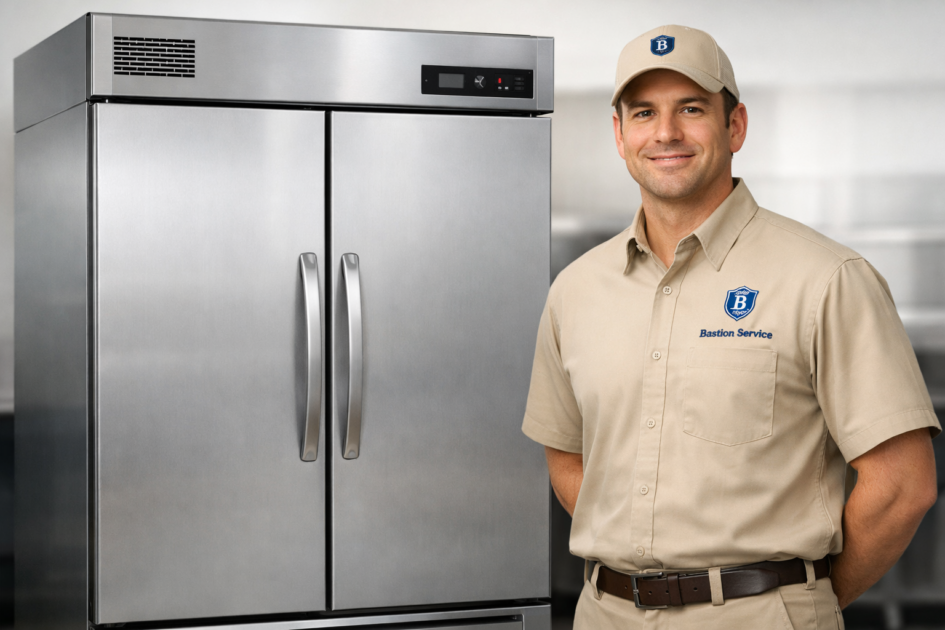
Refrigerator problems rarely stay isolated for long in a busy work environment. A Beverage-Air unit that starts running warm, icing up, leaking, or making new noise can quickly affect food safety, prep timing, storage capacity, and staff workflow. The most effective next step is to identify which system is failing and schedule service based on the actual risk to daily operations. Bastion Service works with businesses in Torrance to evaluate Beverage-Air refrigerator issues, narrow down the cause, and move toward the repair that makes sense for the equipment and the workload.
Related commercial service paths in Torrance include Beverage-Air Commercial Repair in Torrance, Commercial Refrigerator Repair in Torrance, and Beverage-Air Freezer Repair in Torrance.
Common Beverage-Air refrigerator symptoms that need attention
Temperature swings, warm sections, or poor recovery
One of the most common complaints is a cabinet that does not hold a consistent temperature. The refrigerator may cool unevenly from top to bottom, run acceptably early in the day, then drift warm during heavier use. In other cases, the unit recovers too slowly after door openings or after product is loaded.
Possible causes can include dirty condenser coils, weak fan motors, sensor or control problems, door gasket failure, blocked airflow, or sealed-system trouble. Because these symptoms overlap, the repair decision should be based on testing rather than guesswork. What looks like a refrigerant problem may actually be an airflow issue, while a simple loading pattern complaint may point to a failing fan or defrost fault.
Frost buildup, ice accumulation, or restricted airflow
Frost on the evaporator area, ice around panels, or heavy buildup that reduces airflow can lead to uneven box temperatures and strain on the cooling system. Staff may notice certain shelves staying colder than others, product near the air path freezing, or the cabinet warming even though the unit seems to be running constantly.
This often points to a defrost problem, poor door sealing, moisture intrusion, or fan issues. If the ice buildup continues, airflow drops further and the refrigerator has to work harder to maintain temperature. Early service can prevent a smaller failure from turning into compressor stress or a complete cooling loss.
Constant running or short cycling
A Beverage-Air refrigerator that rarely shuts off is usually compensating for another problem. Heat load, coil contamination, leaking gaskets, fan failures, or control issues can all cause long run times. On the other hand, short cycling may suggest electrical faults, thermostat issues, start component trouble, or compressor-related wear.
Both patterns matter because they point to operating inefficiency and rising stress on major parts. If the unit sounds different, runs longer than normal, or cycles in a way staff has not seen before, that change is worth checking before it leads to a no-cool condition.
Water leaks, condensation, or sweating around doors
Water on the floor is more than a nuisance. It can indicate a clogged drain line, defrost drainage problem, door alignment issue, damaged gasket, or an internal temperature problem that is producing excessive moisture. Condensation around the frame or doors can also signal warm air infiltration.
For businesses in Torrance, this kind of symptom affects more than refrigeration performance. It can create cleanup issues, slip hazards, and uncertainty about whether the refrigerator is maintaining a stable storage environment.
Noise, vibration, or clicking sounds
Not every unusual sound means major failure, but new noise should not be ignored. Rattling can come from loose panels or mounts, buzzing may relate to electrical components, and fan blade contact can create scraping or intermittent vibration. Repeated clicking can point to start issues, while louder compressor sound may indicate the system is under strain.
When noise appears together with poor cooling or inconsistent cycling, service becomes more urgent because the sound is often part of a broader failure pattern rather than an isolated nuisance.
Why is my Beverage-Air refrigerator not holding temperature?
Temperature loss usually traces back to one of a few core problems: poor airflow, weak heat transfer, control failure, door seal leakage, defrost issues, or a sealed-system problem. The challenge is that these faults can look similar from the outside. Staff may only see that product is warming, the display seems normal, or the unit runs all day without catching up.
A proper service visit helps separate these possibilities. That matters because each issue carries different urgency and different repair scope. A coil cleaning and airflow correction is a very different situation from a failing evaporator fan, and both are different again from compressor or refrigerant-related faults. The right diagnosis protects against replacing the wrong part and losing more time while the unit continues to underperform.
What often causes cooling problems in day-to-day operation
- Restricted condenser airflow: Dust and grease buildup reduce heat rejection and make the refrigerator run hot.
- Evaporator fan or condenser fan trouble: Weak or failed airflow components lead to uneven temperatures and slow recovery.
- Door gasket wear: Warm air intrusion causes excess run time, condensation, frost, and unstable cabinet temperature.
- Defrost system failure: Ice buildup gradually blocks airflow and makes the refrigerator appear weak or inconsistent.
- Sensor or control issues: The unit may run at the wrong times, cycle incorrectly, or fail to maintain its setpoint.
- Drain problems: Water leaks and moisture buildup can accompany broader cooling and defrost issues.
- Sealed-system or compressor faults: These tend to show up as chronic warming, poor pull-down, or inability to hold temperature under load.
When service should be scheduled right away
Some symptoms can wait a short time for planned service, but others should be treated as urgent because the refrigerator may not stay reliable through the next work period. Schedule repair promptly when:
- Product temperature is no longer stable
- The cabinet is warm even though the unit is running
- Ice buildup returns after being cleared
- Fans stop moving air normally
- The compressor becomes unusually hot or loud
- Water leakage is persistent
- The refrigerator cannot recover after routine door openings
Waiting for a full failure often leads to more downtime, more disruption, and a narrower set of options. A unit that is still running but no longer holding temperature reliably is often already in the middle of a repairable failure.
What a service-focused diagnosis helps you decide
For business owners, managers, and kitchen staff, the main question is usually not just what part failed. The real question is how the problem affects operations today and whether the unit can return to stable use with a targeted repair. Diagnosis helps answer:
- Whether the refrigerator is safe to keep using until repair
- Whether the issue is isolated or likely to affect additional components
- Whether the fault is maintenance-related or a major system problem
- Whether repair is likely to restore dependable temperature control
- Whether the cost and condition of the unit still support continued service life
That information matters when the refrigerator supports prep, storage, line service, or back-of-house workflow and every hour of downtime creates added pressure.
Repair versus replacement considerations
Many Beverage-Air refrigerator issues are repairable without replacing the unit. Fan motors, controls, probes, door gaskets, drains, defrost components, and condenser-related cooling problems are often worth addressing when the cabinet and core system condition remain solid. In those situations, repair can restore performance and extend useful life without forcing an equipment change during a busy period.
Replacement becomes a more serious discussion when the refrigerator has repeated major failures, a history of unreliable operation, or sealed-system and compressor costs that no longer make sense for the age and condition of the equipment. Even then, diagnosis should come first so the decision is based on actual fault findings rather than frustration with the latest symptom.
How businesses in Torrance can prepare for refrigerator service
A little preparation can make the service visit more productive. It helps to note when the problem started, whether the issue is constant or intermittent, and what staff has observed during normal operation. Useful details include whether the cabinet is warm at certain times of day, whether ice buildup returns in the same area, whether the unit became noisy before cooling changed, and whether recent cleaning or loading changes affected performance.
If possible, be ready to describe:
- The current temperature pattern
- Any error indicators or alarm behavior
- Whether doors are closing fully
- Where leaks or condensation appear
- Whether airflow seems weak at the usual discharge points
- How the issue is affecting daily operations
These details can help speed up troubleshooting and support better repair planning.
Service planning for Beverage-Air refrigerator issues in Torrance
When a Beverage-Air refrigerator starts affecting uptime, the best path is to match the symptom pattern to a real repair plan instead of guessing at parts or waiting for total failure. Whether the problem involves warm holding temperatures, recurring frost, poor airflow, water leakage, or abnormal cycling, timely service helps reduce disruption and protects the role that refrigeration plays in daily operations. If your unit is showing any of these signs in Torrance, scheduling an inspection is the practical next step toward restoring stable performance.