
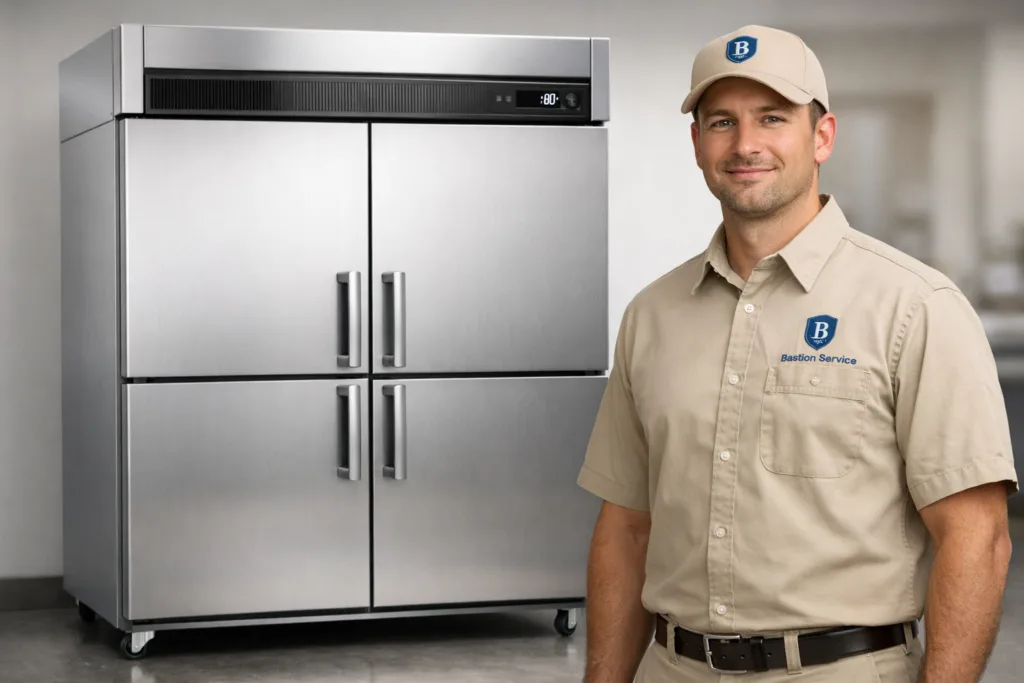




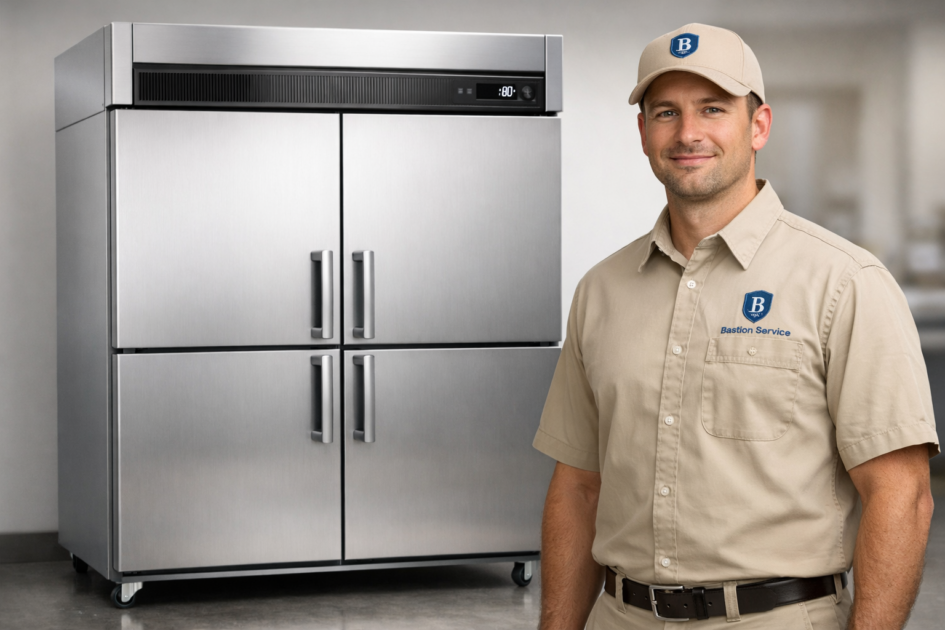
Freezer failures often start as a small temperature shift, a little extra frost, or longer run times between door openings. In a business setting, those early signs can quickly turn into product loss, workflow disruption, and avoidable strain on major components. Bastion Service provides Turbo Air freezer repair for businesses in Torrance by tracing the symptom back to the actual fault, then helping you decide what should be repaired now, what should be monitored, and how to reduce further downtime.
Related commercial service paths in Torrance include Turbo Air Commercial Repair in Torrance, Commercial Freezer Repair in Torrance, and Turbo Air Refrigerator Repair in Torrance.
Common Turbo Air freezer symptoms that point to repair needs
A Turbo Air freezer may keep running even while performance is getting worse. That can make a problem seem manageable until inventory starts softening or the cabinet stops recovering after normal use. The most useful service call usually begins with the exact symptom pattern, because that helps narrow whether the issue is related to airflow, defrost, controls, door sealing, fan operation, or the cooling system itself.
Freezer not staying cold enough
If product is no longer holding at a stable frozen temperature, the cause may be more than one failing part. Poor airflow, evaporator ice buildup, weak fan movement, sensor error, dirty condenser conditions, and declining cooling performance can all create the same result: a cabinet that looks like it is running but does not stay cold enough.
This symptom should be addressed quickly because extended runtime puts extra wear on motors and the compressor. It can also hide the difference between a repairable support issue and a larger cooling failure that needs more immediate attention.
Frost buildup inside the cabinet
Heavy frost on shelves, along interior panels, or around the evaporator section usually means warm air is entering where it should not, or moisture is not being cleared properly during defrost. Torn gaskets, doors that do not close squarely, hinges that have shifted, and defrost component problems are common reasons.
Frost does more than reduce usable space. It can choke airflow, cause uneven temperatures from top to bottom, and keep the freezer running longer than necessary. If ice starts interfering with normal door closure or fan movement, service should not be delayed.
Fans running but weak freezing performance
When you can hear the unit operating but cabinet temperature still climbs, the failure may be hidden behind normal sound. Fans may be turning without moving enough air, controls may not be responding correctly, sensors may be feeding bad information, or the sealed cooling side may be underperforming. This is one of the most common situations where symptom-based guessing leads to the wrong repair.
Water leaks, ice around the base, or drain issues
A freezer that leaks water or develops unexpected ice near the floor may have a drainage problem, defrost-related issue, or sealing problem that is allowing moisture into the cabinet. In a business environment, that creates both safety concerns and equipment stress. Leaks should be checked in context with frost pattern, door use, and temperature stability rather than treated as a separate cosmetic problem.
Fan noise, clicking, buzzing, or short cycling
Unusual sound often appears before a complete breakdown. A noisy evaporator fan, repeated clicking at startup, buzzing from electrical components, or frequent cycling can point to a developing motor, control, relay, or compressor-related issue. If the freezer is repeatedly starting and stopping without holding temperature, continued use can accelerate damage.
Why the same symptom can lead to different repairs
Two Turbo Air freezers can both seem “warm” and still need completely different work. One may have a door gasket that is leaking warm air. Another may have an evaporator fan failure. Another may be struggling with an iced coil, a sensor fault, or a larger cooling-system problem. Replacing one visible part without confirming the cause can waste time and leave the real failure unresolved.
That is why service should focus on how the unit is behaving overall: pull-down speed, temperature recovery, frost pattern, fan response, door condition, control behavior, and how long the freezer is running. Looking at the full operating picture helps determine whether the issue is isolated or part of a broader decline in performance.
Signs the freezer should be serviced before the next busy shift
Some problems can wait for a planned repair window. Others tend to get more expensive if the freezer is pushed through daily use. Service should be scheduled promptly when you notice any of the following:
- Cabinet temperature is drifting upward or varying throughout the day
- Product is softening or freezing unevenly
- Frost or ice is spreading fast after being cleared
- Recovery is slow after normal door openings
- The unit runs almost nonstop
- The compressor cycles off abnormally or struggles to start
- Interior airflow seems weak or fan noise has changed
- Door gaskets are cracked, loose, or no longer sealing tightly
- Displays, alarms, or controls are not behaving normally
These symptoms are important because a freezer can appear partly functional while still putting inventory and daily operations at risk.
What a service visit typically needs to sort out
For businesses in Torrance, the main question is usually not just whether the freezer can be made colder. The real question is what failed, how that failure affected temperature control, and whether the repair will restore stable operation without leaving related issues behind.
A focused freezer repair visit may involve checking door seal condition, cabinet airflow, evaporator frost level, fan operation, drain behavior, control response, temperature reading accuracy, and how the cooling system is performing under load. That process helps separate a straightforward repair from a unit that may be developing multiple problems at once.
Repair or replacement: how businesses usually make the call
Not every Turbo Air freezer problem means the unit should be replaced. Many issues involving fan motors, controls, sensors, door hardware, gaskets, defrost parts, or other isolated components are often good repair candidates if the cabinet is otherwise in solid condition.
Replacement becomes a more serious consideration when the freezer has a long breakdown history, major cooling-system deterioration, significant structural wear, or repair cost that no longer makes sense for the role the equipment plays in daily operations. The value of repair often depends on whether the problem is contained or part of an ongoing pattern.
For businesses in Torrance, that decision is easier when the fault has been identified clearly enough to understand the likely outcome instead of guessing based on one symptom.
Preparing for Turbo Air freezer repair service
If your freezer is still running, a little preparation can make the appointment more productive. It helps to note when the problem started, whether it is constant or intermittent, what temperatures you have observed, and whether frost, leaks, alarms, or unusual sounds appeared first. If the unit struggles more at certain times of day or after heavier use, that detail can also help narrow the cause.
Businesses should also be ready to protect temperature-sensitive inventory if the unit is no longer holding properly. The sooner the operating pattern is documented, the easier it is to move from symptom to repair decision without losing time.
Service-focused help for Turbo Air freezer problems in Torrance
If your Turbo Air freezer is warming, frosting over, leaking, making fan noise, or failing to recover as it should, the next step is to have the problem diagnosed in a way that supports a real repair decision. For businesses in Torrance, prompt service can help limit inventory risk, reduce unnecessary downtime, and keep a manageable freezer problem from turning into a larger interruption.


