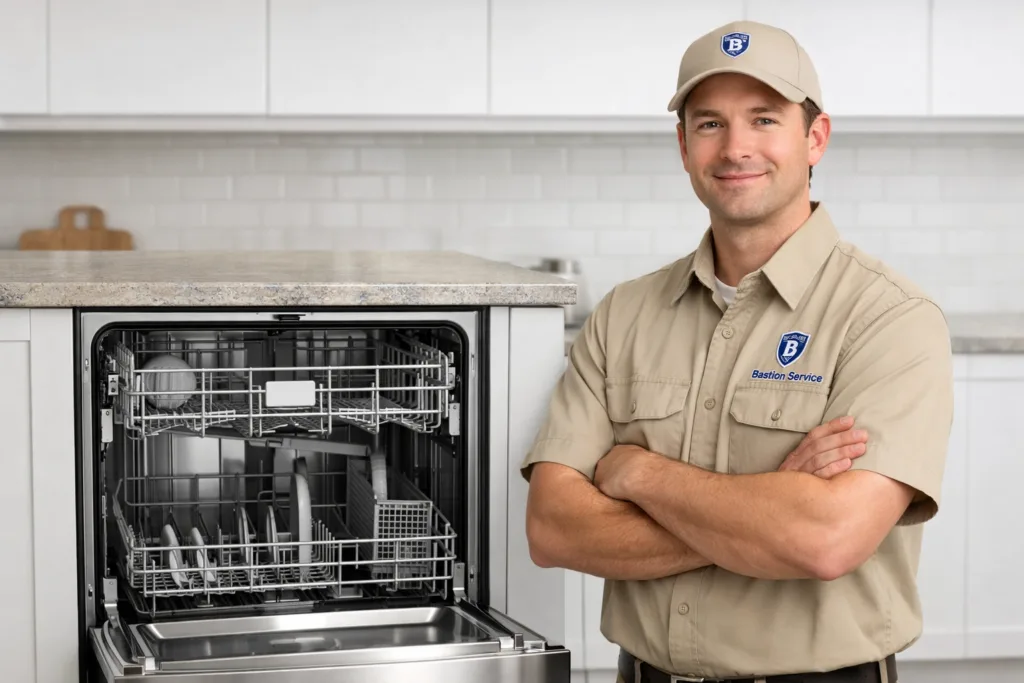
A Thermador dishwasher that leaves cloudy glasses, pools water in the tub, or leaks onto the floor usually needs more than a quick reset. Different symptoms can point to very different failures, so the most useful approach is to match the repair plan to what the machine is actually doing during fill, wash, heat, and drain.
Start with the symptom pattern
Dishwasher problems often look similar from the outside. A cycle that runs too long, for example, may involve a heating issue, a wash system problem, or a control fault. A unit that hums but does not clean may have water entering normally but poor circulation inside the tub. Looking at the full symptom pattern helps narrow the issue before any parts are replaced.
With Thermador dishwashers, brand-aware troubleshooting matters because wash performance, drying results, and cycle behavior depend on multiple systems working together. When one part of that sequence fails, the visible symptom is often only the final clue.
Poor wash results and cloudy dishes
If plates come out with stuck-on food, glasses look hazy, or silverware feels gritty, the issue is not always detergent alone. Weak spray pressure, restricted spray arms, a worn circulation pump, or a dispenser problem can all reduce cleaning performance. In some cases, the dishwasher is filling properly but not moving water with enough force to clean the load.
Homeowners may also notice that one rack cleans better than the other, or that heavier items stay dirty while lighter items look acceptable. That uneven pattern often points to wash arm blockage, circulation weakness, or loading conditions that reveal an existing performance problem.
Standing water and drain problems
Water left in the bottom of the dishwasher after the cycle usually means the machine is not draining fully. Common causes include debris in the filter area, a restricted drain path, a failing drain pump, or a hose issue. If the unit smells musty or leaves dirty water behind, it is best not to ignore it, since repeated use can make cleanup harder and place extra strain on the drain system.
Some units partially drain but leave a shallow layer of water that returns after the cycle ends. That can indicate a slow drain condition rather than a complete drain failure, and it still deserves attention before it becomes a larger problem.
Leaks around the dishwasher
Leaks can show up at the front edge of the door, underneath the unit, or along the surrounding cabinet area. A worn door gasket, overfilling, hose damage, poor leveling, or an internal spray issue can all send water where it should not go. Even a small amount of water on the floor is worth addressing quickly because repeated leaking can affect flooring, trim, and the area beneath the appliance.
If leaking appears only during certain parts of the cycle, that timing can be especially helpful. Water that shows up during fill may point to one set of causes, while leaking during active wash may suggest another.
Low heat and poor drying
When dishes come out wet long after the cycle finishes, the problem may involve rinse temperature, heating performance, or cycle completion. Thermador dishwashers rely on proper heat levels to support drying and overall wash results. If plastics remain soaked, glassware feels cool, or the cycle seems to end without adequate drying, the heating side of the system should be checked.
Low heat can also affect cleaning quality. Detergent may not dissolve as intended, and food residue can remain on dishes even when the machine appears to complete the cycle normally.
Cycle failures, noise, and control issues
A dishwasher that will not start, stops mid-cycle, or behaves unpredictably may have a door latch issue, a control problem, wiring trouble, or a fault elsewhere in the electrical system. Unusual sounds matter too. Grinding, repeated clicking, loud humming, or strained pump noise can help identify whether the issue is tied to draining, circulation, or a seized component.
Intermittent problems are especially frustrating because the unit may work one day and fail the next. In those cases, direct testing is usually more useful than trial-and-error part replacement.
When to stop using the dishwasher
Some issues can wait a short time, but others should push the dishwasher out of service until it is checked. It is smart to stop using the unit if you notice:
- Water leaking onto the floor or into nearby cabinetry
- Standing water that does not drain out
- Burning odors or signs of overheating
- Repeated breaker trips
- Loud grinding or pump noise
- Filling and draining at the wrong times
Continued operation under those conditions can increase damage to internal parts and may create avoidable kitchen damage as well.
What homeowners can notice before service
A few observations can make diagnosis faster and more accurate. It helps to note whether the dishwasher fills with water, whether spray seems strong or weak, whether the detergent dispenser opens, and whether the cycle finishes or stalls. Pay attention to where water appears if there is a leak and whether the machine is noisy during wash or only during drain.
It is also useful to check for simple maintenance issues such as a dirty filter, blocked spray arm holes, or obvious debris near the drain area. Those checks do not replace service, but they can help separate a maintenance problem from a mechanical or electrical failure.
Repair or replacement: how the decision is usually made
For many Redondo Beach households, the decision depends on the type of failure and the overall condition of the dishwasher. A focused repair often makes sense when the issue is limited to a pump, drain component, inlet valve, latch, seal, or sensor and the rest of the machine is still in solid shape.
Replacement becomes more likely when there are multiple major issues at once, signs of broader internal wear, or a history of repeated breakdowns that point to an end-of-life pattern rather than a single failed part. A proper diagnosis helps separate those two situations so the decision is based on the actual condition of the appliance, not just the most visible symptom.
What a service visit should accomplish
A useful in-home visit should do more than confirm that the dishwasher is not working. It should identify the exact fault, check related systems that may be affected, and explain whether repair is reasonable based on the unit’s condition and the work required. That may include evaluating fill performance, wash circulation, drain function, heating, door operation, controls, and signs of leakage or wear.
For Redondo Beach homeowners, that kind of diagnosis makes it easier to decide what to do next without guessing. When the problem is clearly identified, the repair path is usually much more straightforward.