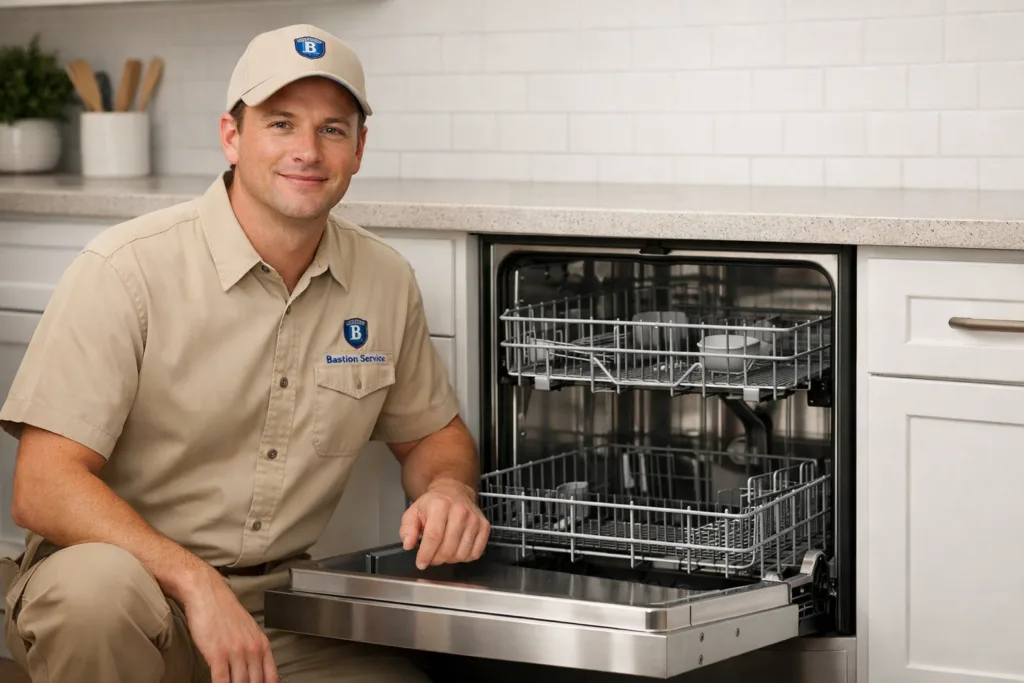
Dishwasher problems often start small and then become harder to ignore. A little water left in the bottom can turn into odor, a weak wash cycle can become dishes that never come out clean, and an occasional leak can damage nearby flooring or cabinet edges. With Whirlpool units, the best repair path depends on what the machine is doing before, during, and after the cycle.
Common Whirlpool dishwasher problems in Redondo Beach homes
Most service calls fall into a handful of symptom patterns, but the cause is not always obvious from the complaint alone. Two dishwashers can both leave standing water, for example, while one has a clogged drain path and the other has a failing pump or control issue. Looking at the full pattern usually leads to a faster and more accurate repair plan.
Standing water or a dishwasher that will not drain
If water remains in the tub after the cycle ends, the issue may be in the filter area, drain pump, drain hose, air gap if your installation has one, or the control sequence that tells the machine when to drain. In some cases, the dishwasher is not actually reaching the drain portion of the cycle because another part of the system has failed first.
Signs that help narrow it down include:
- Water left behind after every cycle rather than occasionally
- A humming sound with little or no draining action
- Food debris collecting quickly in the tub
- Odor building up between washes
It is usually best to stop running repeated cycles once drainage becomes unreliable. Continued use can strain the pump and leave residue inside the machine.
Dishes come out dirty, cloudy, or gritty
Poor wash results are not always a detergent problem. A Whirlpool dishwasher that runs through a full cycle but leaves dishes dirty may have restricted spray arms, weak circulation, a dispenser issue, low rinse temperature, or buildup that is interfering with water movement.
Homeowners often notice this problem in a few specific ways:
- Glasses look hazy after the cycle
- Plates still have fine food particles on them
- The top rack washes differently from the bottom rack
- Soap does not fully dissolve or dispense as expected
When cleaning performance drops gradually, it can be tempting to keep adjusting detergent or loading patterns. That may help in some cases, but a real circulation or heating problem typically continues to worsen until the dishwasher is inspected.
Leaks during washing or after the cycle finishes
Leaks can come from more than one place. A worn door seal, a door that is not closing evenly, a loose hose connection, overfilling, cracks in water-carrying parts, or internal spray issues can all push water outside the cabinet. Some leaks appear only during the wash portion of the cycle, while others leave moisture under the machine hours later.
Even minor leaking is worth addressing quickly because water often spreads farther than it first appears. Repeated moisture under or beside the dishwasher can affect subflooring, trim, and surrounding cabinetry.
Will not start, stops mid-cycle, or acts unpredictably
When a Whirlpool dishwasher does nothing after the start command, shuts off halfway through, or seems to restart or flash unexpectedly, the problem may involve the latch system, controls, wiring, power supply, or a failed electrical component. These symptoms are frustrating because they can look similar even when the root cause is very different.
Useful details to note include whether:
- The control panel lights up at all
- The cycle starts and then stops at the same point each time
- The machine responds only after opening and closing the door
- Buttons beep but the dishwasher does not actually run
That kind of pattern helps separate a door-related issue from a control or power problem.
Buzzing, grinding, rattling, or louder-than-normal operation
New or worsening noise usually means something has changed mechanically. Debris in the pump area, spray arm interference, motor wear, or drain component trouble can all create unusual sounds. A brief rattle from a misplaced utensil is one thing; a repeated grinding or loud buzz from cycle to cycle is another.
Noise complaints are worth checking early because the machine may still run while a component is starting to fail. Catching the issue before the part seizes or breaks completely can prevent a more disruptive repair.
Symptom patterns that help identify the likely fault
A single complaint rarely tells the whole story. Looking at related symptoms often makes the repair path clearer.
Drain problem plus bad odor
When standing water is combined with odor, there is often trapped residue in the drain path, filter area, or sump. The problem may still involve a pump, but buildup becomes part of the diagnosis because it affects both performance and sanitation.
Poor cleaning plus low heat or wet dishes
If dishes are not getting clean and they also come out unusually wet, the dishwasher may not be heating properly during the cycle. Heating problems can affect detergent performance, soil removal, and final drying all at once.
Leak plus poor washing
A leak that appears together with weak cleaning can point to a wash-system issue rather than a simple door seal problem. If water is not moving as intended inside the machine, it can create both performance complaints and escaping water.
Mid-cycle shutdown plus control issues
If the dishwasher stops, flashes, or behaves inconsistently, the repair may involve more than a simple reset. Repeated interruptions often indicate a problem that needs to be tested rather than guessed at.
When to stop using the dishwasher
It is smart to pause normal use and schedule service if your Whirlpool dishwasher is doing any of the following:
- Leaking onto the floor
- Leaving dirty water in the tub after each cycle
- Making harsh grinding or burning-type sounds
- Tripping power or shutting down unexpectedly
- Giving off a strong electrical or overheated smell
Using the machine in those conditions can make the original problem more expensive and may also create avoidable household damage.
What matters when deciding between repair and replacement
Many Whirlpool dishwasher issues are still worth repairing, especially when the machine is otherwise in solid condition and the failure is limited to one main system. A repair decision usually makes sense when the dishwasher has been performing well overall, the cabinet and racks are in good shape, and the problem is not tied to widespread wear.
Replacement becomes more likely when multiple systems are failing at once, leaks have been recurring for a long time, or the appliance shows broader signs of decline beyond the current complaint. The most useful evaluation usually answers three questions:
- What failed and why did the symptom appear?
- Are other worn parts showing up at the same time?
- Does the expected repair fit the age and condition of the unit?
What homeowners in Redondo Beach should pay attention to before service
A few observations can make diagnosis more efficient. If you are arranging Whirlpool dishwasher repair in Redondo Beach, it helps to note when the problem occurs, whether it happens on every cycle, and whether the symptom changed gradually or appeared all at once.
Useful details include:
- Whether the issue started after a power interruption or plumbing work
- Which cycle was selected when the problem happened
- Whether the dishwasher fills, washes, drains, and dries normally
- If any noise, smell, or leaking happens at a specific point in the cycle
Those details often reveal whether the fault is tied to draining, circulation, heating, controls, or water entry.
What a service visit should clarify
A productive appointment should identify the active failure, check for related wear or blockage, and determine whether the dishwasher is safe to keep using. It should also make clear whether the problem is isolated or part of a larger pattern inside the machine. That gives homeowners in Redondo Beach a practical repair plan based on the actual condition of the appliance rather than guesswork.