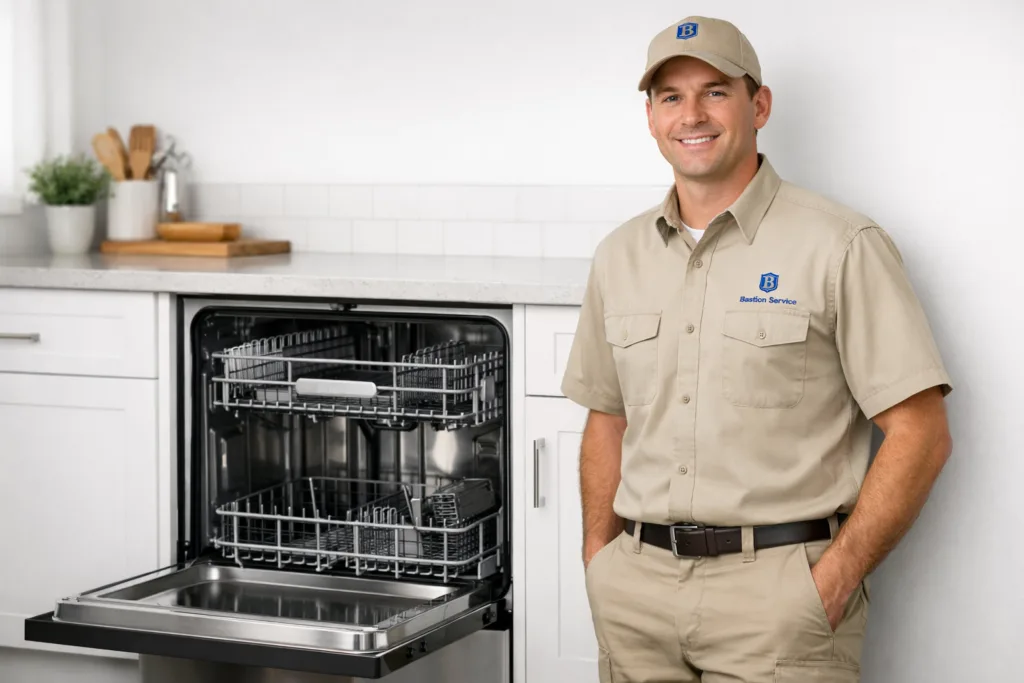
Many Samsung dishwasher issues are easier to solve when you look at the full symptom pattern instead of a single complaint. A machine that leaves water in the tub, for example, may have a drain restriction, a pump problem, or a control issue that interrupted the cycle before draining finished. Looking at what the dishwasher does from start to finish usually reveals the most likely repair path.
Common Samsung dishwasher symptoms and what they may mean
Dishwashers combine water fill, circulation, heating, draining, and door safety functions in one cycle. When one part of that sequence fails, the symptoms often show up in a specific way. For homeowners in Redondo Beach, understanding those patterns can make it easier to decide when service is worth scheduling.
Standing water after the cycle
If water remains at the bottom of the tub, the problem may involve the drain pump, drain hose, filter area, air gap if present, or a clog further along the drain path. In some cases, the dishwasher did not truly finish the cycle because a sensor or control problem stopped it early. Water left behind should not be ignored, especially if you notice odor, debris collecting near the filter, or water backing up after each wash.
Dishes come out dirty, gritty, or cloudy
Poor wash results are often tied to weak water circulation, blocked spray arms, low fill volume, filter buildup, or detergent not dissolving correctly. Cloudy glasses and food left on plates do not always point to the same failed part. Sometimes the issue is mechanical, and sometimes it starts with restricted water movement inside the tub. If cleaning quality has dropped over several cycles, that usually means the problem is developing rather than random.
Leaks on the floor or moisture around the door
A Samsung dishwasher can leak from the door gasket, lower door seal, hose connections, sump area, pump housing, or from overfilling. Even a slow leak matters because moisture around the base of the appliance can affect flooring, toe-kick areas, and nearby cabinets. If you see puddling more than once, it is best to stop running normal loads until the source is identified.
Dishwasher will not start
When the unit has power but does not begin a cycle, the cause may involve the door latch, control panel, user interface, wiring, or a safety condition preventing operation. Some homeowners notice lights but no response; others find that the dishwasher seems completely dead. These differences matter because they point to different diagnostic directions.
Cycle stops mid-wash
If the dishwasher starts normally and then shuts down, pauses for too long, or flashes an error, the issue may be tied to draining, heating, water level sensing, or control communication. A mid-cycle stop can also happen when the unit detects a condition it considers unsafe or incomplete. This is one of the most common situations where guessing leads to unnecessary part replacement.
Not drying or low rinse temperature
When dishes come out wet long after the cycle ends, the problem may involve heating performance, a control issue, or a wash cycle that never reached the proper final phase. Plastic items often hold more moisture than glass or ceramic, but if the whole load is unusually wet every time, the dishwasher may not be heating or rinsing as intended.
Signs the problem may be getting worse
Some dishwasher faults stay small for a while, then become more expensive once the unit keeps running under strain. Watch for these warning signs:
- Drain problems happening in multiple back-to-back cycles
- Grinding, humming, or unusual pump noise
- Leakage that appears in the same spot each time
- Error codes that return after resetting power
- Long cycle times with poor cleaning results
- Burning smells, heat issues, or tripped breakers
When these symptoms repeat, continued use can increase wear on pumps, seals, controls, or nearby kitchen surfaces.
Why Samsung dishwasher diagnosis needs to be specific
Samsung dishwashers rely on several systems working in sequence. A drain complaint may actually begin with a circulation problem. A poor cleaning complaint may be connected to low fill, not the spray arms themselves. A unit that appears not to start may be reacting to a latch or sensor input rather than a failed main control. Because several faults can look similar from the outside, exact diagnosis matters before deciding on repair.
What homeowners can notice before service
You do not need to disassemble the appliance to gather useful information. A few observations can help narrow down the issue:
- Does the dishwasher fill with water at the start?
- Do you hear normal spray action or only humming?
- Does the cycle stop at the same point every time?
- Is the leak coming from the front, underneath, or near a side cabinet?
- Are dishes dirty throughout the rack or only in one area?
- Is the problem constant or intermittent?
Those details often help separate a clogged or worn component from an electrical or control-related fault.
When to stop using the dishwasher
It is usually smart to pause use if the dishwasher is leaking, leaving significant standing water, tripping the breaker, producing a hot electrical smell, or stopping mid-cycle repeatedly. A machine that only partly drains or only sometimes washes can still cause hidden wear if it keeps being run through full loads. In a household kitchen, catching the issue early often prevents a larger repair later.
Repair or replacement for a Samsung dishwasher
For many Redondo Beach homeowners, the decision depends on age, condition, repair scope, and whether the failure is isolated or part of a longer pattern. If the dishwasher has one serviceable fault and the rest of the machine is in solid condition, repair is often the better choice. If the unit has multiple recurring problems, heavy internal wear, or repeated control-related failures, replacement may deserve consideration.
A useful repair decision usually comes down to:
- How long the dishwasher has been in service
- Whether the issue is mechanical, electrical, or both
- If there is visible water damage or repeated leakage
- Whether past repairs have already addressed similar symptoms
- How disruptive the current failure is to daily kitchen use
What a household-focused service visit should address
In residential settings, the most helpful service approach is centered on the actual failure you are living with day to day: water left behind, dishes not getting clean, leaks, heat problems, or a cycle that will not complete. That makes it easier to determine whether the problem is limited to one component, whether related parts should be checked, and whether repair is practical based on the appliance’s overall condition.
Samsung dishwasher repair in Redondo Beach with symptom-based guidance
Kitchen cleanup becomes much harder when the dishwasher is unreliable, especially when each load ends with hand-washing, puddles, or rewashing dishes. When a Samsung unit in Redondo Beach starts showing repeat symptoms, the best next step is usually to match the behavior to the likely system involved and choose service based on the appliance’s real condition rather than trial-and-error part swapping.