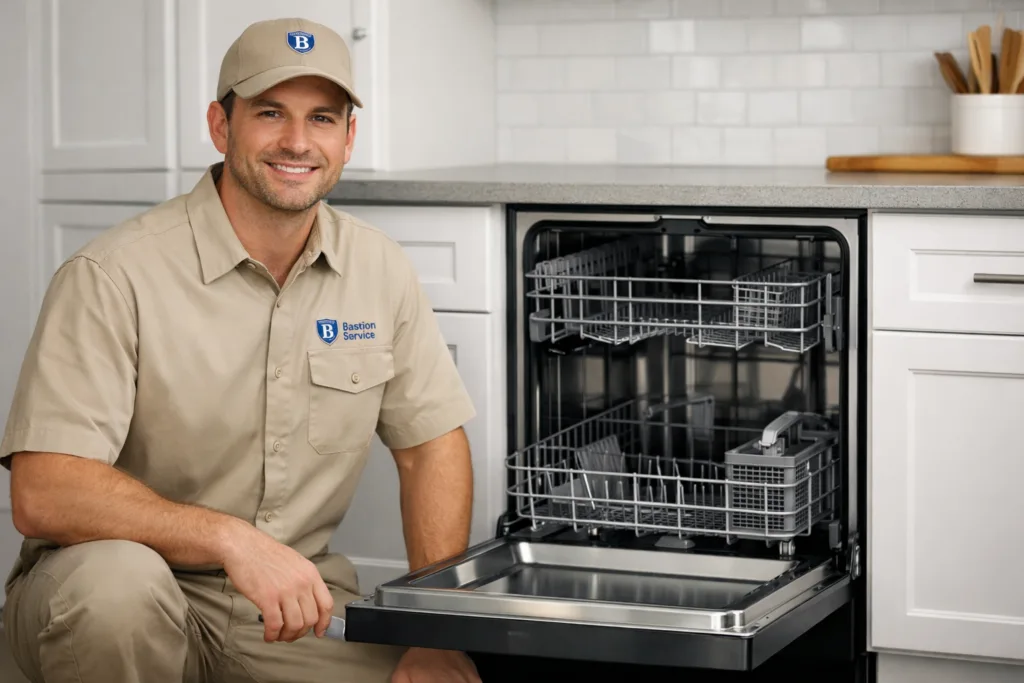
Common LG dishwasher problems and what they usually point to
Standing water after the cycle

If water is still sitting in the bottom of the tub, the problem is not always the same from one dishwasher to the next. On an LG unit, the cause may be a blocked filter, a kinked or restricted drain hose, trouble at the drain pump, a clogged air gap if present, or a disposal connection issue. In some cases, the dishwasher sounds like it is trying to drain but never fully clears the water, which can suggest a different repair path than a machine that stays completely silent at the drain stage.
Dishes that come out dirty, gritty, or cloudy
Poor wash performance can come from weak spray pressure, clogged spray arms, low water fill, wash motor trouble, detergent problems, or a sensor issue that affects how the cycle runs. Cloudy glasses do not always mean the dishwasher itself has failed, but if the change is sudden or the machine also starts leaving food residue behind, it is worth checking the circulation system instead of assuming it is only a soap or loading issue.
Water leaking onto the floor or around the door
Dishwasher leaks can start small and become expensive if they are ignored. Water at the front edge of the door may point to a gasket problem, loading issue, oversudsing, or a spray arm pattern that is pushing water where it should not go. Water under the machine can indicate trouble with hoses, the inlet valve, drain components, or the sump area. The leak location matters because it helps separate a door-related problem from one deeper inside the unit.
Cycle failures, no start, or stopping mid-cycle
When the dishwasher will not start, powers on but does nothing, or quits before finishing, the problem may involve the door latch, control panel, wiring, control board, or a fault that interrupts the cycle for safety reasons. If the same stage fails repeatedly, that pattern often helps narrow down whether the issue is with heating, draining, filling, or control response.
Low heat, poor drying, or cool dishes at the end
LG dishwashers that stop drying well may have a heater-related issue, a problem with temperature sensing, or a cycle interruption that keeps the unit from reaching the proper final stage. Some homeowners first notice plastic items staying wet, but if dishes across the whole load remain cool and damp, the concern may go beyond normal drying variation.
Grinding, buzzing, or unusual vibration
A change in sound is often an early warning sign. Debris in the pump area, spray arm interference, motor problems, or installation-related vibration can all create noise that was not there before. If the dishwasher becomes louder while cleaning results also get worse, both symptoms often connect to the same underlying failure.
Why the exact symptom pattern matters
Dishwashers can show the same symptom for very different reasons. A drain complaint may be a simple blockage, but it can also trace back to a weak pump or an electrical problem. Poor drying may look like a heater failure, yet the real issue could be a cycle that is not completing properly. That is why a symptom-based inspection matters more than replacing parts based on a guess.
For homeowners in Redondo Beach, this is usually the difference between a one-time repair decision and repeated frustration. Looking at when the problem started, whether it happens on every cycle, and what other changes appeared at the same time helps identify the most likely fault before repair work begins.
Signs the dishwasher should not keep running
Some issues are inconvenient, but others can risk flooring, cabinetry, or the dishwasher itself if the machine keeps being used. It is generally smart to stop running the unit and schedule service when you notice any of the following:
- Water leaking from the front or underneath the dishwasher
- Standing water that does not drain out after repeated attempts
- Burning smells, electrical odor, or repeated breaker trips
- Loud grinding or harsh pump noise
- A door that does not latch securely
- A cycle that shuts down unpredictably or leaves the tub unusually hot or unusually cool
Even when the dishwasher still turns on, continued use can make a minor failure more expensive if water escapes into surrounding materials or a struggling pump is forced to keep running.
What homeowners can check before booking service
Not every performance issue means a major repair is needed. A few basic checks can help rule out simple causes:
- Clean the filter if it is packed with food debris
- Make sure spray arms can turn freely and are not blocked by large items
- Confirm the sink drain and disposal are clearing normally
- Look for obvious kinks in the visible drain hose path
- Use the correct detergent amount and avoid excessive soap
- Check whether the issue happens on every cycle or only on certain settings
If these steps do not change the result, the next step is usually internal diagnosis rather than more trial and error. That is especially true when the dishwasher leaks, stops mid-cycle, or has inconsistent draining.
Repair or replace? How that decision is usually made
Replacement is not automatically the best answer just because an LG dishwasher has started acting up. In many cases, the better choice depends on the age of the unit, the condition of major components, whether the machine has had repeated past repairs, and how extensive the current failure appears to be.
Repair often makes sense when the problem is isolated and the rest of the dishwasher is in good shape. Replacement becomes more likely when there are multiple system failures, significant leak-related damage, or a major component issue on an older machine that has already had a pattern of trouble. The key is understanding the scope of the fault first so the decision is based on the appliance’s actual condition rather than frustration alone.
What to expect from a useful dishwasher service visit
A worthwhile service call should do more than confirm that the dishwasher is malfunctioning. It should identify the failed system, check related parts that commonly cause the same complaint, and explain whether the appliance can be used safely before repair is completed. That gives homeowners in Redondo Beach a practical way to weigh timing, repair value, and the risk of waiting.
If your LG dishwasher is draining poorly, washing inconsistently, leaking, running with low rinse temperature, or failing to complete cycles, the best next step is to pinpoint the cause and build the repair plan around that exact symptom pattern.