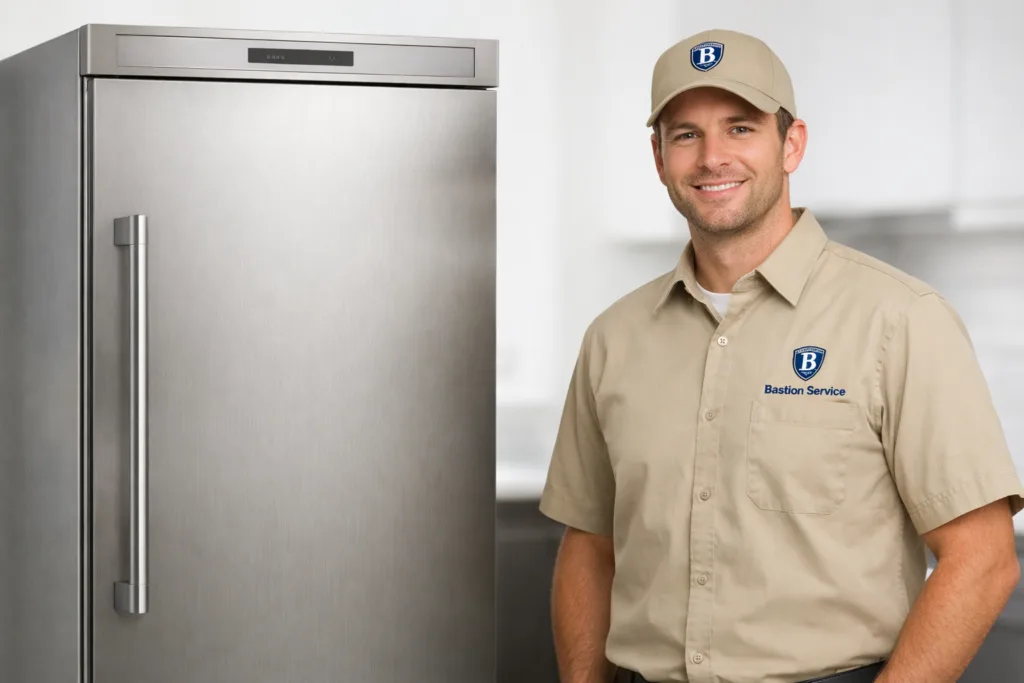
Small changes in freezer performance often show up before a complete breakdown. You might notice ice cream softening, frost collecting in one section, drawers getting harder to open, or a motor sound that seems to run longer than usual. On a Thermador freezer, those symptoms can come from very different causes, so the pattern matters as much as the symptom itself.
Common Thermador freezer symptoms and what they may mean
A freezer that is not working properly does not always fail in an obvious way. In many Redondo Beach homes, the first clues are inconsistent temperature, extra frost, moisture, or unusual noise. Looking at how the problem behaves can help narrow down the likely repair path.
Food is soft or the freezer is not holding a steady temperature
If frozen items are no longer staying solid, the problem may involve restricted airflow, an evaporator fan issue, sensor trouble, a defrost fault, or a cooling-system problem. Sometimes the freezer cools unevenly, with one drawer or shelf performing better than another. That kind of uneven freezing often points to circulation or frost-related blockage rather than a total loss of cooling.
It is also worth checking whether packages are packed tightly against interior vents. A blocked vent can reduce circulation and make the freezer appear weaker than it really is. If rearranging contents does not improve performance quickly, service is usually the next step.
Frost keeps building up inside
Frost on walls, bins, rails, or food packages usually means moisture is entering the compartment or the defrost system is not clearing ice as intended. A door gasket that is not sealing well, a door left slightly ajar, warped storage bins, or a failed defrost component can all create similar frost patterns.
Heavy frost is more than a cosmetic issue. It can block airflow, interfere with fans, and force the freezer to run longer to maintain temperature. Once that happens, the original issue can start causing secondary wear.
The freezer runs all the time
Long run times can happen when the freezer is trying to recover from warm air entering the compartment, dirty condenser conditions, a control issue, or reduced cooling efficiency. Constant operation does not automatically mean the compressor is bad, but it does mean the system is working harder than normal.
If the exterior feels warmer than usual around the machine compartment or the freezer seems to hum almost nonstop, it is a sign that the appliance is struggling to reach or hold the target temperature.
You hear buzzing, clicking, rattling, or fan noise
Different noises suggest different faults. A fan scraping sound can mean ice is contacting the blade. Repeated clicking may point to a start problem, relay issue, or control-related fault. Rattling can be something simple, but if it appears along with weak freezing or temperature swings, it deserves attention.
What matters most is whether the sound is new, getting louder, or tied to a cooling complaint. A noise-only issue may be minor, but noise plus performance loss often signals a deeper problem.
Water leaks or ice forms in the wrong place
Water under the freezer, slush near the bottom, or a sheet of ice below drawers can point to a defrost drain issue or improper meltwater flow. When water cannot drain correctly, it may refreeze inside the compartment and start affecting drawer movement, door closure, and airflow.
Why symptom patterns matter on a Thermador freezer
Two freezers can look like they have the same issue while needing completely different repairs. A warm freezer with frost may involve a door seal problem on one unit and a failed defrost component on another. A noisy freezer may need a fan repair, while a similar sound on another model may come from a starting issue or control fault.
That is why guessing and replacing parts one at a time is rarely the best approach. Thermador units often use model-specific control behavior, sensors, and airflow layouts, so the most useful diagnosis is based on the exact symptoms, how long they have been happening, and whether they are constant or intermittent.
Signs the problem should not be put off
Some freezer issues can wait a short time for a scheduled visit, but others should be addressed quickly to reduce the risk of food loss and further strain on the appliance. Service is usually a good idea when you notice any of the following:
- Food is no longer staying completely frozen.
- Frost returns soon after it is removed.
- The freezer runs almost constantly.
- The door does not close or seal the way it should.
- There is standing water, slush, or unexpected ice buildup.
- New clicking, buzzing, or fan interference starts along with weak cooling.
A partially cooling freezer can be especially deceptive because it may seem functional while temperatures are slowly drifting upward. By the time food quality changes are obvious, the unit may already be under significant stress.
When continued use can make the repair worse
If a freezer is struggling to maintain temperature, forcing it to keep running can increase wear on key components. Repeatedly opening the door to check food, overloading the compartment, or trying to force drawers through ice buildup can make matters worse.
A poor seal is another common example. When warm air keeps entering the compartment, the freezer may chase the set temperature all day without fully recovering. That can create more frost, longer run times, and extra strain on the system.
Repair or replace?
Many Thermador freezer problems are repairable, especially when the issue involves a fan, drain blockage, door gasket, defrost part, control, or sensor. In those cases, repair is often reasonable if the rest of the appliance is in good condition.
Replacement becomes a more serious consideration when the freezer has major sealed-system trouble, a history of repeat cooling failures, or a repair cost that is hard to justify against the age and overall condition of the unit. The real question is not only whether the appliance can be fixed, but whether the repair makes sense long term.
Helpful details to notice before service
Before an appointment, it helps to pay attention to a few specifics:
- Are all items softening, or only those in one area?
- Where is frost collecting most heavily?
- Is the noise constant, or does it come and go?
- Did the issue begin after a power interruption or after the door was left open?
- Are drawers sticking, rails icing over, or seals looking uneven?
These details can make diagnosis faster and more accurate because they help separate airflow problems, defrost issues, door-seal problems, and more serious cooling faults.
What homeowners in Redondo Beach can expect from a focused freezer diagnosis
The goal of service is to identify the actual source of the problem rather than respond only to the visible symptom. A freezer that is frosting over may need a simple correction, while one that is warming, noisy, and running nonstop may require a broader repair decision. Good diagnosis helps avoid unnecessary parts replacement and gives a better sense of whether the unit is worth repairing.
For households in Redondo Beach, the most important next step is usually to act before soft freezing turns into food spoilage or before extra runtime leads to more expensive component wear. When the symptoms are evaluated early, the repair path is often more straightforward and the decision is easier to make.