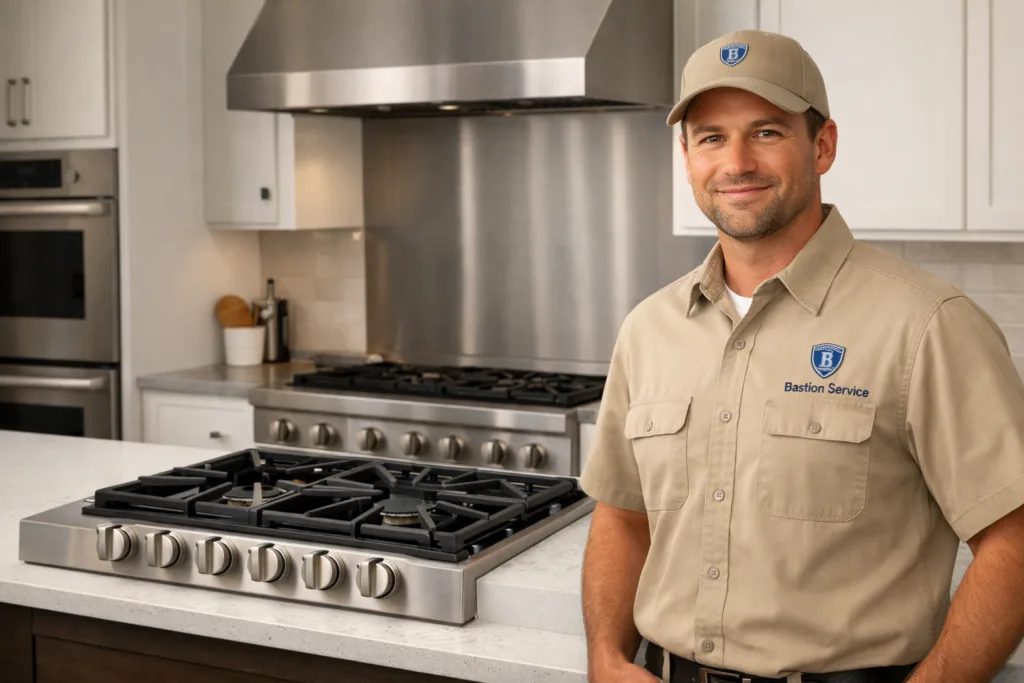
Cooktop problems are often easier to solve when the symptom is described precisely. A burner that clicks but does not light, a surface element that overheats, or controls that respond inconsistently can each point to very different failures. On a Thermador unit, that distinction matters because ignition parts, switches, wiring, burner assemblies, and control components can all produce similar day-to-day complaints.
How Thermador cooktop issues usually show up at home
Most homeowners first notice the problem during ordinary cooking rather than as a complete breakdown. One burner may become unreliable while the rest still work, or the cooktop may seem normal until heat demand increases. That pattern can help narrow the cause.
Common signs include delayed ignition, constant clicking, uneven flame, electric elements that do not match the selected setting, and controls that stop responding partway through use. In some cases, the unit works intermittently for days or weeks before the fault becomes obvious. Intermittent behavior should still be treated seriously, especially when performance is getting less predictable.
Common Thermador cooktop symptoms and what they may mean
Burner clicks but does not ignite
On gas models, repeated clicking without flame often points to an issue around the burner cap, igniter, burner base, or moisture and residue interfering with normal spark performance. If the problem affects only one burner, the fault may be limited to that assembly. If several burners behave the same way, the issue may involve shared ignition components or power supply to the ignition system.
Homeowners sometimes notice the burner lights only after several tries, lights with a weak flame, or clicks after the flame appears. Those details are useful because they help separate an ignition fault from a gas-flow or burner-distribution issue.
Weak flame or poor heating performance
A weak or uneven flame can slow cooking and make temperature control frustrating. Burner ports may be restricted, burner parts may be misaligned, or regulation may not be stable during use. Even when the burner technically lights, poor flame shape can lead to hot and cool spots under the pan.
In a busy household, this often shows up as longer boil times, inconsistent sautéing, or one side of the pan heating faster than the other. If the problem repeats after normal cleaning, a repair inspection is usually more useful than continued trial and error.
Electric element not heating correctly
On electric Thermador cooktops, an element that stays cool, heats only partway, or runs hotter than the setting indicates may be dealing with a failed element, switch problem, or control fault. Some units also cycle incorrectly, which can feel like the cooktop is turning itself down or surging unexpectedly.
If the element remains hot too long or does not respond when lowered, stop relying on that burner. Heat-control problems can become a safety concern as well as a cooking-performance issue.
Controls not responding
When knobs feel loose, touch controls fail to register, or settings change unpredictably, the problem may involve the user interface, control board, or related electrical connections. A cooktop that powers on but will not accept commands is different from one that loses power entirely, and that difference helps guide repair.
These problems can be especially disruptive because they affect everyday use even when the burners themselves are still capable of heating.
Cooktop keeps clicking
Continuous clicking is one of the more common complaints on gas cooktops. Sometimes it happens only after cleaning or a spill. Other times it appears during cooking and does not stop until power is interrupted. The cause may be moisture, contamination around the ignition area, a misaligned component, or a failing spark-related part.
If the clicking continues after the cooktop has dried and normal burner parts are seated correctly, it is a good time to have it checked rather than repeatedly resetting the unit.
Power loss, tripped breaker, or intermittent shutdown
If the cooktop trips power, shuts off during use, or works only occasionally, the issue may involve wiring, terminal connections, internal electrical components, or a developing short. These symptoms should not be ignored, particularly if they happen under normal cooking load.
Electrical faults can spread beyond the original failure point, so it is wise to stop pushing the appliance through routine use when power problems begin to repeat.
Problems that deserve faster attention
Some symptoms are more than a convenience issue. Service should be scheduled promptly when the cooktop shows signs that operation is becoming unsafe or unusually unstable.
- Burners fail to ignite consistently
- Clicking continues after ignition or after the burner is turned off
- An electric element overheats or does not regulate
- The cooktop trips a breaker or loses power during use
- Controls stop responding in the middle of cooking
- Flame is visibly uneven or much weaker than normal
- The glass surface is cracked or damaged
Cracked glass and surface damage
If your Thermador cooktop has a cracked glass surface, do not keep using it as though it is only cosmetic. Surface damage can affect heat distribution, cleaning safety, and the integrity of components beneath the top. On radiant or induction-style surfaces, cracks can also create a more serious electrical and heat-related risk.
Even small cracks tend to worsen over time, especially with repeated heating and cooling. In many Inglewood homes, this issue starts after impact from cookware or stress around a frequently used burner.
When repair makes sense
Many Thermador cooktop problems are repairable when the failure is limited to one or two components and the rest of the appliance is in solid condition. That is often the case with isolated ignition faults, a single weak burner, a defective switch, or a specific control issue.
Repair is usually worth stronger consideration when the cooktop fits the countertop opening well, matches the kitchen layout, and has otherwise been performing reliably. A symptom-based diagnosis can clarify whether the issue is contained or part of broader wear across the appliance.
When replacement may be the better path
Replacement becomes more likely when a cooktop has multiple major failures at once, significant surface damage, chronic electrical problems, or repair costs that approach the value of keeping the current unit in service. Age alone does not decide the answer, but condition does.
For homeowners in Inglewood, the most useful repair decision is based on the exact symptom pattern, the number of affected components, and whether the appliance can return to stable everyday use after the repair.
What to note before a service visit
A few details can make diagnosis faster and more accurate:
- Which burner or element is affected
- Whether the problem is constant or intermittent
- If clicking happens before ignition, after ignition, or continuously
- Whether the issue started after cleaning, a spill, or normal use
- If the cooktop shuts off, trips power, or shows control problems
- Whether heat is too low, too high, or uneven across the pan
Those observations often help separate burner-specific problems from shared electrical or control-related faults.
Practical help for homeowners in Inglewood
Household cooking appliances do not need to fail completely to justify service. If your Thermador cooktop has become unreliable, difficult to control, or inconsistent from one meal to the next, it is usually better to address the pattern early. A proper diagnosis can show whether the issue is straightforward, whether continued use may worsen it, and whether repair is the practical next step for your home.