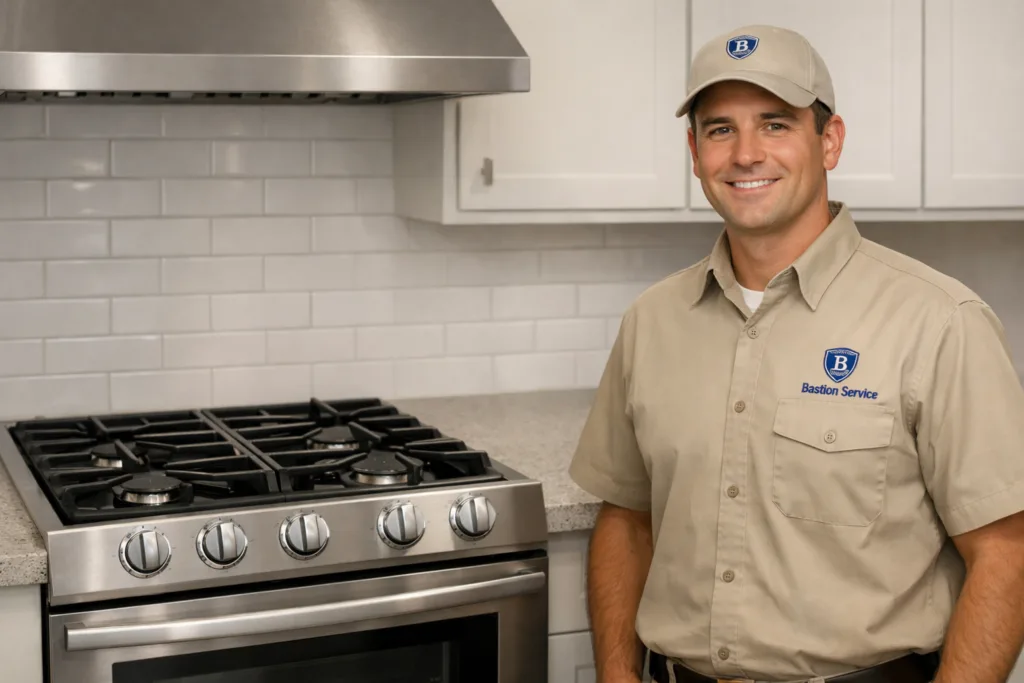
Cooktop problems often look simple at first, but the same symptom can come from very different faults. A burner that will not heat, an igniter that clicks constantly, or controls that respond inconsistently may point to a single worn part, a wiring problem, or a larger control issue. For homeowners in Inglewood, the most useful next step is understanding what the symptom pattern suggests before deciding on repair.
Start with the exact symptom pattern
LG cooktops can fail in ways that seem straightforward on the surface but are more complex underneath. A dead burner is not always a burner failure. On gas models, ignition trouble may involve the spark system, burner cap alignment, moisture, or debris blocking normal flame spread. On electric and induction models, poor heating can come from the element, sensor, relay, board, or incoming power issue.
Looking at when the problem happens also matters. If the issue appears only after the cooktop has been running for a while, heat stress, overheating protection, or a component breaking down under load may be involved. If the problem is immediate every time, the fault is often easier to isolate to a specific switch, igniter, element, or control path.
Common LG cooktop issues homeowners notice
- One burner does not heat or ignite
- Burners click repeatedly without lighting
- Heat is uneven or too weak for normal cooking
- A burner gets too hot and does not regulate properly
- Touch controls or knobs stop responding correctly
- The unit beeps, shows an error, or shuts down during use
- The glass surface is cracked or visibly damaged
What specific symptoms often mean
Burner will not ignite or keeps clicking
On gas LG cooktops, repeated clicking usually means the unit is trying to ignite but the flame is not establishing correctly. Sometimes the cause is simple, such as a wet burner area after cleaning or a burner cap that is slightly out of position. In other cases, the issue may be tied to the igniter, spark switch, wiring, or a fault in the ignition system itself.
If the clicking continues after the burner is lit, or if several burners begin acting strangely at the same time, that points more toward an electrical or switch-related problem than a basic cleaning issue. If there is a strong gas smell or a burner will not light safely, stop using the appliance until it has been checked.
Burner heats weakly or not at all
On electric LG cooktops, a weak or dead burner can indicate a failed radiant element, a bad switch, damaged wiring, or a control problem. On induction models, the cooking zone may appear to turn on but fail to transfer heat properly because of a module issue, cooling problem, or pan detection fault.
If one cooking zone works only on certain settings, that often suggests a regulation issue rather than total component failure. If the burner starts normally and then drops out, the problem may involve temperature sensing or a part that fails once it gets hot.
Heat is uneven or difficult to control
Uneven performance usually shows up as food scorching on one burner, long boil times, or settings that do not match the actual heat output. On standard electric models, that can point to switch or element regulation problems. On gas models, poor flame spread can come from clogged ports or burner misalignment. On induction cooktops, inconsistent heating may involve communication between the cookware, coil, and controls.
This kind of issue is easy to live with for a while, but it often gets worse over time. Inconsistent heat can also place extra stress on controls and related components if the unit is cycling abnormally.
Touch controls or knobs do not respond correctly
If settings fail to register, jump unexpectedly, or respond only some of the time, the problem may be with the user interface, switch assembly, contamination around the controls, or an electronic control board. Intermittent response is especially important to address early, because it can shift into complete loss of function without much warning.
A burner that turns on unpredictably, fails to turn down, or does not shut off correctly should not be ignored. Control-related faults affect both usability and safety.
Error codes, beeping, or shutoffs during cooking
When an LG cooktop displays an error or shuts itself down, it is usually detecting a fault condition and limiting operation to protect the appliance. Depending on the model, that may involve temperature sensing, cooling airflow, communication between internal components, or unstable power delivery.
An error code is helpful, but it does not always identify the failed part by itself. Different faults can trigger similar codes, especially on electronic cooking appliances.
Cracked glass and surface damage
A cracked glass cooktop is more than a cosmetic problem. Surface damage can affect heat transfer, allow moisture into sensitive components, and make continued use unsafe. Even if the burners still appear to work, a damaged top should be evaluated before the cooktop is used again.
Minor-looking impact damage can also hide larger stress cracks that spread with repeated heating and cooling. If the surface is chipped, cracked, or separating, repair decisions usually depend on the extent of the damage, the model, and whether additional internal parts were affected when the impact occurred.
When intermittent problems are a warning sign
One of the most frustrating service patterns is a cooktop that works normally some days and fails on others. A burner may come back after a reset, the controls may respond again after cooling down, or an ignition problem may disappear temporarily after cleaning. That does not necessarily mean the issue is resolved.
Intermittent faults often show up before full failure. Loose connections, heat-damaged wiring, failing relays, and weakening electronic components commonly start with occasional disruption. If the same symptom keeps returning, it is usually a sign that the underlying problem is progressing.
When to stop using the cooktop and schedule service
It is smart to stop regular use and arrange service if you notice any of the following:
- A burner overheats or will not regulate
- A burner does not shut off normally
- Ignition clicking continues abnormally
- The cooktop trips power or shuts down repeatedly
- Controls behave unpredictably
- There is visible cracking in the glass
- The same error or failure keeps returning
Continuing to cook through these symptoms can turn a smaller repair into a more expensive one, especially if repeated heat exposure starts damaging wiring, boards, or surrounding components.
Repair or replacement: what usually makes sense
Repair is often worthwhile when the problem is limited to one burner, one igniter, a switch, a control interface, or another isolated serviceable part. Many homeowners choose repair when the cooktop otherwise fits the kitchen well and the rest of the unit is in solid condition.
Replacement becomes more likely when there are multiple major faults at once, widespread electronic failure, severe surface damage, or part cost approaches the value of the appliance. Age matters, but overall condition matters more. A newer unit with a focused fault is often a good repair candidate, while an older cooktop with several active problems may be harder to justify.
What a productive service visit should accomplish
A good service visit should do more than identify a symptom. It should determine which part or system actually failed, check whether nearby components were affected, and make it clear whether repair is the sensible path. That is especially important with LG cooktop systems, where ignition, heating, and control issues can overlap.
For households in Inglewood dealing with an unreliable cooktop, the goal is to restore normal cooking safely and avoid repeat breakdowns caused by an incomplete diagnosis. When the underlying fault is identified correctly, the repair decision becomes much easier and more cost-effective.