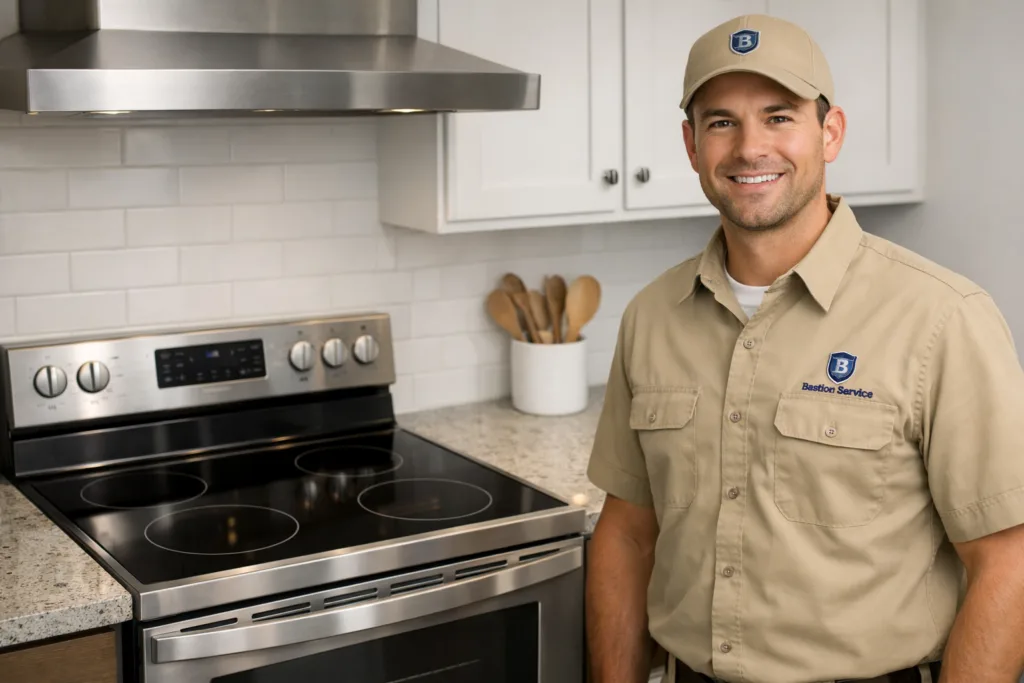
Cooktop problems usually show up in ways that seem simple at first, but the underlying cause is not always obvious. A burner that will not light, an element that stays cold, or nonstop clicking can each come from different parts of the system. In many Inglewood homes, the most useful way to approach a Whirlpool cooktop issue is to match the repair plan to the exact symptom instead of assuming the same fix applies to every burner problem.
Common Whirlpool cooktop symptoms and what they can mean
Whirlpool cooktops can develop ignition, heating, control, or surface damage issues over time. Noticing the pattern helps narrow down what may be failing.
Burner will not ignite on a gas cooktop
If a gas burner clicks but does not light, the cause may be as simple as a misaligned burner cap or residue blocking the burner ports. In other cases, the igniter, spark switch, or ignition module may be at fault. When one burner fails while the others work normally, the issue is often isolated to that specific burner assembly or its related ignition components.
If several burners struggle at once, the problem may involve shared ignition parts, moisture after cleaning, or another condition affecting the cooktop more broadly.
Burner clicks repeatedly
Constant clicking is one of the most common complaints on gas cooktops. Sometimes it starts after a spill, deep cleaning, or moisture getting into the ignition area. It can also happen when a burner cap is not seated correctly or when an ignition switch begins to fail.
If the clicking continues after the burner is turned off, it should not be ignored. That usually means the ignition system is not behaving normally and needs attention before regular use continues.
Electric burner does not heat
On electric Whirlpool cooktops, a cold burner may point to a failed radiant element, a bad infinite switch, damaged wiring, or a problem at the receptacle connection on coil-style units. If the burner sometimes works and sometimes does not, that intermittent behavior can be a clue that a switch or connection is deteriorating rather than fully failed.
Uneven heat or weak cooking performance
When a burner heats unevenly, cooking becomes harder to control. Pots may develop hot spots, simmering becomes unreliable, and food may take longer than expected. On gas units, uneven flame can come from blocked ports or burner alignment issues. On electric units, it may indicate a weakening element or a control problem that affects how the burner cycles.
Burner gets too hot or does not respond to setting changes
If an electric burner seems stuck on high or does not lower temperature when the knob is adjusted, the surface switch is often a strong suspect. This is more than a convenience issue. Overheating can damage cookware, stress the cooktop surface, and create a safety concern. A burner showing this symptom is usually best left off until it can be inspected.
Cracked glass or visible physical damage
For smooth-top Whirlpool models, cracked glass should be taken seriously. Even a crack that looks minor can affect safe operation, especially around heat and electrical components. Loose knobs, damaged control shafts, discoloration near switches, or scorch marks also suggest wear that should be evaluated before the problem spreads.
Why the same symptom can have different causes
Cooktops pack several systems into a compact appliance. Gas models rely on burner parts, ignition components, switches, and fuel flow. Electric models depend on elements, switches, wiring, and stable power delivery. Because of that, one symptom does not always point to one failed part.
For example, a burner that will not heat might be caused by the burner itself, but it could also be tied to a switch, connection, or control issue. A gas burner that will not ignite may not need a full burner replacement at all if the real problem is moisture, debris, or a misfiring ignition component. That is why a careful diagnosis matters before parts are replaced.
Signs the problem is getting worse
Some cooktop issues stay limited for a while, but others tend to progress. Watch for signs such as:
- A burner that works only occasionally
- Clicking that happens more often or lasts longer than before
- Heating that becomes slower or less consistent
- Knobs or controls that feel loose, stiff, or unresponsive
- Burners that trip a breaker or cause flickering operation
- Visible scorching, sparking, or melted areas near controls
These patterns often mean a component is wearing out rather than experiencing a one-time glitch. Addressing the issue earlier can help prevent added damage to nearby parts.
When to stop using the cooktop until it is checked
Some problems allow limited use of unaffected burners, but others call for stopping right away. It is generally best to stop using the cooktop or the affected burner if:
- An electric burner overheats or will not turn down
- A gas burner clicks continuously after use
- You see sparks, arcing, smoke, or scorch marks
- The glass top is cracked
- The cooktop trips the breaker repeatedly
- Controls feel damaged or do not respond normally
If there is a strong or persistent gas smell, do not continue troubleshooting the appliance. Leave the area if needed and contact the gas utility or emergency services first.
Repair or replacement: what usually makes sense
Many Whirlpool cooktop issues are repairable, especially when the problem is limited to one burner, one switch, one igniter, or another isolated component. In those cases, repair is often the more practical choice if the cooktop is otherwise in solid condition.
Replacement may be more worth considering when there are multiple failing components, major surface damage, recurring electrical problems, or overall wear that makes future repairs less sensible. Cracked glass, repeated control failures, and heavy age-related deterioration can shift the decision away from repair.
For homeowners in Inglewood, the most balanced decision usually comes down to three things: how isolated the fault is, the overall condition of the cooktop, and the cost of restoring reliable daily use.
What helps speed up cooktop diagnosis
Before service, it helps to note exactly what the cooktop is doing. Small details can make diagnosis faster and more accurate, including:
- Whether the model is gas or electric
- Which burner is affected
- Whether the issue is constant or intermittent
- Whether the problem started after a spill or cleaning
- Whether clicking, sparking, or overheating happens every time
- Whether the cooktop has visible cracks or damaged controls
That information can help separate a simple burner-related issue from a switch, wiring, or ignition system problem.
Practical help for everyday cooking problems
Cooktop failures are disruptive because they affect routine meals right away. Even one bad burner changes how food is prepared, puts more strain on the remaining burners, and can make normal cooking feel unpredictable. A service-focused approach looks beyond the surface symptom to determine whether the problem is isolated, whether continued use risks more damage, and whether the repair path is likely to restore stable operation.
For Whirlpool cooktops in Inglewood homes, symptom-based service is often the fastest way to move from frustration to a workable next step.