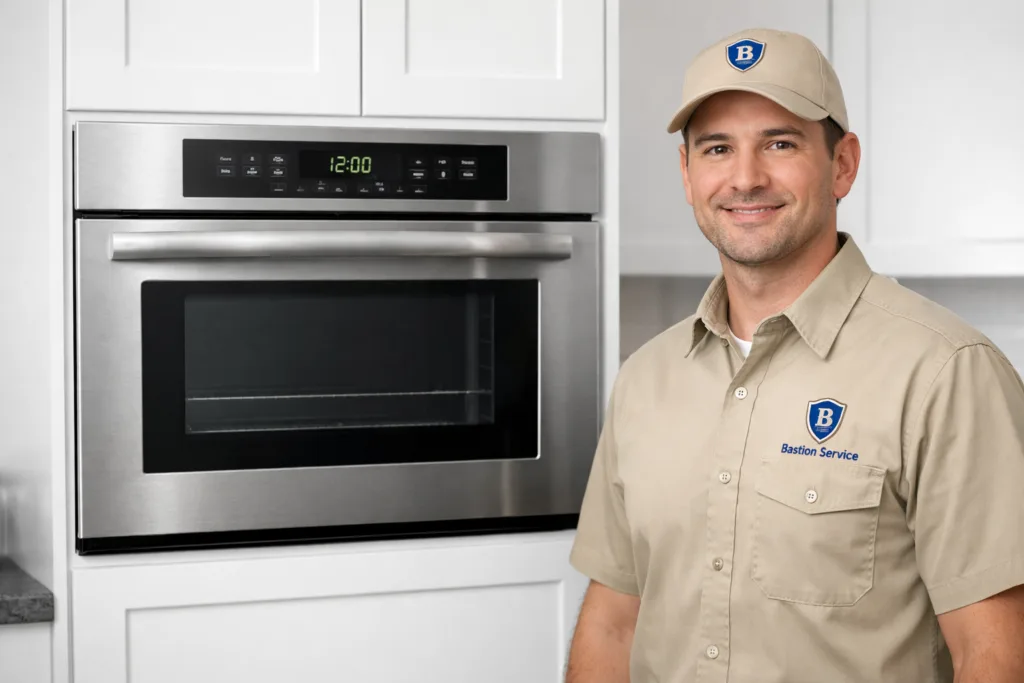
Wall oven failures tend to show up in ways that disrupt daily routines fast: dinner runs late because preheat drags on, baked food comes out uneven, or the oven shuts off in the middle of a cycle. With Summit models, the same symptom can come from very different causes, so the most useful next step is to look at how the oven behaves from start to finish rather than guessing based on one sign.
Start with the exact symptom, not the part
A Summit wall oven may still light up, accept settings, and look normal on the display while failing to heat correctly inside the cavity. In other homes, the problem is more obvious, such as a dead control panel, a door that will not latch, or a breaker that trips when bake or broil is selected. Those differences matter because they help narrow down whether the issue is related to power supply, heating components, temperature sensing, controls, or door operation.
Symptom-based testing is especially important with built-in ovens because access is tighter, replacement parts can be model-specific, and changing the wrong part can waste time without fixing the real fault.
Common Summit wall oven problems and what they may mean
Oven will not heat at all
If the oven powers on but stays cold, the failure may involve the bake element, broil element, sensor, relay, thermal protection, or electronic control. If nothing responds at all, the cause may be upstream, such as power loss, a tripped breaker, wiring trouble, or a failed interface. Because several faults can create a no-heat complaint, this is one of the most important problems to diagnose before ordering parts.
Slow preheat
A wall oven that eventually reaches temperature but takes much longer than usual often has one heating circuit that is weak or inactive. That can happen when an element is failing, when the control board is not sending power consistently, or when the sensor is misreading the cavity temperature. Homeowners often notice this first with weeknight meals, frozen foods, or recipes that suddenly need extra time for no clear reason.
Uneven baking
If the top browns too fast while the center stays undercooked, or one rack cooks differently than expected, the issue may be linked to uneven heat output, inaccurate temperature feedback, or poor heat retention caused by a door seal or hinge problem. Inconsistent baking does not always mean the oven has fully failed, but it usually means performance is drifting enough to justify service before the problem gets worse.
Temperature swings
Some cycling is normal in electric ovens, but wide swings are not. If the cavity feels much hotter or cooler than the selected setting, possible causes include a drifting sensor, control fault, calibration problem, or intermittent element operation. This often shows up as recipes that used to be reliable suddenly becoming hard to time.
Error codes, beeping, or control issues
Repeated fault codes, random beeping, unresponsive buttons, or settings that do not register properly can point to keypad, communication, sensor, or control board issues. These symptoms can be straightforward or misleading depending on the model, so hands-on diagnosis is usually more reliable than trying to match a code to one replacement part.
Door not closing, locking, or sealing correctly
A door problem can affect more than convenience. If the door does not close evenly, heat may escape and temperature stability can suffer. If the latch system fails, some models may not allow normal operation at all. Hinges, gasket wear, alignment issues, and lock mechanisms are all worth checking when the oven seems hot but cooks poorly.
Signs the problem may be electrical
Some Summit wall oven complaints are really electrical supply problems in disguise. If the display works but heating does not, if the oven cuts out under load, or if the breaker trips when the oven starts drawing current, it may indicate a wiring, terminal, relay, or supply issue rather than a simple element failure.
- Breaker trips when bake or broil starts
- Burning odor that is stronger than normal cooking residue
- Intermittent loss of power during use
- Display works, but heating functions do not
- Sparking, buzzing, or signs of overheating
In those situations, it is best to stop using the oven until the cause is identified.
What homeowners can notice before service
A few observations can make diagnosis faster. Note whether the problem happens in bake, broil, or both. Pay attention to whether the oven reaches temperature and then drifts, or never gets close in the first place. If an error code appears, note when it shows up: during preheat, after the door is opened, after self-clean, or at random.
It also helps to notice whether the issue began suddenly or gradually. A sudden failure can suggest a component that stopped working outright, while a gradual decline often points to a sensor, element, or control performance problem that has been worsening over time.
When repair usually makes sense
Repair is often a practical option when the problem is isolated to a heating element, temperature sensor, door component, switch, latch, or a clearly identified control-related fault and the oven is otherwise in good condition. Built-in wall ovens also involve cabinet fit, electrical configuration, and installation considerations, so a targeted repair can be the simpler path when the rest of the appliance remains solid.
Replacement becomes more likely when there are multiple failures at once, recurring electronic issues, severe interior or door damage, or costs that no longer match the oven’s remaining useful life. For many households in El Segundo, the right choice depends less on one dramatic symptom and more on whether the repair addresses the core problem without leading to repeat service.
Situations where you should stop using the oven
Some problems can wait a short time for service. Others should not.
- Repeated breaker trips
- Visible sparking
- Strong electrical or burning smell
- Oven overheating far beyond the set temperature
- Control panel behaving erratically during operation
- Door latch or seal issues that affect safe operation
If any of these are happening, continued use can increase the chance of further damage.
Why built-in wall ovens need careful diagnosis
Wall ovens are not used the same way as freestanding ranges. They are installed into cabinetry, rely on proper airflow and fit, and can be harder to access for inspection and testing. That makes accuracy more important from the start. A repair decision should be based on the actual failed system, the condition of the oven as a whole, and whether the symptom points to a durable fix.
For homeowners in El Segundo, that usually means wanting a straightforward answer: what failed, whether the oven is safe to use, and whether the repair is likely to restore normal baking and roasting performance without unnecessary extra work.
What a useful service visit should clarify
By the end of a service evaluation, you should have a clearer picture of whether the problem involves heating output, temperature regulation, the control system, door function, or incoming power. You should also know whether the issue appears isolated or whether it suggests broader wear inside the appliance.
That kind of practical repair guidance is what helps homeowners make a good decision on a Summit wall oven in El Segundo, especially when the problem affects daily cooking and the difference between repair and replacement is not obvious at first glance.