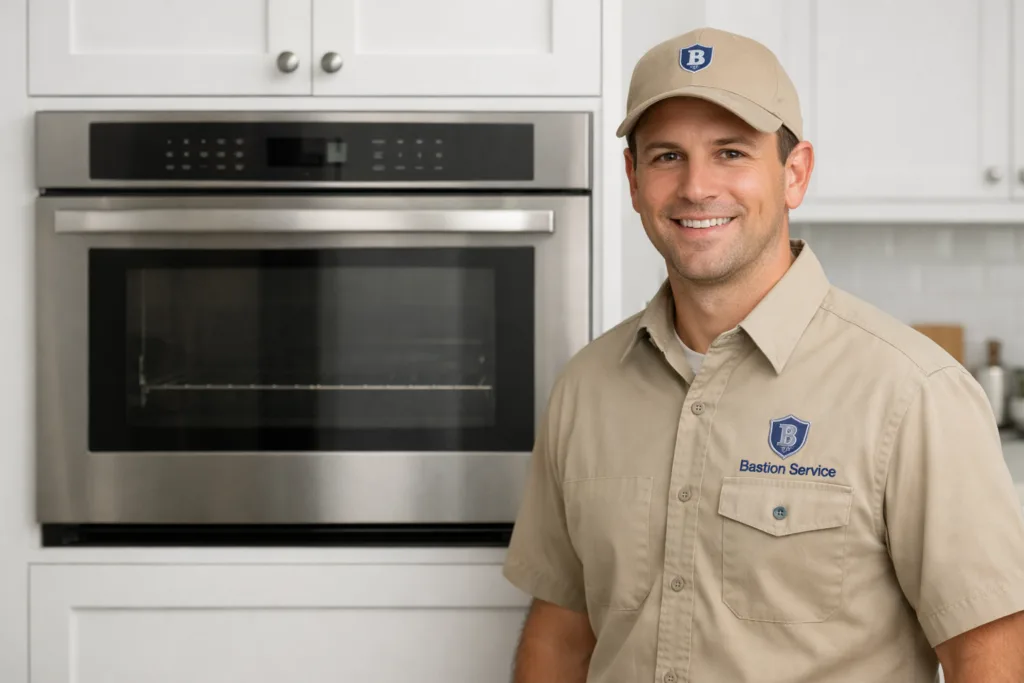
Common Whirlpool wall oven problems in El Segundo homes

Wall ovens usually give warning signs before they fail completely. A Whirlpool unit may still turn on, light up, or run a cycle while struggling to heat correctly, hold temperature, or operate the door and controls the way it should. Paying attention to the pattern of symptoms often makes it easier to understand whether the issue is likely tied to heating components, sensing, power delivery, or the control system.
Not heating or heating too weakly
If the oven powers on but food stays undercooked, the problem may involve the bake element, broil element, temperature sensor, relay function, wiring, or electronic control. In some cases, the oven appears normal at the display while the cavity never actually reaches the set temperature. That can show up as pale baked goods, extended cook times, or a broiler that seems much weaker than usual.
Slow preheat
A Whirlpool wall oven that takes far too long to preheat often has a heating issue that has not fully failed yet. One element may be weak rather than completely open, or the oven may be misreading temperature and cycling incorrectly. Slow preheat is easy to ignore at first, but it often develops into more obvious baking and roasting problems.
Uneven baking or temperature swings
When one side browns faster, the top cooks too quickly, or dishes come out inconsistent from one use to the next, the oven may not be regulating heat accurately. Possible causes include sensor drift, cycling problems, convection-related faults on equipped models, or control issues that affect how long elements stay on. This kind of symptom matters even when the oven still seems usable, because unreliable temperature makes everyday cooking frustrating.
Door not closing, locking, or unlocking properly
Door problems can affect more than convenience. A poor seal allows heat to escape, which can make preheat slower and temperature less stable. If the door will not close fully, stays locked, or gets stuck after self-clean, the cause may involve hinges, the latch assembly, switches, alignment, or control logic.
Error codes, flashing display, or intermittent shutdowns
Some Whirlpool wall ovens show clear electronic symptoms such as random beeping, resets, nonresponsive keypads, or fault codes. Others cut out during use or behave inconsistently from one cycle to the next. These issues can point to sensor circuits, wiring faults, thermal protection components, or the main control board.
What different symptom patterns often mean
The same complaint can come from more than one failed part, which is why symptom details matter. A useful service visit starts with how the oven behaves in real use, not with a guess about which component to replace.
- Oven will not heat at all: often tied to an element failure, control fault, power issue, or wiring problem.
- Oven heats but never reaches set temperature: may involve a weak element, sensor issue, or incorrect control cycling.
- Food burns on top but stays raw inside: can suggest uneven element operation or inaccurate temperature regulation.
- Preheat seems normal but cooking results are off: may point to calibration, sensing, or convection performance problems.
- Self-clean causes locking or display problems: often linked to door latch components, switches, or heat-stressed electronics.
On built-in appliances, this distinction matters because access is tighter, parts can be model-specific, and replacing the wrong component adds cost without solving the original problem.
When continued use can make the repair worse
Many oven problems start as inconvenience and become more serious with continued operation. A weak element can overheat related wiring. A bad door seal can force longer heat cycles. Repeated overheating may stress controls and nearby components. If the oven is showing clear signs that it is no longer operating normally, it is usually better to stop pushing it through more cooking cycles.
Stop using the oven if you notice these signs
- Breaker trips during preheat or baking
- Burning electrical smell
- Visible scorching around wiring or the control area
- Smoke that is not related to food residue
- Door will not close securely
- Display malfunctions paired with heating problems
If any of these conditions show up, the safer choice is to leave the oven off until it has been checked.
Repair or replacement for a Whirlpool wall oven
Many Whirlpool wall oven issues are worth repairing, especially when the failure is limited to a heating element, sensor, latch component, or a single control-related fault. Replacement becomes more likely when the unit has multiple major problems, repeat electronic failures, severe physical damage, or older parts that are difficult to source.
For homeowners in El Segundo, the decision usually comes down to a few practical points:
- What part actually failed
- Whether the repair is isolated or part of a larger pattern
- The overall condition of the oven cavity, door, and controls
- How reliably the appliance has been performing before this problem
A newer built-in oven with one identifiable fault often makes sense to repair. An older unit with repeated temperature problems, control trouble, and door issues at the same time may be harder to justify. The value of diagnosis is that it separates a manageable repair from a more expensive chain of problems.
What a focused wall oven service visit should check
Effective Whirlpool wall oven repair is not only about confirming that the appliance has a problem. It should identify where the failure starts and whether it has affected anything else. Depending on the symptom, that may include verifying heat output, checking temperature response, inspecting door operation, reviewing error history, testing sensor readings, and confirming whether the control is sending the proper commands to the heating system.
This matters on built-in units because wall ovens are expected to be consistent. Small performance changes that might seem minor at first can have a big effect on baking, roasting, broiling, and everyday meal prep.
Signs the issue is likely more than routine wear
Some symptoms suggest a broader electrical or control problem rather than a single worn component. Examples include multiple unrelated error codes, a display that resets during use, erratic temperature behavior after a part was already replaced, or a door lock issue that appears alongside heating failures. When several systems act up at once, the repair path should be based on testing the full symptom chain rather than changing parts one at a time.
How homeowners can describe the problem more clearly
Before service, it helps to note exactly what the oven is doing. A few details can make the issue easier to pinpoint:
- Whether the oven fails during preheat, during baking, or during broil
- If the problem happens every time or only on certain settings
- Whether the display shows a fault code
- If the door is hard to close, lock, or unlock
- Whether the oven is running hotter or colder than the set temperature
- If the issue started suddenly or gradually
That kind of symptom-based description is often more useful than simply saying the oven is not working, because it points toward the system most likely involved.
Whirlpool wall oven repair for everyday cooking reliability
When a wall oven becomes unpredictable, even simple meals take more time and guesswork. Slow preheat, uneven baking, control glitches, and door problems all reduce confidence in the appliance. For households in El Segundo, the best next step is usually service that matches the repair plan to the actual symptom pattern, the condition of the oven, and whether the fix is likely to restore dependable performance.