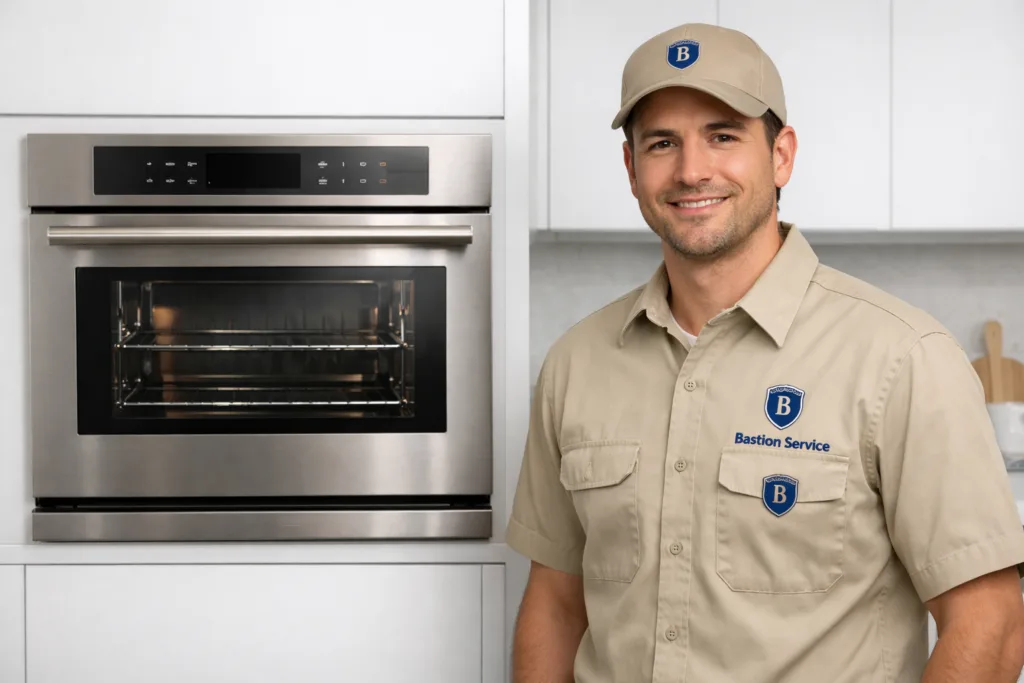
Wall oven failures rarely start with a completely dead unit. More often, the first sign is a change in performance: longer preheat times, baking that suddenly turns inconsistent, or a control panel that works one day and acts erratically the next. For homeowners in El Segundo, the most useful approach is to match the symptom to the likely failure area before deciding on a repair.
How symptom patterns help identify the problem
Two ovens can appear to have the same issue while needing very different repairs. A Monogram wall oven that lights up but never gets hot may be dealing with an element, relay, or sensor problem. A unit that reaches temperature eventually but cooks unevenly may be struggling with calibration, airflow, or heat retention. Looking at when the problem happens, how often it happens, and whether it affects every cooking mode helps narrow the cause.
This matters because wall ovens combine high heat, electronics, and door-seal components in a compact built-in appliance. When one part begins to fail, the symptoms can overlap. A weak bake element, for example, can look similar to a sensor issue if the only thing you notice is undercooked food.
Common Monogram wall oven problems in El Segundo homes
Oven will not heat at all
If the display turns on but the cavity never gets warm, several components may be involved. Possible causes include a failed bake element, a broil element that is not assisting preheat, a temperature sensor sending the wrong reading, or a control board that is not delivering power correctly. In some cases, the issue is tied to the incoming electrical supply rather than the oven itself.
Homeowners often notice this when food stays pale, preheat seems endless, or the oven says it is ready even though the interior is still cool. If both upper and lower cooking functions are affected, the problem may point more strongly to control or supply issues.
Slow preheating
Slow preheat is one of the most common complaints with wall ovens because it can develop gradually. You may not notice it right away until weeknight meals start taking longer or recipes that used to work become unreliable. A partially failing element, inaccurate sensor, convection problem, or weakened control response can all contribute.
If preheat takes much longer than it used to, but the oven eventually gets hot, that does not mean the appliance is working normally. Extended heating cycles can place extra strain on components and lead to more noticeable temperature swings during cooking.
Uneven baking or roasting
When one rack browns faster than another or the back of a dish cooks differently from the front, the issue may involve heat distribution rather than total heat loss. Causes can include sensor drift, convection fan trouble, a damaged door gasket, or one heating circuit not cycling as it should.
These problems often show up first with baked goods. Cookies may darken on one side, casseroles may stay cool in the center, and roasts may need much more time than expected. If results have changed without any change in cookware or recipe, the oven itself is worth checking.
Temperature running too hot or too cool
An oven that overshoots the set temperature can dry out food, burn tops before centers finish, or make routine recipes unpredictable. An oven that runs cool can leave meals underdone even after the timer ends. In many cases, this points to a sensor or calibration issue, though controls and relays can also be involved.
Because temperature errors are not always obvious from the display, homeowners usually notice them through repeated cooking results rather than a single event. If the same recipes are consistently failing in the same way, the oven may not be holding the temperature you selected.
Error codes, resets, or unresponsive controls
Electronic symptoms can appear as flashing displays, controls that stop responding, intermittent beeping, or fault codes that clear and return. These issues may be related to the main control, touch interface, sensor communication, or a heat-sensitive electrical fault that appears only after the oven has been on for a while.
Intermittent control problems are especially frustrating because the oven may seem normal during one use and fail during the next. Tracking when the issue occurs, such as during preheat, after reaching temperature, or during shutdown, can help identify where the fault is developing.
Door not sealing or closing correctly
A Monogram wall oven depends on a proper door seal to hold heat where it belongs. If the door feels loose, sits unevenly, will not close fully, or leaks heat, cooking performance can suffer. Hinges, springs, latches, and gaskets all affect how the door aligns and seals.
Even when the heating system is working, a poor seal can cause long preheat times, uneven baking, and temperature inconsistency. It may also create problems during self-clean cycles, when precise door function becomes even more important.
Signs you should stop using the oven
Some symptoms suggest the oven should not be used again until it is inspected. That includes tripped breakers, strong burning smells that persist, visible sparking, overheating, a door that will not latch correctly, or an oven that keeps heating after you try to turn it off. Repeated control errors also deserve prompt attention if they affect safe operation.
Even without an obvious safety concern, it is smart to schedule service if the oven’s performance has clearly changed. Continued use of an appliance with weak heating or unstable controls can turn a limited repair into a broader one.
Repair or replace?
Many wall oven problems are worth repairing when the issue is isolated and the appliance is otherwise in good shape. Element failures, sensor problems, latch issues, some control-related faults, and certain door-seal problems are often repairable without replacing the entire oven.
Replacement becomes a more serious consideration when the oven has multiple active failures, major electronic damage, or a pattern of repeat problems that make future reliability questionable. Age alone does not decide it. The better question is whether the expected repair restores steady daily use at a reasonable cost compared with starting over.
What to note before service
Before scheduling a visit, it helps to write down exactly what the oven is doing. Useful details include:
- Whether the issue affects bake, broil, convection, or every mode
- Whether the oven eventually reaches temperature or stays cool
- Any error code or display message
- Whether the problem began suddenly or worsened over time
- Whether the door closes and seals normally
- Any recent power interruption or unusual shutdown
These notes can make it easier to separate a heating fault from a control issue or a door-related performance problem.
Why built-in wall ovens need careful diagnosis
Unlike a freestanding range, a wall oven is installed into cabinetry and often used as a primary daily cooking appliance. That means even a moderate performance problem can disrupt the household quickly. It also means repairs should be based on the exact symptom pattern rather than assumptions, since access, electronics, and fit all matter more with built-in units.
When a Monogram wall oven in El Segundo starts showing inconsistent heat, slow preheat, error messages, or door problems, symptom-based troubleshooting gives homeowners a more realistic picture of whether the repair is straightforward or whether the unit is nearing a larger decision point.
Support for Monogram wall oven issues in El Segundo
Bastion Service helps homeowners in El Segundo evaluate Monogram wall oven problems based on the way the appliance is actually failing. Whether the issue is no heat, unstable temperature, uneven cooking, or control trouble, the goal is to identify the cause, explain the repair path, and help you decide what makes sense for your kitchen.