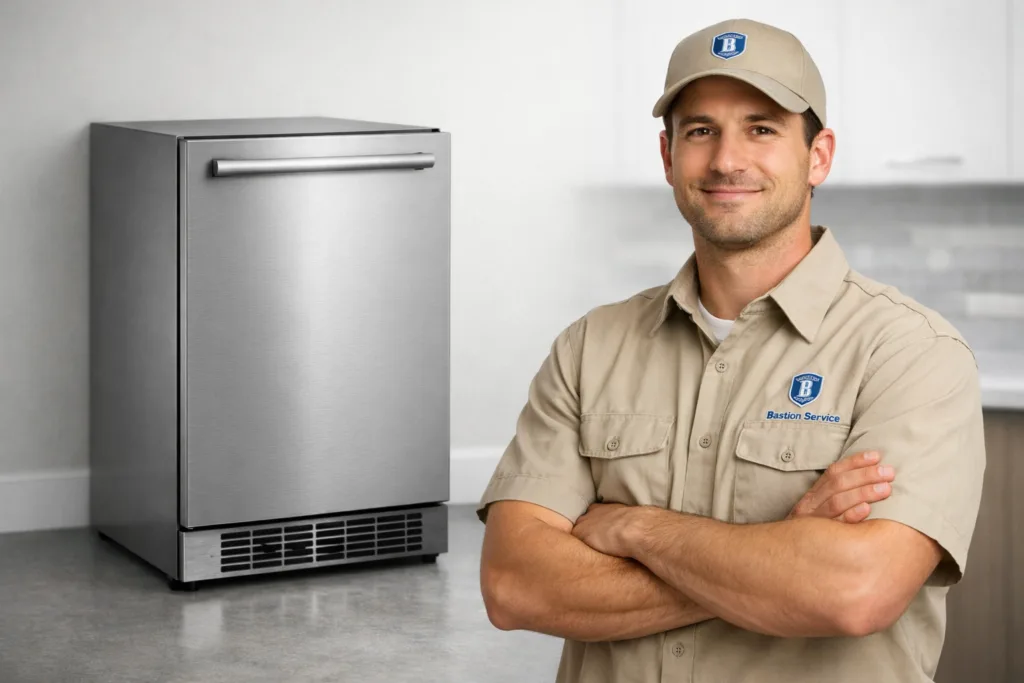
Common Summit ice maker problems in El Segundo homes

Ice makers usually fail in recognizable ways, and the symptom pattern often points toward the system that needs attention. With Summit units, the same complaint can sometimes come from a water supply issue, a control failure, a temperature problem, or ice buildup that interferes with normal cycling. Looking closely at what the machine is doing helps narrow the repair path.
No ice production
If the ice maker is powered on but not producing ice, the problem may involve the water feed, inlet valve, shutoff mechanism, sensor, thermostat, or control circuit. In some cases, the unit is technically running but never reaches the conditions needed to start a proper freeze and harvest cycle. If it is completely unresponsive, power supply problems or failed electrical components may be involved.
Slow ice production
When ice output drops off gradually, temperature instability is often part of the issue. Restricted airflow, a weak cooling pattern, mineral buildup affecting water fill, or a component that is not cycling at the right time can all slow production. Homeowners may first notice this when the bin never seems to refill the way it used to.
Small, hollow, or clumped ice
Odd ice shape usually points to fill problems or inconsistent freezing. Low water flow can lead to undersized or hollow cubes, while partial melting and refreezing can cause clumping in the bin. If the machine is producing ice but the quality keeps changing, the unit may be struggling with water delivery, temperature regulation, or harvest timing.
Leaks or water pooling
Water around the appliance should be addressed quickly. A loose connection, cracked line, drain issue, overflowing fill cycle, or internal ice obstruction can all cause leaking. Even a slow leak can affect surrounding flooring or cabinetry if it continues unnoticed.
Ice buildup or freezing in the wrong places
Frost where it does not belong can block normal operation. Ice can accumulate around internal components, interfere with movement during harvest, or prevent water from flowing where it should. This type of problem may come from sensor errors, drainage issues, airflow restrictions, or a fill problem that causes water to spill and freeze.
Unusual noise
Buzzing, clicking, humming, or grinding can be an early sign that the unit is struggling. A noisy inlet valve, obstructed fan, pump issue, or ice jamming a moving part can all change the sound of the machine. Noise does not always mean a major failure, but it usually means the ice maker is no longer cycling normally.
What these symptoms often mean
A useful way to think about ice maker problems is by grouping them into a few core systems. This helps explain why one visible symptom does not always identify one specific failed part.
- Water-related issues: no ice, tiny cubes, hollow cubes, long cycle times, overflow, or leaks.
- Temperature or cooling issues: slow production, soft ice, clumping, failure to harvest, or repeated freeze-ups.
- Drainage issues: water pooling, interior ice buildup, or recurring frost around components.
- Electrical and control issues: intermittent operation, no response, erratic cycling, or repeated clicking without completion.
Because several systems can create similar results, replacing parts based only on a guess often leads to repeat problems. A clear diagnosis matters most when the appliance is still running but not performing correctly.
Why symptom-based diagnosis matters
A Summit ice maker that is “not making ice” may have a simple water supply restriction, or it may have a sensor, control, or cooling fault. A leaking unit could have a loose fitting, but it could also be overfilling because another part is no longer regulating the cycle properly. That is why symptom history is so important.
Service is usually more productive when the technician can compare what the unit is supposed to do with what it is actually doing during fill, freezing, harvest, and drain operation. That process helps separate isolated part failures from larger performance problems and gives homeowners a better sense of whether repair is likely to last.
When to stop using the ice maker
Some problems can wait a short time for service, but others should not be ignored. Continued use makes less sense when the machine is leaking, freezing over repeatedly, or obviously struggling through each cycle.
You should avoid continued operation if:
- Water is collecting on the floor or inside nearby cabinetry.
- The unit hums or clicks but never completes a cycle.
- Ice keeps clumping or melting and refreezing.
- The machine ices over again soon after being cleared.
- The appliance starts operating intermittently or loses power unexpectedly.
In these situations, letting the unit keep trying to run can add stress to valves, motors, controls, or cooling components.
Repair or replacement: what usually matters most
Repair is often the better choice when the problem is limited to a valve, sensor, drain issue, wiring fault, or other targeted component failure. If the appliance is otherwise in good condition and this is the first major issue, repair is often reasonable.
Replacement becomes more likely when the unit has repeated cooling-related failures, multiple worn systems, heavy corrosion, or repair costs that approach the value of the appliance. For many homeowners in El Segundo, the deciding factors are not just age, but whether the current problem appears isolated or part of a longer pattern.
What to note before scheduling service
A few observations can make troubleshooting more efficient. Try to note whether the unit stopped suddenly or declined over time, whether any ice is still being made, whether cube size changed, and whether the machine is making new sounds. If leaking is involved, it also helps to notice whether the water appears during fill, during harvest, or after the unit has been sitting.
It is usually best not to force extra cycles, keep resetting the machine, or continue using it while it is leaking or icing over. Those attempts can change the symptom pattern and make the root issue harder to identify.
Practical help for Summit ice maker issues
When a Summit ice maker in El Segundo starts producing less ice, leaking, freezing up, or making poor-quality cubes, the right next step is to match the repair plan to the actual failure rather than the surface symptom alone. That approach helps homeowners understand whether the issue is a straightforward fix or a sign of broader wear inside the unit.