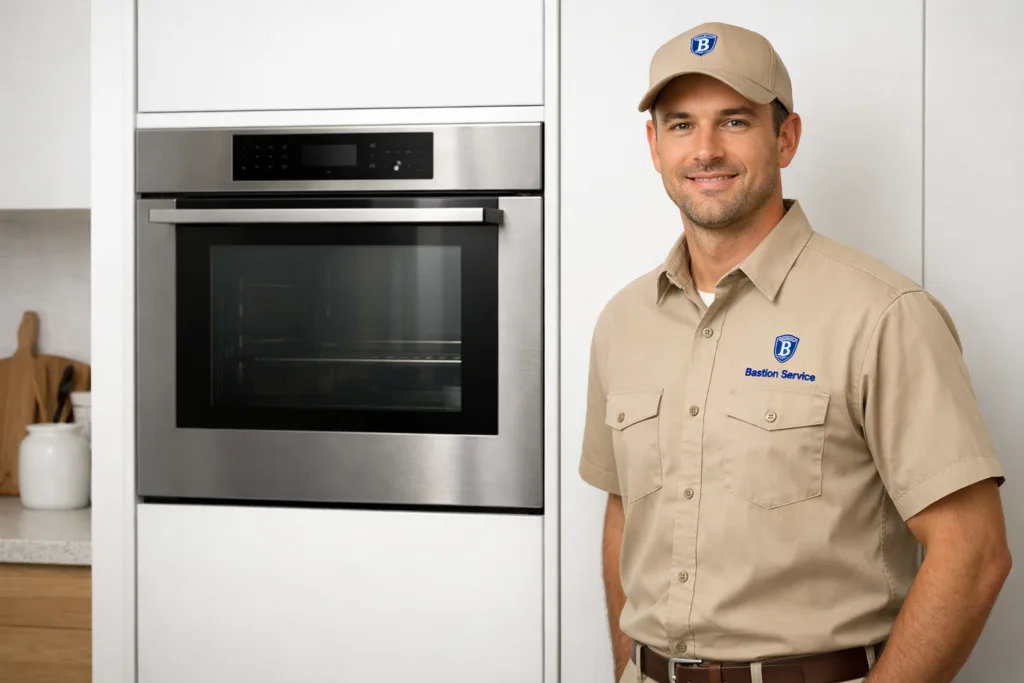
Small changes in oven performance usually show up in everyday cooking first. Cookies brown unevenly, casseroles need extra time, or the oven seems to be running hot one day and cool the next. With an Asko oven, those patterns often point to a specific heating, sensing, door, or control issue rather than a general decline in the appliance.
What symptom patterns usually mean
The most useful way to approach oven trouble is to match the symptom to the system that is most likely failing. Two ovens can both seem “off,” but the repair path may be completely different depending on whether the problem happens during preheat, at cooking temperature, or only on certain modes.
Not heating at all
If the oven powers on but stays cold, the fault may involve a bake element, broil element, igniter, thermal safety component, wiring, or the electronic control. On some models, lights and the display still work normally even when the oven cannot generate heat.
If the oven is completely unresponsive, the issue may be tied to incoming power, a failed control interface, a fuse, or an internal electrical fault that prevents the cycle from starting.
Slow preheat
An oven that eventually reaches temperature but takes much longer than usual often has a weak heating component or a problem with how the control is cycling heat. This can be easy to overlook because the oven still “works,” but extended preheat is often an early sign that a part is no longer performing correctly.
Uneven baking
When one rack cooks faster than another, the rear runs hotter than the front, or baked goods repeatedly come out inconsistent, heat distribution may be off. Possible causes include a weakening element, sensor drift, poor door sealing, or a convection-related issue on models with fan-assisted cooking.
Temperature swings
Some normal cycling is expected, but wide swings that affect results can indicate a sensor problem, control calibration issue, or a component that cuts in and out during operation. This often shows up as food that is overdone on the outside and undercooked inside.
Door not sealing well
A loose or misaligned door lets heat escape and can make the oven run longer, bake unevenly, or struggle to hold the set temperature. Worn hinges, a damaged gasket, or latch problems are common reasons a door no longer closes tightly.
Control or display issues
If settings do not respond correctly, the clock resets, error codes appear, or cooking modes stop mid-cycle, the problem may be in the control board, touch interface, wiring, or related components. Intermittent control problems are especially important to address because they can be hard on the rest of the oven system.
Why accurate testing matters with Asko ovens
Many oven symptoms overlap. Slow heating can be caused by a weak element, a sensor reading problem, a control fault, or heat loss through the door. Replacing parts based on guesswork can lead to repeat service and unnecessary cost.
That is why effective Asko oven repair in Rancho Palos Verdes should focus on how the oven behaves through a cycle, whether the correct components are energizing, and whether temperature feedback matches actual performance inside the cavity.
Signs the problem is getting worse
Homeowners often notice a gradual pattern before a full breakdown. Scheduling service sooner is usually the better move when you see changes like these:
- Preheat is noticeably slower than it used to be
- Recipes that were once reliable no longer cook consistently
- The oven overshoots the set temperature or cools off too quickly
- The door needs to be pushed closed to hold heat
- The control panel works intermittently or shows repeat errors
- The breaker trips during use
When to stop using the oven
Some issues are inconvenient. Others can make continued use a bad idea. It is best to stop using the oven and have it checked if it trips electrical power, shuts off unexpectedly during operation, overheats, sparks, or has a door that will not stay closed securely.
If your Asko oven is gas and you notice a persistent gas odor, do not keep testing it. Leave the area if needed and contact the gas utility or emergency services before arranging appliance repair.
Common repair paths for residential ovens
In many cases, the repair is tied to one failed or worn component rather than the entire appliance. Depending on the exact symptom, service may involve the bake or broil element, igniter, temperature sensor, door gasket, hinges, latch assembly, wiring repair, or an electronic control-related part.
For households in Rancho Palos Verdes, the difference between a manageable repair and an expensive one often comes down to how long the oven has been struggling. A weak part that is addressed early is less likely to cause added wear on surrounding components.
Repair or replace: how to think it through
Replacement is not always the automatic answer when an oven starts acting up. Repair often makes sense when the unit is otherwise in solid condition, the problem is isolated, and the expected fix restores reliable cooking performance.
Replacement becomes a more realistic discussion when multiple major systems are failing at once, prior repairs have been stacking up, or the oven has broader condition issues beyond the current symptom. The key is understanding what actually failed and whether the repair path is reasonable for the appliance you have.
What homeowners can check before service
A few basic observations can help narrow the issue before an appointment:
- Whether the problem happens on bake, broil, convection, or every mode
- If preheat completes but cooking results still seem off
- Whether the door feels loose, uneven, or difficult to close
- If the display shows an error or resets during use
- Whether the problem is constant or only happens after the oven has been running for a while
Even simple notes like “top browns too fast” or “takes 20 minutes longer than before” can be more helpful than a general description that the oven is not working right.
Focused help for Asko oven issues in Rancho Palos Verdes
Asko ovens are best evaluated by the specific symptom pattern they are showing, especially when the issue is intermittent or affects cooking results more than basic power. Whether the concern is no heat, slow preheat, uneven baking, drifting temperature, or control trouble, the goal is to identify the failed part accurately and restore normal, safe operation without unnecessary part swapping.