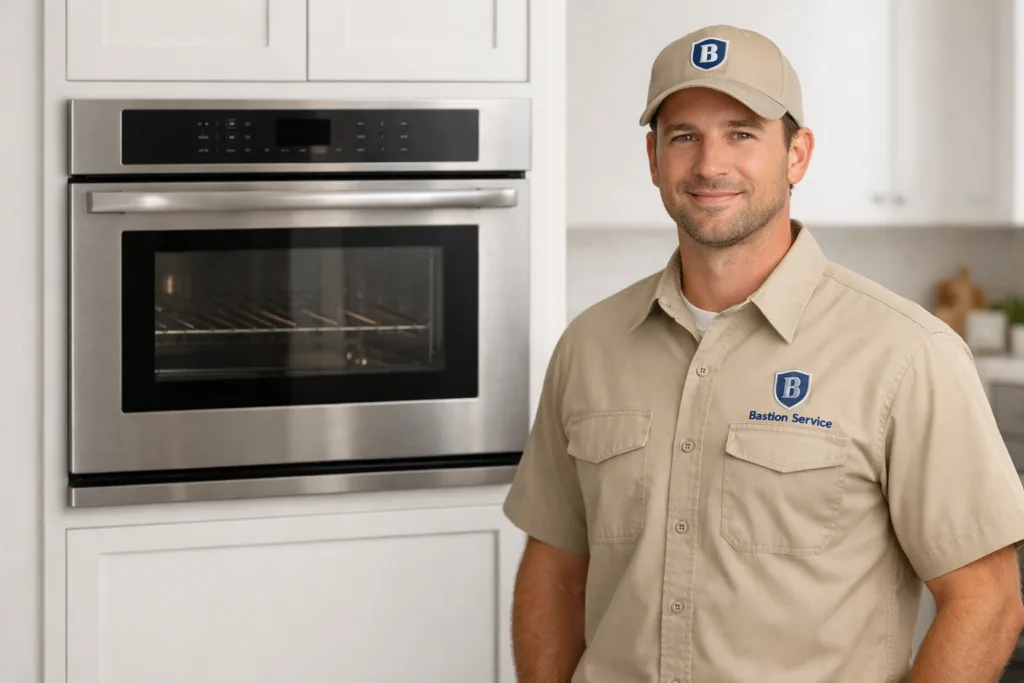
Oven problems often show up in small ways before they turn into a complete failure. A Whirlpool oven may start taking much longer to preheat, bake cookies unevenly from front to back, or shut off before a dish is finished. Paying attention to those early changes can help narrow down the cause and prevent extra wear on heating and control components.
How Whirlpool oven problems usually present at home
Many homeowners first notice a performance issue rather than a total breakdown. The display may still work, the light may come on, and the oven may appear normal, yet the cavity never gets hot enough for reliable cooking. In other cases, the oven reaches temperature eventually but struggles to hold it, which can lead to overcooked edges, underdone centers, and inconsistent results from recipes that used to be predictable.
Whirlpool oven issues commonly involve one of a few core systems: heating, temperature sensing, electronic controls, door sealing, or power supply. Because those systems affect each other, the same symptom can have more than one possible source. That is why testing matters more than guessing, especially when the problem is intermittent.
Common symptoms and what they can point to
Oven will not heat
If the oven turns on but does not produce heat, the fault may involve the bake element, broil element, igniter on gas models, thermal protection components, wiring, sensor, or the control board. Some Whirlpool ovens can seem partly functional because the clock and panel still respond even when the heating circuit has failed.
A useful clue is whether bake and broil fail the same way. If one cooking mode works and the other does not, that can help isolate whether the issue is tied to a specific heating component or a broader control problem.
Slow preheating
When preheating takes much longer than usual, the oven may still be heating, but not efficiently. A weakening element, inaccurate sensor, or relay issue can cause the cavity to warm too slowly or stall before reaching the selected temperature. This often shows up in daily use as meals taking longer than expected, even when the timer and settings seem correct.
Uneven baking or roasting
Uneven cooking can come from poor heat distribution, reduced element output, a damaged door gasket, rack placement issues, or sensor drift. One side of a sheet pan browning faster than the other, muffins rising unevenly, or a roast finishing on the outside before the inside is done are all signs that the oven may not be holding heat properly.
Temperature swings
All ovens cycle heat on and off, but large swings can make cooking unreliable. If food alternates between undercooked and burned, the sensor may be reading incorrectly, the control may not be regulating heat normally, or a heating component may be cutting in and out during the cycle.
Control panel or keypad problems
An unresponsive keypad, flashing display, random resetting, or failure to start a cycle can indicate trouble with the interface, electronic control, or incoming power. If these symptoms are occasional at first, they can still progress into a no-start condition later.
Door, hinge, or latch trouble
A door that does not close tightly can let heat escape and affect both performance and preheat time. Misaligned hinges, a worn gasket, or latch issues may also interfere with self-cleaning cycles and overall temperature stability.
Why symptom details matter
Small details can make diagnosis much faster. It helps to note whether the problem happens on every cycle or only sometimes, whether broil works when bake does not, whether the oven reaches temperature and then drops off, and whether any error messages appear. If the issue is uneven cooking, it is also helpful to know whether the top, bottom, front, or one side of the oven seems affected most.
Those patterns often reveal whether the problem is related to heat production, heat measurement, or control response. In many Rancho Palos Verdes homes, that distinction is what separates a straightforward part replacement from a larger repair decision.
When to stop using the oven
Some problems are inconvenient but manageable for a short period, while others should be treated as a safety concern. Stop using the oven if it trips the breaker, gives off a burning smell, overheats, sparks, shows signs of melted wiring, or fails unpredictably during cooking.
For gas Whirlpool ovens, delayed ignition, repeated clicking without ignition, or any persistent gas odor should be taken seriously. If there is a strong gas smell, leave the area if needed and contact the gas utility or emergency service before arranging appliance repair.
Repair or replacement: what usually makes sense
Repair is often worthwhile when the problem is limited to a serviceable part and the rest of the oven is in good shape. That is especially true when the appliance fits the kitchen well, has otherwise been reliable, and the symptom points to a contained failure rather than multiple systems failing at once.
Replacement may deserve stronger consideration when the oven has repeated control problems, significant electrical damage, structural issues around the door or cavity, or several major faults together. Age matters, but condition matters more. A well-kept oven with one failed component can still be a sensible repair, while a unit with layered issues may no longer be the better household investment.
What to check before scheduling service
- Whether the oven powers on normally
- Whether bake and broil behave differently
- Approximate preheat time compared with normal use
- Any error codes or flashing display messages
- Whether the problem is constant or intermittent
- Whether the door closes fully and seals tightly
- Which foods or rack positions show the problem most clearly
Having that information ready helps describe the issue more accurately and can make the repair path easier to understand.
What homeowners in Rancho Palos Verdes usually want from oven service
Most households are not looking for a technical lecture. They want to know what failed, whether the oven can be repaired reasonably, and whether continued use risks more damage. The most helpful service approach is one that connects the visible symptom to the likely failed system and explains the next step in plain language.
Whether the concern is no heat, poor baking results, erratic temperatures, or control failure, Whirlpool oven repair in Rancho Palos Verdes is most useful when the problem is evaluated based on actual performance patterns, appliance condition, and overall repair value.