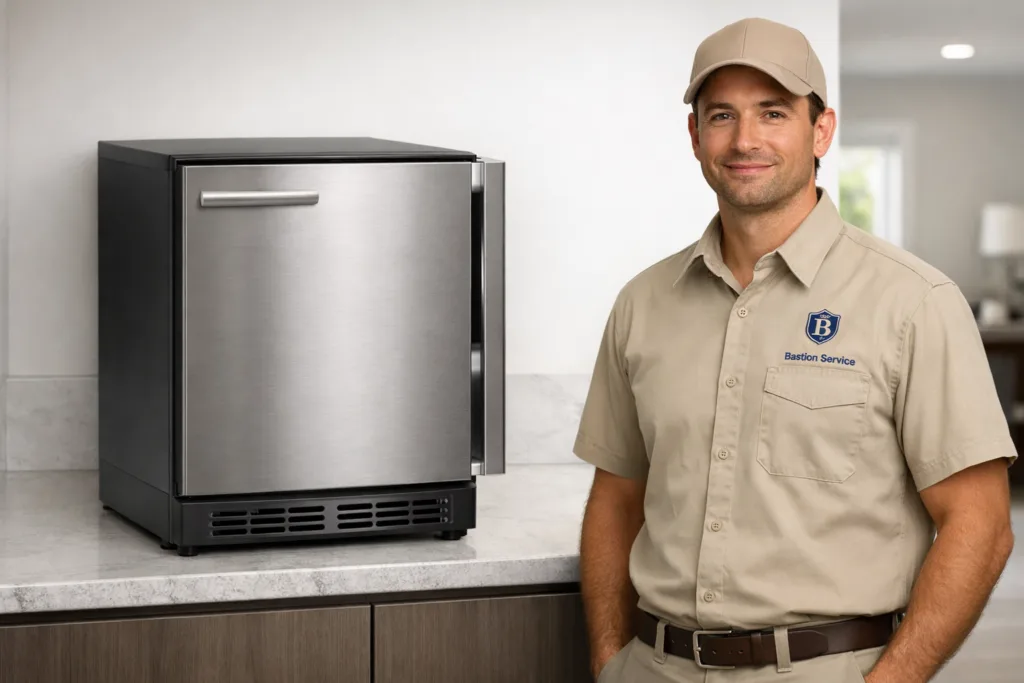
EdgeStar ice makers can fail in ways that look simple from the outside but come from very different causes once the cycle is checked step by step. A machine that is not making ice may have a water supply problem, but it can also be dealing with poor freezing performance, scale buildup, a sensor issue, a drain problem, or a worn component that interrupts harvest.
For homeowners in Palos Verdes Estates, the most useful approach is to match the symptom to the part of the cycle where the machine is breaking down. That helps narrow the repair path and avoids spending money on the wrong fix.
Common EdgeStar ice maker symptoms and what they can mean
No ice production
If the unit powers on but never produces a batch, the issue may start with restricted water flow, a faulty inlet valve, a blocked line, a control failure, or inadequate cooling. In some cases, the machine begins the process but never reaches the temperature needed to complete freezing and move into harvest.
This symptom is usually more than a convenience issue when it persists for several cycles. If the bin stays empty after cleaning, resetting, and confirming the unit is turned on, service is typically the next step.
Slow ice production
When output drops gradually, homeowners often notice they are running out of ice faster than the machine can recover. Slow production can point to mineral scale on internal components, reduced airflow, weak water fill, partial cooling loss, or a pump that is not circulating water as it should.
A slow machine may still appear to be working, which is why this problem is easy to put off. But reduced production often signals a condition that can continue to worsen with regular use.
Small, hollow, or misshapen cubes
Cube shape is one of the clearest clues an ice maker gives. Small cubes often suggest underfilling. Hollow or uneven cubes can indicate a timing issue, inconsistent water delivery, or a temperature problem during the freeze cycle. Cloudy or clumped ice may point to internal buildup, drainage trouble, or irregular operation.
When cube quality changes suddenly, it usually means the machine is no longer completing one part of the cycle correctly.
Leaks or water around the unit
Water on the floor or inside surrounding cabinetry should be addressed quickly. Common causes include a loose water connection, cracked tubing, a blocked drain, an overflow condition, or a harvest problem that sends water where it should not go.
Even a small leak matters because repeated moisture can damage nearby surfaces and hide a larger issue inside the machine.
Buzzing, clicking, or grinding noises
Some operational sound is normal, but new or repeated noises often help identify where the problem is happening. Buzzing may occur during fill, clicking may point to a control or relay issue, and grinding or strained pump noise can suggest a mechanical failure or obstruction.
Noise is especially important when it happens at the same point in every cycle, because that pattern can help isolate the fault.
Why EdgeStar ice maker problems are often misread
Ice makers combine refrigeration, water flow, drainage, sensors, and moving parts in a compact system. Because of that, the visible symptom is not always the true source of the failure. A unit that seems to have a fill problem may actually be failing to freeze properly. A machine that leaks may have a drain issue rather than a damaged water line. One bad component can create several symptoms at once.
That is why a useful diagnosis checks how the machine fills, freezes, harvests, and drains instead of guessing from one outward sign.
Household checks worth making before scheduling repair
There are a few basic things homeowners can verify before assuming a major failure:
- make sure the unit has power and the controls are set correctly
- confirm the water supply line is on and not kinked
- check for obvious ice buildup or standing water inside the cabinet
- look for clogged or dirty areas that may affect airflow or drainage
- note whether the machine starts a cycle, stalls mid-cycle, or never begins at all
If these checks do not restore normal operation, the next step is usually to inspect the internal system rather than continue resetting or running the unit repeatedly.
When repair is usually the better option
Repair often makes sense when the problem is tied to a specific serviceable part and the rest of the machine is in good condition. That can include issues involving valves, pumps, sensors, drain components, water lines, controls, or other isolated failures.
This is often the case when the unit has been reliable until a recent symptom appeared and there is no broader pattern of corrosion, repeated breakdowns, or cooling-related decline.
When replacement may be more practical
Replacement becomes more likely when the ice maker has multiple problems at once, recurring failures after prior repair, severe wear, or a sealed-system issue that is disproportionate to the value of the unit. If the machine is leaking, underperforming, and showing control problems together, the total repair path may no longer be the most sensible choice.
The goal is not only to get one more batch of ice, but to decide whether the appliance can return to reliable day-to-day use in the home.
Signs the problem should not be ignored
Some symptoms are more urgent because continued operation can increase damage or create messes around the appliance. It is wise to stop using the unit and have it checked when:
- water is repeatedly leaking onto the floor
- the pump or motor sounds strained or unusually loud
- the machine starts and stops abnormally without finishing a cycle
- ice production has dropped sharply and does not recover
- the unit shows signs of electrical or control instability
In Palos Verdes Estates homes, these issues are usually easier to address before they lead to cabinet damage, heavier buildup, or added strain on the refrigeration side of the machine.
What a service visit should clarify
A good service visit should answer a few basic questions clearly: Is water entering the machine correctly? Is the unit reaching the right temperature? Does it complete freeze and harvest without interruption? Is drainage working properly? And is the fault limited to one component or part of a larger wear pattern?
Once those points are confirmed, the repair decision becomes much more straightforward. Some EdgeStar ice makers need only a targeted part replacement or correction. Others show enough overall wear that replacing the unit is the more practical long-term choice.