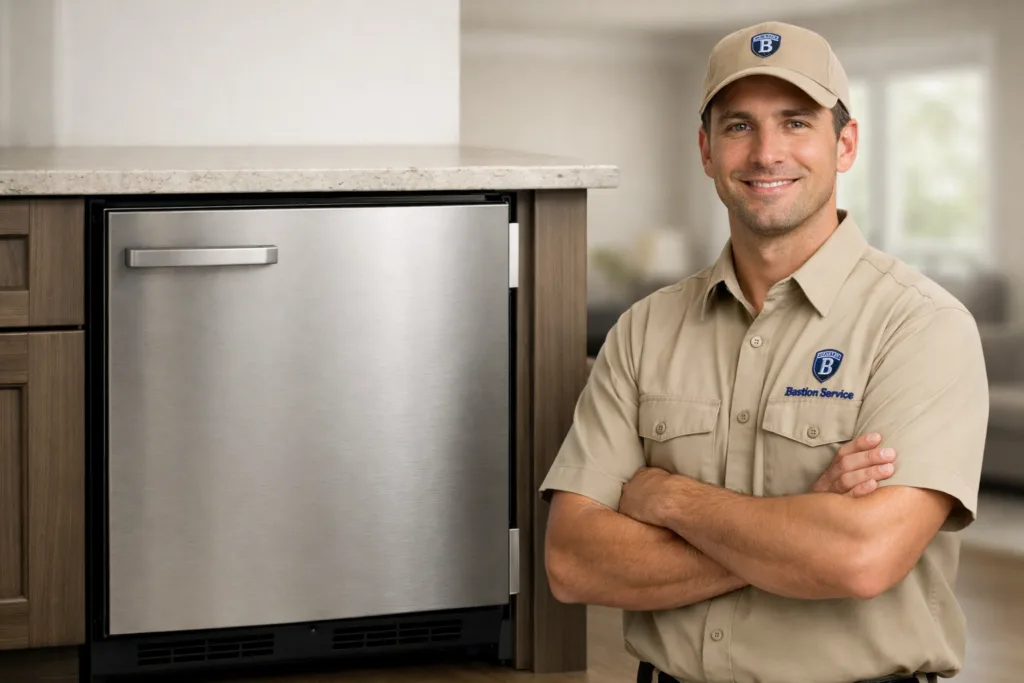
Ice maker problems rarely look the same from one home to the next. One Marvel unit may stop producing ice overnight, while another still runs but turns out smaller cubes, wetter batches, or uneven harvests. Looking closely at the symptom pattern usually tells you whether the trouble is more likely related to water supply, temperature control, drainage, sensing, or a mechanical failure inside the unit.
Common Marvel ice maker symptoms and what they usually mean
Most service calls start with one of a handful of issues. The details matter because a machine that makes no ice at all is often failing for a different reason than one that makes some ice but not enough.
- No ice production: may point to a water supply interruption, inlet valve problem, sensor fault, control issue, or freezing cycle failure.
- Slow ice production: often suggests restricted water flow, scaling, temperature instability, or reduced cooling performance.
- Leaking water: can come from a loose connection, blocked drain path, overflow condition, cracked component, or internal icing in the wrong area.
- Clumped or melting ice: may indicate temperature swings, poor door sealing, inconsistent harvest timing, or drainage trouble.
- Small, hollow, or cloudy cubes: commonly relate to fill issues, low water pressure, or mineral buildup affecting normal operation.
When the unit runs but never drops ice
A Marvel ice maker that powers on, hums, or cycles but never releases finished ice often has trouble in the harvest portion of the process. In some cases, the ice forms but does not release correctly. In others, the unit never reaches the right conditions to complete the cycle. That can involve a sensor, thermostat-related issue, control board problem, or a mechanical fault in the harvest system.
This symptom is easy to misread because the appliance may sound active and appear to be working. In reality, it may be getting stuck at the same step over and over, which increases wear without solving the problem.
Signs the harvest cycle may be failing
- The machine makes noise but the bin stays empty
- You hear repeated clicking or buzzing with no finished ice
- Ice appears to form but never falls into the bin
- The unit seems to restart the same cycle repeatedly
Slow production is often an early warning sign
When output drops gradually, homeowners sometimes assume the ice maker is simply aging. Sometimes that is true, but slower production can also mean the machine is struggling with a correctable issue. Partial blockages, scale, weak water flow, poor ventilation, or inconsistent internal temperatures can all reduce output before the unit stops completely.
If your household notices that the bin is taking much longer to refill, that is usually worth checking before the strain leads to a more obvious failure. In Palos Verdes Estates homes where ice makers are built into kitchens, bars, or entertaining spaces, that kind of reduced performance often becomes noticeable during heavier use first.
Leaks should be addressed early
Even a small puddle around a built-in ice maker deserves attention. Water can travel under the unit, into surrounding cabinetry, or across finished flooring before the source is obvious. A leak may start at a fitting or supply line, but it can also come from overflow, poor drainage, internal ice buildup, or a cracked part that only leaks during part of the cycle.
Continued operation after a leak appears can make the repair more expensive if moisture reaches nearby materials. If the unit is leaking regularly, limiting use until the source is identified is usually the safer option.
Leak patterns that can help narrow the cause
- Water at the front of the unit: may suggest overflow, drain trouble, or melting ice escaping the bin area.
- Water underneath the cabinet: can point to a supply connection or internal leak.
- Intermittent leaking: often happens when the problem only shows up during fill or harvest cycles.
- Ice buildup with dripping: may indicate water is freezing where it should not, then thawing later.
What changed ice quality can reveal
Ice appearance is one of the most helpful clues. Hollow cubes often suggest fill problems. Soft or wet cubes can point to temperature inconsistency. Cloudy ice may be related to water quality or flow issues. If cubes are fusing together in the bin, the machine may be dealing with partial melting, poor temperature maintenance, or an irregular cycling problem that leaves ice sitting too warm before the next batch drops.
Bad taste or odor is not always just a cleaning issue. Sometimes the source is stale ice, but persistent problems can also indicate poor water movement, contamination in the system, or a condition inside the unit that should be inspected more closely.
Why repeated cycling without results matters
An ice maker that keeps trying to run while producing little or nothing is not simply inconvenient. Repeated unsuccessful cycling can add stress to valves, motors, pumps, and controls. If the appliance is overfilling, icing up internally, or failing to complete a normal sequence, continued use can turn a focused repair into a more involved one.
That is especially important in finished residential spaces where hidden moisture or recurring condensation can affect adjacent materials before the appliance fault is fully visible.
Repair or replacement depends on the full picture
Not every Marvel ice maker problem calls for replacement. Many issues are isolated and repairable, especially when the core system is otherwise in good condition. Water inlet faults, drain issues, sensor problems, scale-related restrictions, and some control-related failures can often make repair the reasonable path.
Replacement becomes more likely when there are multiple active problems, major internal damage, chronic leaks, poor cooling performance, or a long history of repeat breakdowns. Age matters, but condition matters more. A newer unit with a major sealed-system problem can be a worse candidate for repair than an older unit with one specific failed component.
What to note before scheduling service
A few observations can make the visit more productive. Try to note:
- Whether the unit stopped completely or is still making some ice
- Whether cubes changed size, shape, clarity, or texture
- Whether you have seen leaking, overflow, or ice buildup
- Whether the problem appeared suddenly or developed gradually
- Whether unusual sounds happen during fill, freeze, or harvest
These details help connect the complaint to the most likely repair path instead of treating every no-ice call as the same problem.
What homeowners in Palos Verdes Estates can expect from a service-focused diagnosis
The most useful next step is to match the exact symptom to the failing part or condition. That may mean confirming a water supply issue, checking for scaling or restricted flow, testing harvest components, inspecting drain operation, or verifying whether the machine is maintaining proper freezing conditions. Bastion Service helps homeowners in Palos Verdes Estates make a practical decision based on the actual fault, the condition of the appliance, and whether repair is worthwhile.
If your Marvel ice maker is producing no ice, leaking, slowing down, or turning out poor-quality batches, addressing it early usually gives you the best chance of containing both the appliance problem and any risk to nearby finishes.