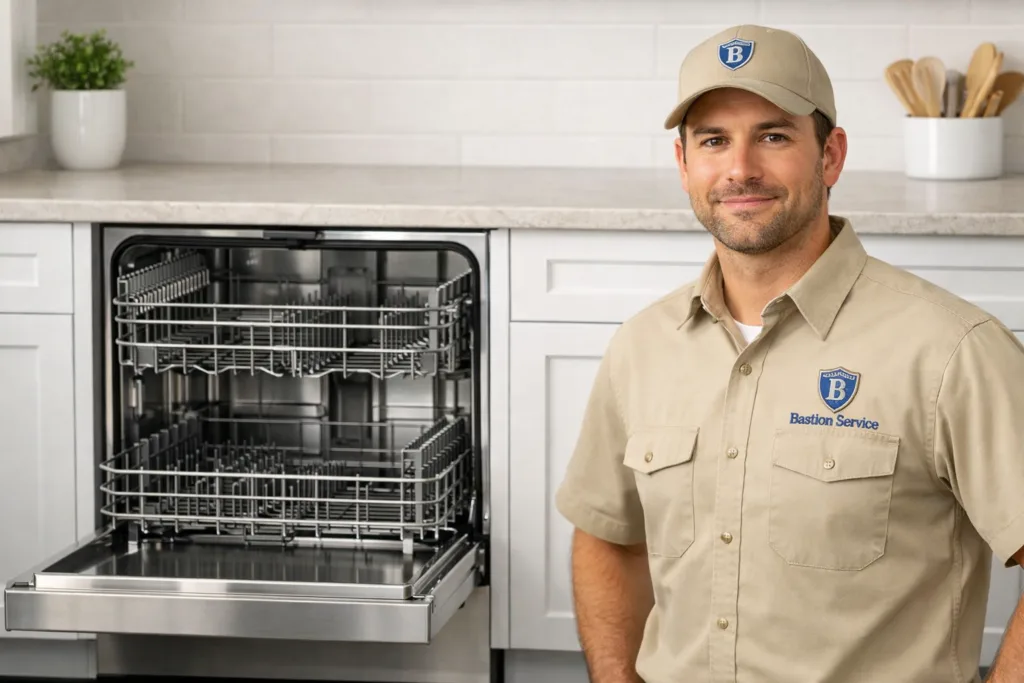
Dirty dishes, standing water, and interrupted cycles often point to more than one possible fault in a Monogram dishwasher. In a Culver City home, the most useful approach is to match the symptom pattern to the part of the machine that is failing, whether that involves draining, circulation, heating, door sensing, or electronic control.
How Monogram dishwasher symptoms usually break down
One of the reasons dishwasher problems can be frustrating is that the same outward symptom can come from very different internal causes. A dishwasher that seems dead may have a power supply issue, a latch problem, a user interface fault, or a control failure. A unit that runs through a full cycle but leaves dishes dirty may be filling improperly, washing with weak pressure, or failing to heat the water as expected.
That is why symptom-based testing matters. Replacing the first visible part rarely works if the real cause is elsewhere in the wash system. On Monogram models, a problem with draining, pump operation, or temperature control can affect several parts of the cycle at once.
Common Monogram dishwasher problems in Culver City homes
Water left in the tub after the cycle
If the tub still has water at the end of a wash, the problem may involve a blocked filter, restricted drain hose, sink-side connection issue, drain pump failure, or a control problem that is not completing the drain sequence. If the dishwasher drains slowly rather than not at all, that can point to a partial restriction rather than a fully failed component.
Standing water should not be ignored for long. It can lead to odor, residue buildup, and repeat wash failures that make the machine seem like it has a cleaning issue when the real problem started with drainage.
Dishes come out dirty, gritty, or cloudy
Poor wash results are not always caused by detergent. A Monogram dishwasher may leave food behind if the spray arms are blocked, the circulation pump is weakening, the water level is too low, or the filter area is restricting flow. Cloudiness can also be linked to mineral residue, but when performance changes suddenly, that often suggests a mechanical issue rather than a loading habit.
If glasses look dull, plates feel greasy, or food particles remain after a normal cycle, it helps to notice whether the problem affects the entire load or only one rack. That pattern can help narrow the cause.
Leak under or around the dishwasher
Leaks can come from the door gasket, lower door area, tub connection points, hose fittings, overfilling, or excessive sudsing. In some cases, spray pressure is being redirected where it should not be, causing water to escape during the wash portion of the cycle.
Even a small recurring leak can damage flooring, cabinetry, and the space beneath the appliance. If you see water more than once, it is usually best to stop normal use until the source is identified.
Dishwasher will not start
When the machine does not respond at all, the issue may involve power, the latch assembly, the control panel, or the main control. If lights come on but the cycle will not begin, that points in a different direction than a dishwasher with no display or response. The exact behavior matters, including whether the unit beeps, flashes, or seems to reset on its own.
Cycle stops midway
A dishwasher that starts and then quits partway through may be losing proper door-latch confirmation, encountering a drain or fill problem, overheating, or failing in the control sequence. If it stops at roughly the same stage each time, that timing can be a strong clue.
Low rinse temperature or poor drying
If dishes are still wet at the end of the cycle or the machine does not seem to rinse with enough heat, the problem may involve the heating circuit, temperature sensing, or control logic. Low rinse temperature can also affect cleaning performance, since grease and detergent residue are harder to remove when wash conditions are not reaching the intended range.
Buzzing, grinding, or louder-than-normal operation
Not every sound is a failure, but changes in sound usually mean something. Grinding may suggest debris in a pump area or wear in a moving component. A repeated buzzing sound can indicate a pump trying to operate under strain. Rattling can come from spray arm contact, loose items, or internal parts shifting out of place.
If the noise is new and continues from cycle to cycle, it is a sign the dishwasher should be checked before the issue becomes more expensive.
What homeowners can check before booking service
There are a few simple observations that can help narrow the problem without taking the dishwasher apart:
- Check whether the filter area has visible debris or buildup.
- Notice if water remains only sometimes or after every cycle.
- Look for leak patterns near the door, underneath, or at one side.
- See whether the machine fills, washes, drains, and dries, or fails at one specific stage.
- Pay attention to error lights, flashing indicators, or repeated beeping.
- Confirm whether the issue began suddenly or developed gradually over several weeks.
These details help separate a one-off loading or residue issue from a true repair problem.
When to stop using the dishwasher
Some dishwasher issues can wait a short time for service, but others should be taken more seriously. It is wise to pause use if the Monogram dishwasher is leaking onto the floor, leaving a significant amount of water in the tub, tripping power, producing a burning smell, or making harsh mechanical noise.
Continued use in those conditions can lead to water damage, electrical concerns, or additional wear on pumps and controls. A machine that still partly runs is not always safe to keep using if the underlying fault is getting worse.
Repair or replace?
For many Culver City households, repair is still the better option when the failure is limited to one major component and the rest of the dishwasher is in solid condition. Drain pump problems, latch issues, certain circulation faults, and some control-related failures can be worth correcting when the unit is otherwise sound.
Replacement becomes more likely when a dishwasher has heavy wear, repeated breakdown history, visible deterioration inside the tub area, or multiple systems failing at once. Age matters, but condition matters just as much. A repair decision should take into account how the dishwasher has been performing overall, not just the most recent symptom.
What a service visit should help clarify
A useful appointment should identify what failed, which symptoms support that diagnosis, whether continued operation risks further damage, and whether the repair path makes sense for the condition of the appliance. That kind of practical repair guidance helps avoid guessing and helps homeowners make a confident decision.
When a Monogram dishwasher is not cleaning, draining, heating, or finishing cycles correctly, getting the exact cause narrowed down is the step that restores normal kitchen routine fastest. In Culver City, that means focusing less on the symptom name and more on what the machine is actually doing at each stage of the cycle.