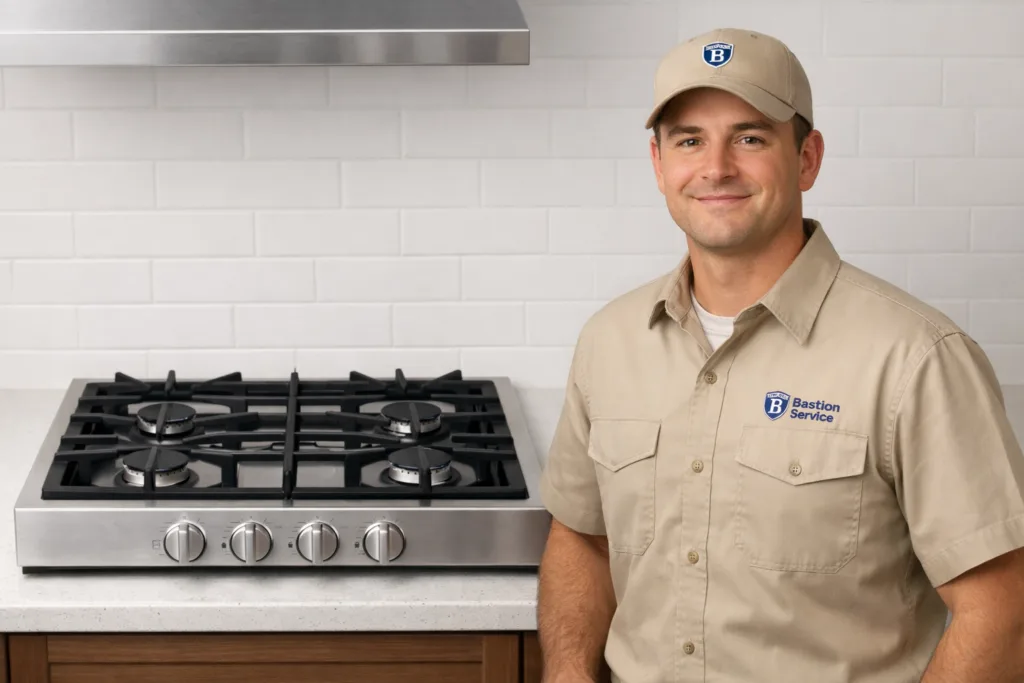
Cooktop failures often start small: a burner that lags, a control that feels off, or a clicking sound that does not stop when it should. On Summit units, those early symptoms can point to very different problems, so the most efficient repair path is to match the behavior of the cooktop to the part or system most likely at fault.
What the symptom usually means
A Summit cooktop in Rancho Park may show one clear issue or several at once. The pattern matters. A single burner that misbehaves suggests a different repair path than a unit with multiple burners failing, intermittent controls, or signs of heat damage around the surface.
Burner will not ignite or clicks repeatedly
On gas models, repeated clicking, delayed ignition, or a burner that lights only occasionally can come from a dirty burner head, a misaligned cap, moisture around the igniter, or a failing ignition component. If one burner is affected while the others work normally, the fault is often localized. If all burners struggle to ignite, the issue may involve the ignition system, power supply, or another shared component.
Clicking that continues after the flame is established should not be ignored. Even when the burner still works, the ignition system may be misfiring or sensing improperly.
Burner heats weakly or unevenly
Weak gas flame, partial flame spread, or an electric element that heats only in spots can all lead to slow cooking and inconsistent results. In practical use, this often shows up as one side of the pan browning faster, water taking much longer to boil, or a setting that no longer behaves the way it used to.
Possible causes include blocked burner ports, a worn electric element, a damaged connection, or a control problem that is not sending steady power or proper regulation to the burner.
Burner stays too hot
If an electric Summit cooktop burner overheats or does not respond when the setting is lowered, the problem can involve the switch or heat control circuit. This is more than a cooking annoyance. A burner that runs too hot can scorch cookware, overcook food quickly, and place extra stress on surrounding parts.
Controls feel loose or stop responding
Knobs and controls that wobble, stick, spin incorrectly, or fail to match the selected heat level may indicate wear in the switch, shaft, or control area. When the control issue is paired with erratic burner behavior, both the user interface and the underlying electrical component may need to be checked.
Cracked glass or visible surface damage
On smooth-top models, cracks, impact damage, or visible stress around the cooking surface should be evaluated before continued use. Surface damage can affect safety, heat distribution, and the condition of components underneath the top.
Signs the problem is becoming more serious
Some Summit cooktop problems stay isolated for a while. Others tend to spread or create safety concerns if the unit keeps being used. It is smart to stop and reassess when you notice any of the following:
- a burner that will not shut off or runs hotter than the selected setting
- persistent ignition clicking
- burners that work only part of the time
- sparking, scorching, or a burning odor
- a breaker that trips when the cooktop is used
- multiple burners failing in a short period
- surface cracks or signs of heat stress
When the symptom affects power, ignition reliability, or temperature control, delaying service can turn a targeted repair into a broader parts issue.
Why intermittent problems are harder than total failure
A burner that never works is often easier to diagnose than one that works every third attempt. Intermittent Summit cooktop issues in Rancho Park commonly involve loose connections, heat-sensitive switches, moisture-related ignition trouble, or components that are starting to fail under load. Because the cooktop may appear normal for part of the day, homeowners sometimes keep using it until the fault becomes more obvious.
That can make the problem less predictable and, in some cases, more expensive if surrounding parts begin to wear from unstable operation.
Gas and electric cooktops fail differently
Understanding whether the cooktop is gas or electric helps narrow down the likely source of the trouble.
On gas Summit cooktops
- clicking without ignition often points to igniter or burner-area issues
- weak or uneven flame may suggest blockage or burner assembly problems
- slow lighting can be tied to gas flow at the burner or ignition timing
On electric Summit cooktops
- a dead burner may be caused by the element, switch, or wiring connection
- overheating usually raises suspicion around the control switch
- erratic cycling may reflect a failing regulation component or heat-damaged terminal area
When repair makes sense
Many Summit cooktop problems are worth repairing when the issue is limited to a specific burner, igniter, switch, element, or related component. In those cases, restoring normal function is often straightforward once the failed part is identified.
Repair becomes less attractive when the cooktop has multiple active faults, significant surface damage, recurring electrical trouble, or age-related part availability issues. For homeowners in Rancho Park, the decision usually comes down to four things: safety, cost relative to the appliance, overall condition, and how likely the repair is to restore stable everyday use.
What a service visit should help you determine
A useful diagnosis should do more than name a symptom. It should clarify whether the issue is isolated or part of a wider pattern, whether continued use is reasonable, and what repair is most likely to solve the problem without guesswork.
That matters especially for a cooktop that still partly works. Partial operation can make the appliance seem manageable, but it can also hide a growing fault in the ignition system, control area, or burner circuit.
Helpful steps before scheduling service
Before service, it helps to note exactly what the cooktop is doing. Small details can make diagnosis faster and more accurate.
- Which burner is affected?
- Does the problem happen every time or only sometimes?
- Did it start suddenly or get worse gradually?
- Is there clicking, sparking, uneven flame, or delayed heating?
- Does the issue change after cleaning or after the unit cools down?
If there is a strong gas odor, visible arcing, smoke, or a burner that will not regulate properly, stop using the cooktop until it can be evaluated.
Residential Summit cooktop repair focused on daily kitchen use
In most homes, the real concern is not just whether a burner turns on, but whether the cooktop can be trusted for normal meals without surprise shutoffs, hot spots, or ignition problems. Summit cooktop repair in Rancho Park is most useful when it connects the symptom to the actual failure point and helps you decide whether the unit is a good candidate for repair or nearing the point where replacement should be considered.