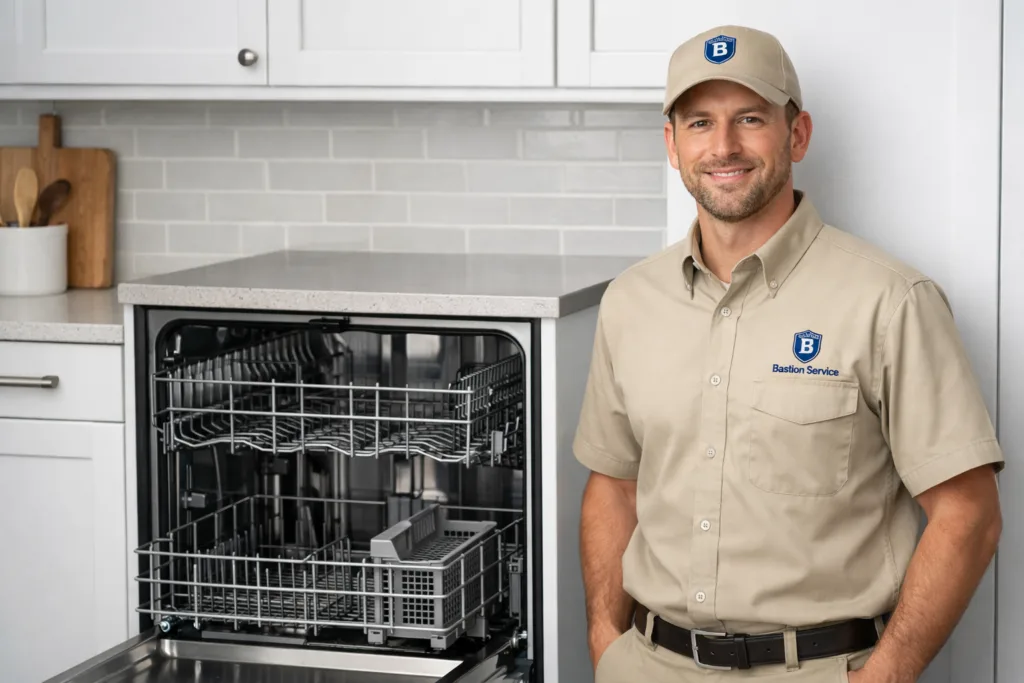
A Summit dishwasher can show the same failure in several different ways, so the symptom pattern matters. A unit that leaves water in the tub may have a drain obstruction, a weak pump, or a problem with how the cycle is advancing. Cloudy dishes can come from poor circulation, low rinse temperature, hard-water residue, or detergent that is not dispensing at the right time. Looking closely at what the dishwasher does before, during, and after the cycle usually tells you much more than the error itself.
Common Summit dishwasher problems seen in Rancho Park homes
Most dishwasher issues fall into a few categories: draining, washing, heating, leaking, or control failure. Knowing which category fits your machine helps narrow down whether the repair is likely to involve a wearable part, a blockage, or an electrical component.
Standing water after the cycle
If water is still sitting at the bottom when the cycle ends, the dishwasher is not removing water fast enough or not being told to drain properly. This can happen because of:
- A clogged filter or sump area
- A restricted drain hose
- A failing drain pump
- A check valve problem allowing water to flow back in
- A cycle or control issue that stops the drain stage early
A low humming sound without active draining often points toward pump trouble or debris jamming the pump area. Slow draining can also leave detergent residue behind and make the next load smell stale.
Dishes come out dirty, gritty, or spotted
When dishes are not getting clean, the cause is not always the same from one load to the next. A Summit dishwasher may struggle with wash performance because spray arms are blocked, water circulation is weak, the incoming water is not hot enough, or the detergent dispenser is not opening correctly. In some cases, overloading the racks can mimic a mechanical problem by preventing water from reaching key areas.
Useful clues include:
- Food left on upper-rack dishes, which can suggest spray or circulation problems
- Cloudy glassware, which can point to rinse, temperature, or water-quality issues
- Soap residue left in the dispenser, which may indicate a dispenser fault or a blocked door
- Plastic items still wet at the end, which may relate to heating performance
Leaks under the door or around the base
Even a small amount of water on the floor should be taken seriously. Leaks can come from a worn door gasket, a damaged lower door seal, loose hose connections, a cracked pump housing, or overfilling. Sometimes the leak appears only during certain stages of the cycle, which helps identify whether the problem is related to filling, washing pressure, or draining.
If you notice repeated moisture near the same corner, swelling of nearby cabinetry, or a musty smell around the dishwasher opening, it is usually best to stop running the unit until the source is identified.
Dishwasher runs too long or stops mid-cycle
A cycle that stalls, repeats, or runs much longer than normal may be struggling to heat water, read sensor input, or complete one of its programmed steps. A dishwasher that seems to pause for too long can have a heater issue, a control fault, or a door latch problem that interrupts operation. In some cases, the dishwasher is technically still running but not progressing as it should.
Unusual noises during wash or drain
Rattling, grinding, buzzing, or harsh humming sounds can reveal a lot. Debris caught in the pump area may create intermittent grinding. Spray arms hitting dishes can cause rhythmic tapping. A loud drain stage can point to restriction or pump wear. New noises matter more than normal operational sound, especially if they appear alongside poor cleaning or incomplete cycles.
How to tell whether the problem is minor or likely to need repair
Some dishwasher complaints are caused by maintenance or loading habits, while others indicate a part failure. Before assuming the machine needs major work, homeowners can check a few basics:
- Clean the filter and inspect for visible debris
- Make sure spray arms can turn freely
- Confirm large items are not blocking the detergent dispenser
- Run hot water at the sink before starting a load
- Check whether the drain hose appears kinked or pinched
If the same issue continues after those steps, repair becomes more likely. Repeated leaks, no-drain conditions, nonresponsive controls, and cycle failures usually need more than routine cleaning.
Signs you should stop using the dishwasher
It makes sense to stop using a Summit dishwasher right away if you notice any of the following:
- Water leaking onto the floor
- A burning smell
- Repeated tripping of power
- Loud new grinding or electrical buzzing
- Standing water that does not clear
- The door not latching securely
Continuing to run the dishwasher in these conditions can turn a manageable repair into cabinet damage, flooring problems, or a larger component failure.
Repair or replace a Summit dishwasher?
Repair is often worthwhile when the problem is limited to one main system, such as the drain pump, latch, circulation component, seal, or control-related part, and the rest of the dishwasher is in solid condition. Replacement becomes a more serious option when the unit has multiple issues at once, a history of recurring leaks, or visible wear that suggests declining reliability overall.
A sensible decision usually depends on:
- The age and overall condition of the dishwasher
- Whether the failure is isolated or part of a pattern
- The presence of water damage or corrosion
- How the machine has been performing in recent months
What a symptom-based service visit should help clarify
Homeowners usually want three clear answers: what failed, whether the dishwasher can be used safely before repair, and whether fixing it makes financial sense. That is especially important when symptoms overlap, such as dirty dishes combined with long cycles, or leaking combined with poor draining. Summit dishwasher repair in Rancho Park is most helpful when the visit leads to a specific explanation instead of guesswork.
When Rancho Park homeowners typically call for service
In many households, dishwasher problems become urgent not because the machine has fully stopped, but because performance keeps slipping. The unit may still run, yet dishes need rewashing, the tub smells sour, or water appears under the toe kick every few loads. Those are the situations where early attention can prevent a bigger interruption to kitchen routine.
If your Summit dishwasher is showing a consistent pattern rather than a one-time glitch, the next step is usually to have the exact failure identified and decide whether repair is practical based on the appliance condition and repair path.