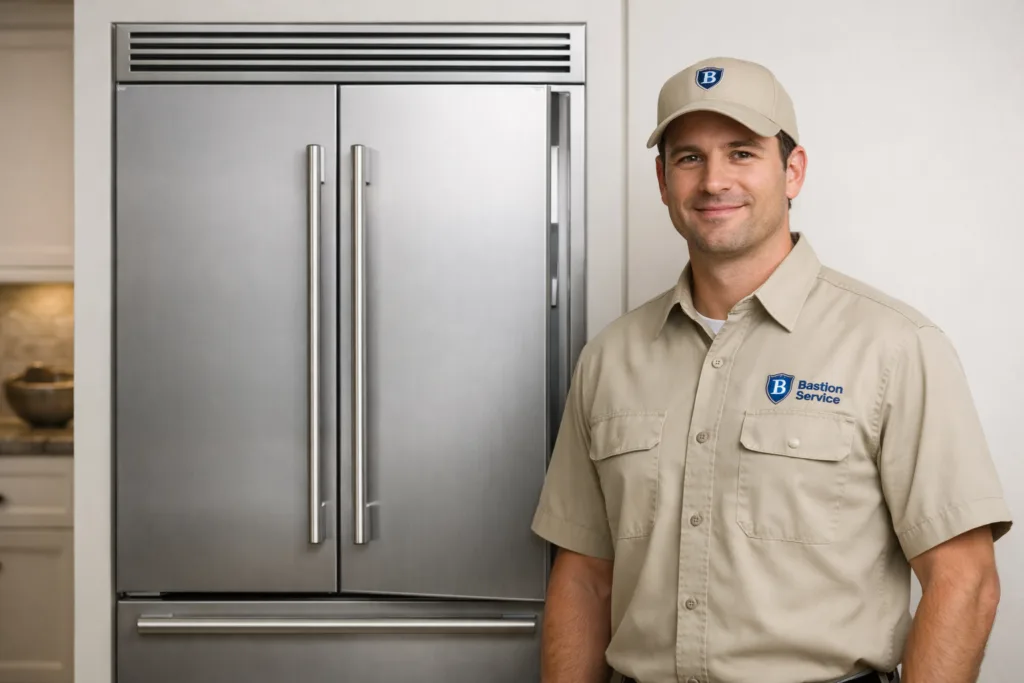
A Sub-Zero freezer that starts warming, frosting over, leaking, or running without stopping can put stored food at risk quickly. The most useful first step is to match the repair plan to the exact symptom pattern, because the same visible problem can come from several different faults inside the unit.
Common Sub-Zero freezer symptoms and what they may mean
Freezer problems rarely stay isolated for long. A little frost can turn into blocked airflow, a small temperature swing can become soft food, and a drain issue can lead to water under the appliance. Looking at the full pattern helps narrow down whether the issue is related to airflow, defrost, controls, door sealing, or the cooling system itself.
Freezer not freezing properly
If food is soft, ice cream is no longer firm, or the cabinet feels colder in some areas than others, the unit may not be moving cold air correctly or may not be producing enough cooling. Common causes include evaporator fan problems, restricted airflow from ice buildup, sensor or control issues, dirty condenser areas, or a more serious sealed-system fault.
This symptom matters most when the freezer is still running but not recovering. Homeowners often notice the unit sounds active, yet temperature continues to drift upward. That usually means the freezer is working harder than normal and needs attention before food loss gets worse.
Frost buildup on shelves, walls, or stored items
Heavy frost usually points to moisture entering the cabinet or a defrost problem that is allowing ice to accumulate. Worn door gaskets, a door that does not close fully, blocked vents, or failed defrost components can all create similar frost patterns.
As ice builds up, airflow drops. That can make the freezer feel too warm in one area and too cold in another, even though the root issue is frost restricting circulation. If shelves, drawers, or the rear panel keep icing over, the problem typically will not resolve on its own.
Constant running or short cycling
A Sub-Zero freezer should cycle based on demand. If it seems to run nearly all the time, the appliance may be struggling to maintain set temperature. That can happen when coils are not shedding heat well, when fans are not moving air as they should, or when a control issue is causing poor temperature regulation.
Short cycling can point to a different problem, where the system starts and stops too quickly to cool properly. Either pattern is worth checking, especially if it appears alongside warming temperatures, frost, or new noise.
Buzzing, clicking, rattling, or fan noise
Unusual sounds often help identify where the problem is developing. A fan scraping noise can mean ice is interfering with the blade. Buzzing may suggest a motor or compressor-related issue. Clicking can sometimes point to startup trouble, controls, or repeated attempts to run.
Not every new sound means a major failure, but a freezer that suddenly sounds different is usually operating outside normal conditions. Catching that early can prevent additional wear on related components.
Water leaks or excess condensation
Water under or around the freezer often comes from a blocked defrost drain, moisture entering through a poor seal, or meltwater from frost accumulation. Even if cooling still seems acceptable, leaks should be addressed promptly. Ongoing moisture can damage nearby flooring, create odor concerns, and signal a freezer that is not defrosting correctly.
What to note before service
Helpful observations can make diagnosis faster and more accurate. In Mar Vista homes, it helps to note whether the freezer is fully warm or only inconsistent, whether frost appears in one spot or throughout the cabinet, whether the door closes firmly, and whether unusual noise is constant or comes and goes.
It is also useful to notice how the issue started. A sudden failure may point toward a fan, control, or electrical problem, while gradual temperature decline can suggest airflow restriction, condenser trouble, or a cooling-system issue. If the freezer is part of a built-in combination unit, pay attention to whether the refrigerator section is behaving normally as well.
When the problem needs prompt attention
Schedule service as soon as possible if food is no longer staying frozen, frost keeps returning after you clear it, the unit runs continuously, or you see water collecting around the base. These symptoms usually become more expensive and disruptive when ignored.
- Food is soft or thawing
- Frost returns quickly after the door has been fully closed
- The freezer is much louder than usual
- Water is appearing under the appliance or inside the cabinet
- The unit is alarming, tripping power, or changing temperature rapidly
If cooling has stopped entirely, it is best not to keep relying on the appliance while hoping it recovers. A freezer that is trying and failing to cool can continue stressing major components without protecting the food inside.
Repair versus replacement for a Sub-Zero freezer
Many freezer problems come from serviceable parts such as fan motors, defrost components, sensors, controls, drains, or door gaskets. In those cases, repair is often straightforward once the fault is identified. Other situations require a closer look at compressor performance, sealed-system condition, prior repair history, and the overall state of the cabinet.
The smartest decision is usually based on the scope of the failure rather than the symptom alone. A freezer with a manageable component issue may still be a solid repair candidate, while a unit with multiple system-level concerns may need a broader cost-benefit discussion. That is why a practical repair guidance process should start with what the freezer is actually doing now, not with assumptions.
How symptom-based service helps protect the appliance
Sub-Zero equipment is built differently from many standard freezers, so diagnosis should stay focused on the actual failure path. Replacing parts based only on a warm cabinet or frost complaint can miss the real cause and prolong downtime. A symptom-based approach helps determine whether the problem starts with airflow, defrost, controls, sealing, drainage, or cooling performance.
For homeowners in Mar Vista, that means a more useful repair conversation: what failed, how it affects freezer operation, whether the issue is likely isolated or part of a larger condition, and what the next step should be to restore stable freezing performance.
Keeping freezer problems from getting worse
While waiting for service, avoid overloading the freezer or repeatedly opening the door to check temperature. Extra door openings bring in moisture and can make frost and temperature instability worse. If the seal looks loose or something is blocking the door from closing fully, correcting that right away may help limit additional frost buildup until the unit can be evaluated.
It is also worth moving vulnerable food if temperatures are clearly rising. Once a freezer starts showing persistent performance changes, protecting stored food and arranging service quickly is usually the best way to limit both spoilage and further appliance strain.