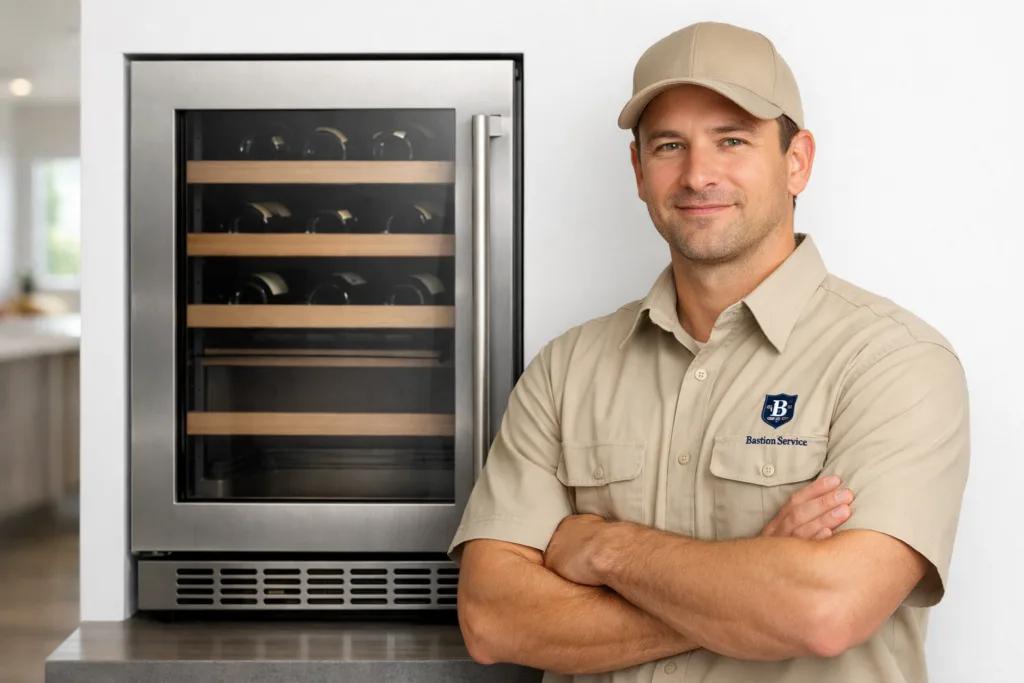
A Perlick wine cooler that starts warming, sweating, rattling, or cycling at odd times can put a collection at risk quickly. In West Los Angeles homes, the most useful first step is identifying which system is actually causing the change, since similar symptoms can come from airflow restrictions, fan trouble, sensor errors, control faults, or a door that is no longer sealing as it should.
Symptoms that usually point to a repair need
Wine coolers are designed for stable, low-vibration storage. When that stability changes, the symptom pattern usually helps narrow the cause.
Cabinet not cooling to the set temperature
If the interior stays warmer than expected, the issue may involve the condenser area, evaporator fan, thermistor, electronic controls, or compressor performance. Some units still run and make normal operating sounds but never bring the cabinet back into the proper range. That often means the problem is not obvious from the outside and needs testing rather than guesswork.
Temperature swings or uneven cooling
A Perlick wine cooler that shifts between too warm and too cold may have a sensor problem, control issue, restricted internal airflow, or warm air entering around the door. Even when bottles do not feel dramatically warm, repeated swings can still affect long-term storage conditions.
Condensation, moisture, or water under the unit
Water inside the cabinet or around the base can come from a blocked drain path, excessive moisture entering through a worn gasket, or frost buildup melting after airflow problems. If moisture continues, it can lead to odors, shelf residue, and damage around the installation area.
Buzzing, clicking, rattling, or fan noise
A sudden increase in noise is worth attention. Fan blades can strike ice or a loose panel, motor bearings can wear down, and vibration can develop if a component is struggling or mounting has shifted. If the sound appears together with weak cooling, both symptoms may be part of the same failure.
Frequent cycling or nonstop running
When the unit runs far more often than usual, it is often trying to overcome heat, poor airflow, a control issue, or loss of cooling efficiency. Longer runtimes increase wear on major components and can make a manageable problem more expensive over time.
How symptom combinations help narrow the cause
Single symptoms matter, but combinations are often more revealing than one complaint on its own.
Warm interior and constant running
This often means the cooler is trying to reach temperature but cannot do it efficiently. Dirty condenser surfaces, weak fan operation, sensor issues, or sealed-system problems are all possibilities. If the cabinet is warming while runtime increases, the unit may be under strain without protecting the contents properly.
Condensation and temperature drift
When moisture shows up together with unstable temperatures, warm air infiltration becomes more likely. A worn gasket, slight door misalignment, or hinge issue can let humid room air into the cabinet, forcing the system to work harder while creating moisture and cooling inconsistency.
Noise and uneven cooling
If unusual sound is paired with warm spots or fluctuating temperatures, internal airflow should be checked closely. Fan-related problems are common in this symptom group, though compressor operation and frost buildup can create similar patterns.
Interior too cold or bottles freezing unexpectedly
Overcooling can point to a control board problem, inaccurate sensor readings, or a thermostat-related fault that keeps the cooling cycle running too long. This is not just an inconvenience; it can damage labels, affect storage quality, and suggest that the unit is no longer regulating correctly.
Common problem areas in Perlick wine coolers
While the exact failure varies by model and age, several systems are commonly involved when performance changes.
- Door gasket and door alignment: Poor sealing allows warm, humid air into the cabinet.
- Evaporator or condenser fan: Weak or noisy fans can disrupt temperature control and airflow.
- Thermistor or temperature sensing components: Incorrect readings can cause drifting or overcooling.
- Electronic controls: Display issues, erratic cycling, or incorrect response to settings may start here.
- Drain path: Blockages can lead to interior moisture or water near the base.
- Compressor or sealed-system components: These are more serious concerns when cooling falls off despite long runtimes.
When to schedule service
Service is usually the right move when the cabinet will not hold temperature, the cooler becomes noticeably louder, water appears where it should not, or the controls behave unpredictably. It is also smart to schedule service for intermittent problems. Early control, fan, or sensor faults often appear off and on before they become constant.
It is usually best not to keep changing temperature settings repeatedly to force a correction. That can make the pattern harder to interpret and may delay the right repair. If the exterior feels hotter than usual, condensation keeps returning, or the unit seems to be laboring constantly, continued operation may add wear without solving the issue.
Repair or replacement?
Many Perlick wine cooler issues are repairable, especially when the fault is tied to fans, controls, sensors, gaskets, drains, or other accessible components. Replacement becomes a more serious consideration when there is major sealed-system failure, repeated high-cost breakdowns, or multiple age-related issues affecting overall reliability.
The better decision usually depends on the cooler’s age, cabinet condition, performance history, and the cost of restoring stable operation. A single noisy fan motor is very different from a unit with declining cooling performance and several failing components at once.
What a service-focused visit should accomplish
For homeowners in West Los Angeles, the goal is not just to make the unit power on again. A useful service approach should verify the temperature complaint, check airflow, inspect sealing surfaces, evaluate component behavior, and determine whether the repair path makes sense for the condition of the appliance.
When a wine cooler is storing a home collection, timing matters. Addressing warning signs early can help prevent spoiled storage conditions, reduce stress on expensive components, and keep a smaller issue from turning into a more disruptive repair.