
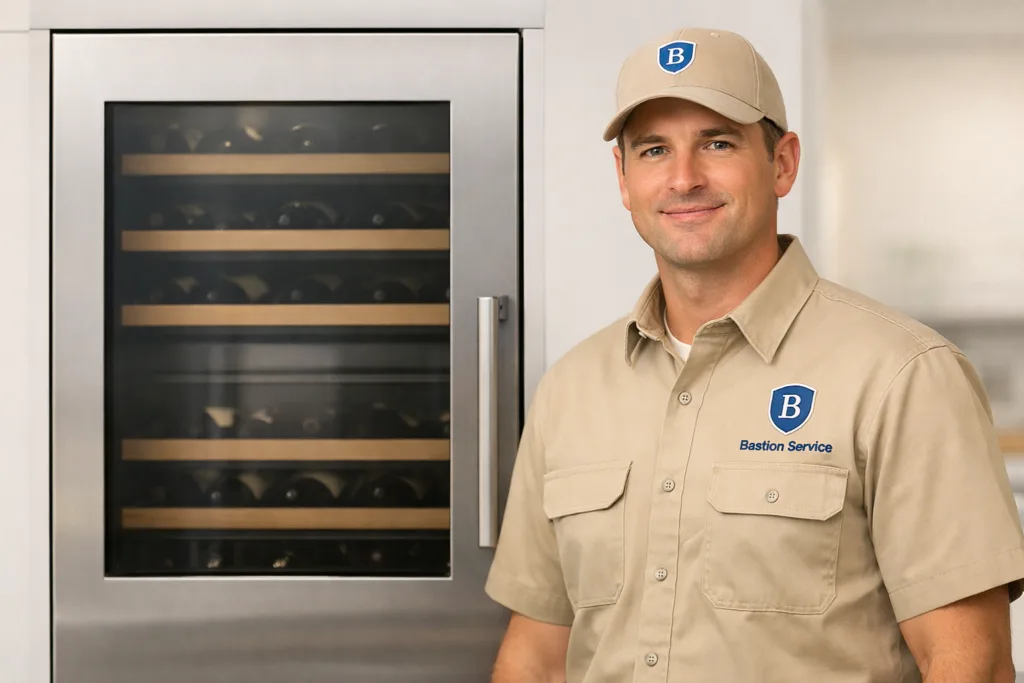




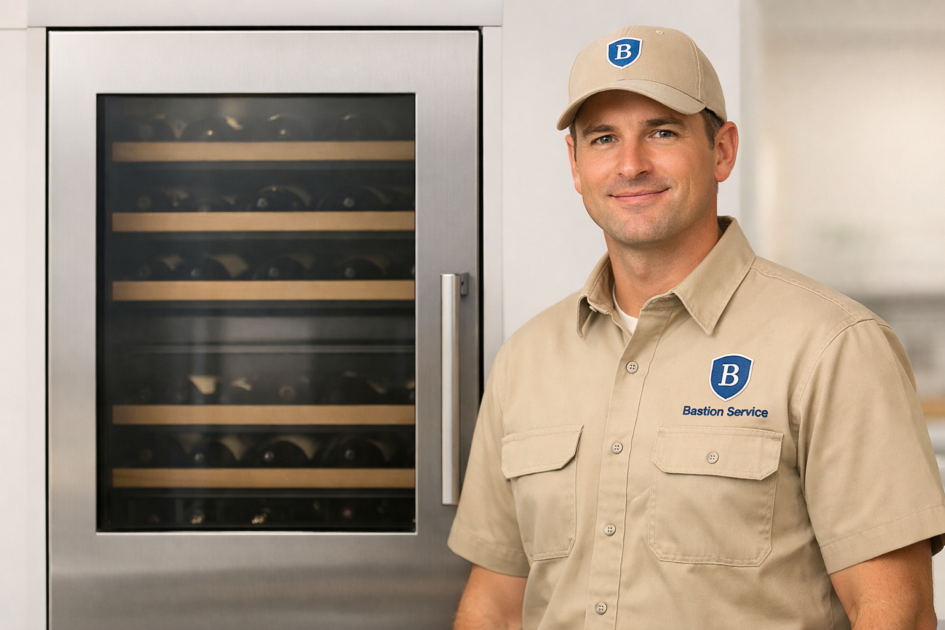
Protecting stable storage conditions matters more than almost anything else with a wine cooler. When a Fisher & Paykel unit starts running warmer than expected, cycling oddly, or building up moisture, the immediate goal is to understand whether the issue is affecting only convenience or the actual environment inside the cabinet.
Common Fisher & Paykel wine cooler symptoms at home
Most household wine cooler problems show up in a few recognizable ways. What seems like one simple issue on the surface can come from airflow problems, electronic control faults, door sealing issues, or deeper refrigeration trouble.
Temperature swings or unstable cooling
If bottles no longer feel consistently cool or the display setting does not match the real cabinet temperature, the unit may be dealing with a faulty sensor, poor internal airflow, control board issues, or weakening cooling performance. Some coolers still produce cold air but fail to hold a steady range, which is often the more important concern for wine storage.
Not cooling enough
A cabinet that stays noticeably warm, takes too long to recover after the door opens, or never reaches the selected setting should be checked sooner rather than later. This symptom can point to condenser airflow restriction, evaporator fan trouble, thermostat or sensor error, or a more serious sealed-system issue.
Running constantly or cycling too often
When the compressor seems to run nearly all the time, the cooler may be compensating for warm air leaking in through the door gasket, heat buildup around the condenser area, or inaccurate temperature readings. If it is running hard without achieving proper cooling, that usually means the problem is already affecting performance rather than just efficiency.
Condensation, water, or excess humidity
Moisture on the glass, damp shelving, or water collecting inside the cabinet can happen when the door is not sealing tightly, when drainage is restricted, or when internal temperatures are fluctuating more than they should. Repeated condensation can also be a warning sign that the cooler is losing control of the environment it is supposed to maintain.
Buzzing, rattling, clicking, or fan noise
Some operational sound is normal, but a noticeable change in sound level usually deserves attention. Rattling can come from loose panels or shelving, while buzzing or clicking may indicate compressor strain, fan obstruction, or a failing component. Noise becomes more meaningful when it appears together with weak cooling or long run times.
What these symptoms can mean
Wine cooler issues are easy to misread because different failures can produce similar results. A bad sensor can make the unit behave as though it has a cooling problem. A weak door seal can cause long run times that resemble compressor trouble. A fan problem can create warm spots that feel like total cooling loss even when the sealed system is still functioning.
That is why useful troubleshooting should focus on the full pattern: how the cabinet temperature behaves, whether the fan is circulating air correctly, whether the controls respond normally, how well the door closes, and whether moisture is building up in specific areas. Looking at only one symptom often leads to replacing the wrong part.
Signs the problem should not be ignored
It makes sense to arrange service if you notice any of the following:
- The cabinet is warmer than the selected setting
- Cooling varies from shelf to shelf
- The unit runs for very long periods
- Condensation keeps returning after wiping it away
- The display behaves erratically or settings do not respond
- The door does not close or seal firmly
- Fan or compressor noise has become noticeably different
These symptoms usually do not resolve on their own. Continued operation while the cooler struggles to maintain conditions can add wear to major components and increase the chance that stored bottles are exposed to unnecessary temperature variation.
When continued use can make damage worse
If the wine cooler is obviously warm inside, short-cycling, or covered with recurring moisture, using it as normal may push the system harder than intended. A compressor that runs continuously because of airflow restriction, a bad gasket, or faulty controls can be stressed for extended periods. Excess condensation can also affect shelving, labels, trim, and nearby cabinetry.
While waiting for service, it helps to keep the door closed as much as possible, avoid overloading the cabinet, and make sure nothing is obstructing the door from sealing. Those steps may reduce added strain, but they do not solve the underlying fault.
Repair issues that are often worth addressing
Many Fisher & Paykel wine cooler problems are repairable when the failure is limited to one area. Depending on the symptom pattern, worthwhile repairs may involve:
- Temperature sensors or thermostatic controls
- Fan motors or airflow-related components
- Door gaskets and sealing problems
- Condensate drainage issues
- Electronic control or display faults
These types of faults can often be corrected without the larger cost and uncertainty associated with major refrigeration system failure.
When replacement may enter the conversation
Not every repair makes equal sense. If diagnosis shows compressor trouble, a sealed-system failure, or several aging problems at the same time, the decision may come down to overall condition and whether the repair restores reliable storage performance. For homeowners in West Los Angeles, the most reasonable choice usually depends on the unit’s age, the exact failure, prior performance, and the expected value of the repair compared with replacement.
What a proper service visit should clarify
A productive visit should do more than confirm that the cooler is not working well. It should narrow down why it is underperforming and what the realistic next step is. That usually means checking temperature accuracy, fan movement, compressor behavior, control response, door sealing, and visible signs of moisture or airflow restriction.
Once the cause is identified, the repair path becomes much clearer: move forward with a targeted repair, monitor a minor issue, or decide the unit is no longer a strong candidate for continued investment. For households in West Los Angeles, that approach helps protect both the appliance and the collection stored inside it.


