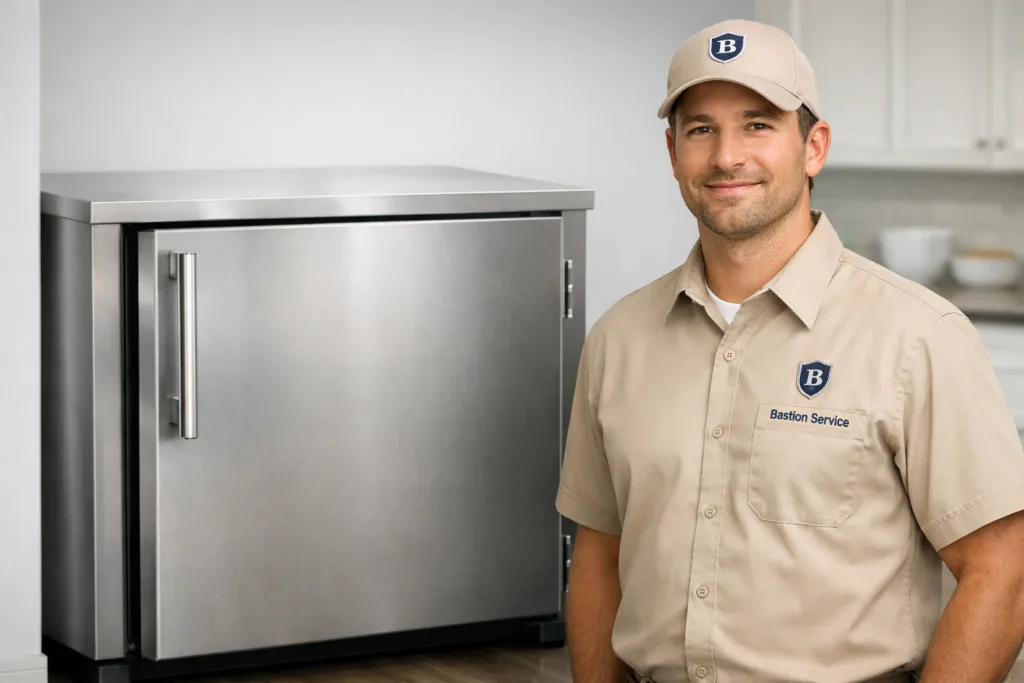
A Perlick freezer that begins warming, icing over, or cycling strangely can go from inconvenient to urgent very quickly. The same outward symptom can come from very different problems, so the most useful next step is to look at the pattern: what changed first, how often it happens, and whether the issue involves temperature, airflow, moisture, or noise.
What the symptom usually points to
Most freezer failures start with small signs before the compartment stops performing altogether. Paying attention to those early clues can help narrow down whether the problem is likely tied to air circulation, defrost, door sealing, controls, or the refrigeration system.
Food is softening or the freezer is not fully freezing
If frozen items are less solid than usual, the freezer may still be cooling but not well enough to hold a stable temperature. Common possibilities include weak airflow from an evaporator fan, dirty condenser components, a door gasket that is letting warm air in, a sensor or control issue, or declining sealed-system performance. Slight warming can become a bigger problem if the unit keeps running under strain.
Frost keeps coming back
Heavy frost on shelves, interior walls, or around the door opening often means moisture is entering the compartment or the defrost process is not working as intended. A torn gasket, poor door alignment, frequent warm-air intrusion, or a failed defrost component can all create similar frost patterns. Once frost builds up, airflow can drop and cooling becomes less even.
The freezer runs nonstop
A Perlick freezer that rarely cycles off is usually trying to overcome heat gain or reduced cooling efficiency. That can happen when coils are dirty, a fan is weak, the door does not close tightly, or the temperature sensing system is reading inaccurately. Constant operation is not just a nuisance. It can accelerate wear on key components.
Clicking, buzzing, rattling, or fan scraping
Noise changes matter because they often reveal which part of the freezer is under stress. Repeated clicking with weak cooling can suggest a start or compressor problem. A scraping sound may indicate ice contacting a fan blade. Buzzing or rattling may come from a motor, vibration, or a part that is no longer operating smoothly. The timing of the sound is often as important as the sound itself.
Water, condensation, or moisture around the unit
Moisture outside the freezer can come from a door seal issue, excess condensation, or a blocked drain path on models with defrost drainage. Even if the amount seems small, repeated moisture can be a sign that temperature control inside the compartment is no longer stable.
Why similar freezer symptoms can need different repairs
A freezer that is warming up could need a fan motor, a thermostat or sensor, a defrost repair, a gasket correction, or sealed-system work. That is why replacing parts based only on the symptom often leads to repeat problems. A proper diagnosis separates electrical faults from airflow restrictions and distinguishes control issues from refrigeration failures.
This is especially important when the freezer still seems to work part of the time. Partial cooling can make the problem seem minor even while the system is overworking in the background. In many cases, earlier service helps prevent food loss and avoids added stress on the compressor or fan system.
Signs it is time to stop waiting
Homeowners in West Los Angeles should usually schedule service when the freezer shows any of these patterns:
- Temperature is rising or fluctuating from day to day
- Ice cream, meats, or other frozen items are softening
- Frost returns soon after being cleared
- The unit runs almost constantly or starts and stops too often
- The door does not seal firmly or seems misaligned
- New clicking, buzzing, or scraping noises appear
- Water or excess condensation keeps showing up
When one of these signs continues, using the freezer as if nothing is wrong can make the repair path more expensive. Restricted airflow, repeated icing, and nonstop running all increase the chance of secondary problems.
Simple checks you can make before service
There are a few basic observations that can help clarify what is happening without taking anything apart. Check whether the door closes fully without pushing back open, whether the gasket looks cracked or loose, and whether stored items are blocking interior vents. Notice whether frost is concentrated in one area or spread across the compartment, and whether the noise happens all the time or only during certain cycles.
It also helps to note whether the control panel appears normal even though cooling is off. That contrast can point toward a hidden mechanical or airflow problem rather than a simple settings issue.
Common residential repair directions for Perlick freezers
Depending on the symptom pattern, repair may involve correcting airflow issues, replacing a fan motor, resolving a defrost fault, addressing a poor door seal, clearing a drain problem, or testing control and temperature-sensing components. In some cases, the issue is deeper in the refrigeration system and needs to be evaluated as a sealed-system concern rather than a simple part replacement.
For households in West Los Angeles, the goal is not merely getting the appliance to turn on again. The real objective is restoring steady freezer performance so food stays safely frozen and the unit cycles normally instead of operating under continuous stress.
Repair or replace depends on the actual failure
Many freezer problems that look serious at first are still repairable, especially when the cause is tied to frost buildup, airflow, fan operation, drainage, or door sealing. Replacement becomes a more realistic discussion when the freezer has a major sealed-system failure, a long history of repeated breakdowns, or repair cost that no longer makes sense for the condition of the appliance.
That decision is usually easier after the fault has been identified. Once the failed component and the overall condition of the freezer are known, homeowners can make a more informed choice instead of guessing from the symptom alone.
What helps speed up the appointment
If you are arranging Perlick freezer repair in West Los Angeles, it helps to describe the first symptom you noticed, whether the freezer still cools at all, how long the problem has been happening, and whether frost, leaks, or unusual sounds are part of the issue. Those details often make the visit more efficient and help determine the most likely repair path from the start.
When a freezer is already struggling, minimizing door openings can help protect the remaining cold air until service is completed. If food is beginning to thaw, acting sooner is usually the best way to limit both food loss and added strain on the appliance.