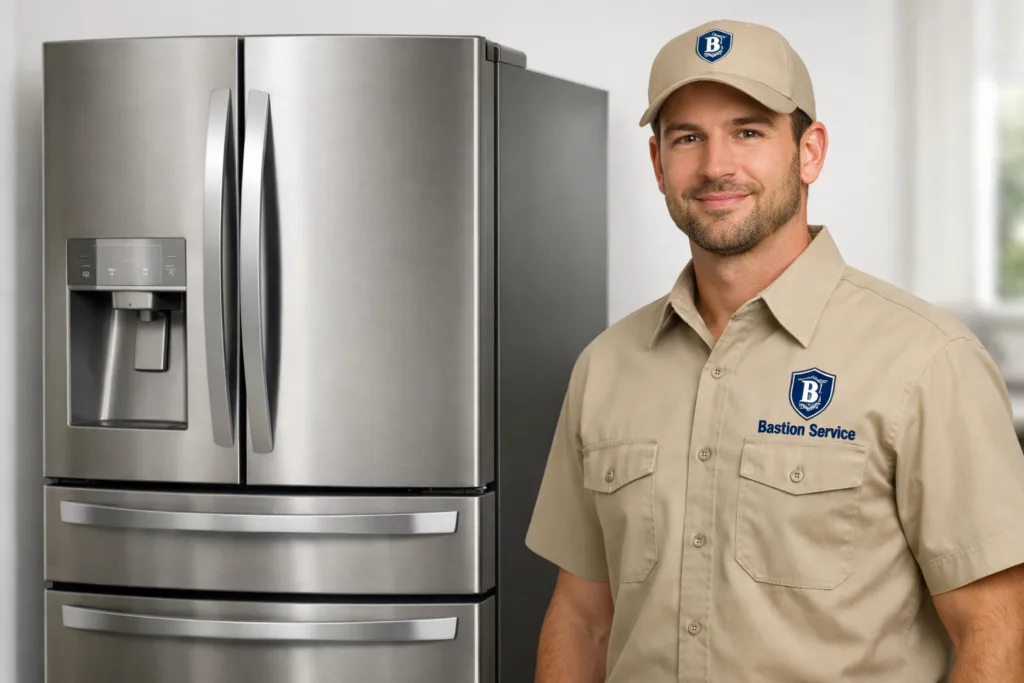
LG refrigerators can show the same outward symptom for very different reasons, so the most useful first step is to match what you are seeing, hearing, and feeling to the likely system involved. In Mid-Wilshire homes, that often means separating a true cooling failure from an airflow problem, a defrost issue, a water supply problem, or an electronic control fault before any repair decision is made.
Common LG refrigerator problems and what they can mean
Some refrigerator issues appear all at once, while others build gradually over several days. Paying attention to the pattern can help narrow the repair path and reduce guesswork.
Refrigerator not cooling properly
If the fresh food section is warming up but the freezer still seems cold, the problem often points to blocked airflow, an evaporator fan issue, frost buildup behind the rear panel, or a defrost system failure. If both sections are warming, the inspection usually shifts toward compressor operation, condenser airflow, control response, or a deeper cooling system problem.
Temperature drift should not be ignored. Even when the refrigerator is still running, unstable cooling can spoil food quickly and place extra strain on major components.
Freezer cold, refrigerator warm
This symptom often means cold air is being made but not distributed correctly. A stuck damper, fan failure, ice obstruction, or heavy frost accumulation can all create this pattern. Some households first notice it as warm upper shelves, soft produce, or milk spoiling sooner than expected before it turns into a full refrigerator-side cooling complaint.
Water leaking inside the cabinet or onto the floor
Leaks can come from more than one source. Water under crisper drawers may suggest a clogged defrost drain, while water near the front or under the door area can point to a supply line, filter connection, or dispenser-related issue. Repeated leaking is worth addressing quickly because even a small amount of water can lead to flooring damage or swollen cabinet material over time.
Frost buildup in the freezer
Heavy frost on shelves, drawers, or rear interior panels usually signals a defrost problem, an airflow issue, or sometimes a door sealing problem that is allowing moisture inside. Frost buildup can start as a minor inconvenience and then turn into reduced airflow, louder fan noise, and rising temperatures in the refrigerator section.
Ice maker not making ice or dispensing poorly
When an ice maker slows down, stops completely, or starts producing undersized cubes, the cause may involve water inlet flow, fill tube icing, low freezer temperature performance, sensors, or the ice maker assembly. In many cases, poor ice production is not a stand-alone issue but an early clue that cooling is off elsewhere in the unit.
Buzzing, clicking, rattling, or fan noise
Many refrigerators make normal operating sounds, but new or persistent noise deserves attention when it comes with weak cooling, frost, or long run times. Scraping can suggest a fan blade contacting ice. Repeated clicking may point to trouble starting the compressor or an issue with control-related components. A steady change in sound is often one of the first signs that the refrigerator is no longer operating normally.
Why symptom patterns matter with LG refrigerators
Modern LG refrigerators rely on multiple systems working together: fans, sensors, controls, defrost components, sealed cooling parts, and in many models, more advanced compressor designs. Because of that, the visible symptom is not always the failed part.
For example, a refrigerator that seems like it has a thermostat problem may actually have frost blocking air movement. A unit that runs almost nonstop may be dealing with dirty condenser airflow, weak fan performance, a door sealing issue, or poor cooling efficiency. Replacing parts too early can raise the cost without fixing the actual cause.
LG Refrigerator Repair in Mid-Wilshire is most effective when the full picture is considered together: temperature changes, leak location, ice maker behavior, interior frost, unusual sounds, and whether the issue is constant or intermittent.
Signs you should schedule service soon
Some problems are more urgent than they first appear. A refrigerator does not need to stop completely to be at risk of a larger failure. If food temperatures are no longer stable, acting sooner usually helps prevent spoilage and limits additional strain on the appliance.
- The refrigerator section feels warm even though the freezer seems normal
- Frozen food is softening or thawing at the edges
- Water keeps appearing inside the unit or on the floor
- Frost keeps returning after being cleared
- The compressor seems to run for long periods without reaching normal temperature
- The ice maker and water dispenser change behavior at the same time
- You hear new clicking, buzzing, scraping, or rattling along with reduced cooling
- An error display appears and performance changes at the same time
If cooling has dropped sharply, moving perishable food to a safe location is often the best immediate step.
When continued use can make the issue worse
Some refrigerator problems become more expensive when the appliance is left running in a failing state. A defrost issue can allow ice buildup to spread until airflow is severely restricted. A struggling fan can wear out faster if it keeps pushing against frost. A minor leak can turn into repeat water damage. A cooling system that runs continuously may place more stress on major components.
As a simple rule, if the refrigerator is no longer holding safe temperatures, is leaking repeatedly, or is making persistent abnormal noise, it is best to limit use until the cause is identified.
Repair or replacement: how homeowners usually decide
Not every LG refrigerator problem points in the same direction. Many faults involving fans, drains, ice maker components, sensors, door seals, and some control-related failures are often reasonable to repair when the appliance is otherwise in good condition. Replacement becomes a more serious consideration when there is a major cooling system issue, repeated expensive breakdowns, or overall wear that makes another repair hard to justify.
Useful decision points include:
- The exact component or system that failed
- The age of the refrigerator
- How well it was cooling before the current issue started
- Whether the same problem has already been repaired before
- The severity of the temperature, frost, or leak problem now
- The overall condition of shelves, seals, drawers, and door alignment
That is why a proper diagnosis matters before deciding that replacement is the only option.
What to note before a service visit
A few observations can make the repair process more efficient. If possible, take note of what changed first and whether the problem has been getting worse or staying the same.
- Is the freezer still cold, or are both sections warming?
- Did the issue begin after a power interruption or outage?
- Is frost visible on the back interior panel or around vents?
- Where exactly is water collecting?
- Did the ice maker or dispenser stop working around the same time as the cooling issue?
- Are the doors closing fully and sealing evenly?
- Is there a new sound, and does it happen constantly or in cycles?
- Is an error code showing on the display?
Those details can help connect the symptoms to the right repair path instead of treating every cooling complaint as the same problem.
Household situations that often trigger refrigerator complaints
Not every issue begins with a failed part. In day-to-day home use, refrigerators can also show performance changes after doors are left open, shelves are packed too tightly for airflow, warm groceries are loaded all at once, or the unit has recently been moved or cleaned. These situations do not rule out a repair need, but they can affect how the symptoms appear.
If temperatures recover within a normal period, the refrigerator may simply be working through a temporary load change. If they do not recover, or if frost, leaks, or unusual sounds continue, the problem is more likely tied to a component or system that needs attention.
Focused help for LG refrigerator issues in Mid-Wilshire
For homeowners in Mid-Wilshire, the best repair outcome usually starts with identifying whether the complaint is tied to cooling performance, airflow, defrost failure, water delivery, ice production, or electrical control behavior. That symptom-based approach helps determine whether repair is straightforward, whether additional testing is needed, and whether the appliance is still a sensible candidate for service.
When an LG refrigerator is warming, leaking, frosting over, or making new noise, addressing the problem early gives you the best chance of preventing food loss and avoiding a larger repair later.