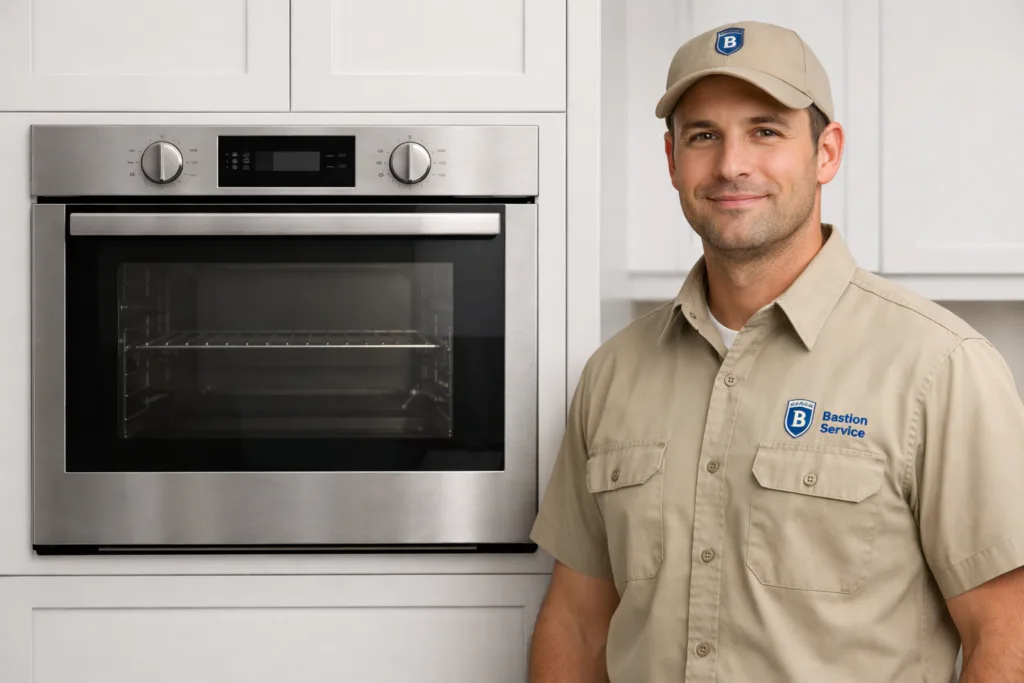
Cooking problems usually show up before a Bosch oven fully fails. Cookies brown unevenly, casseroles need extra time, the broiler stops responding, or the display acts normal while the cavity never gets hot enough. Looking at the exact symptom pattern helps narrow the issue faster and gives homeowners a better sense of whether repair makes sense.
In Westwood homes, oven complaints often involve performance rather than a total shutdown. The appliance may still turn on, light up, and accept settings, but the result is inconsistent heat, long preheat times, or cooking results that are no longer predictable. Those details matter because the same complaint can come from very different underlying faults.
Common Bosch Oven Problems and What They May Mean
Oven will not heat at all
If the oven powers on but produces no heat, the fault may involve the bake circuit, broil circuit, igniter on gas models, temperature sensing, wiring, or the electronic control system. Sometimes one failed part stops the entire heating process. In other cases, the display appears normal while the oven never actually begins a proper heat cycle.
Slow preheating
A Bosch oven that eventually gets hot but takes far too long to preheat may have a weak heating component, a sensor reading problem, or a control issue affecting how heat is being cycled. This symptom is easy to overlook at first, but it often gets worse over time and can affect every meal that depends on accurate timing.
Uneven baking
When one rack cooks faster than another or food comes out overdone on one side and pale on the other, the issue may involve weak heat output, poor temperature regulation, airflow disruption, or a door that is not sealing well. Uneven baking is especially frustrating because the oven may seem to work well enough for some dishes and badly for others.
Temperature swings during cooking
If the oven overshoots the set temperature, drops too low, or cannot hold steady heat, attention usually turns to the sensor, control board, relays, or calibration-related problems. Temperature instability can make roasting, baking, and broiling much less reliable, even when the appliance does not show a visible error.
Broiler not working properly
A broiler that will not turn on, heats weakly, or cycles in an odd way may point to a problem in the upper heating circuit or control system. Because broiling depends on strong direct heat, even a partial failure tends to become obvious quickly.
Display errors or unresponsive controls
Beeping, flashing codes, touch controls that stop responding, or settings that cancel unexpectedly can indicate an electronic control problem, keypad issue, communication fault, or power-related interruption. If resetting power only helps briefly, the problem usually needs a closer look before the oven can be trusted for normal use.
Symptoms Homeowners Should Not Ignore
Some Bosch oven problems are mostly inconvenient, but others should be treated more seriously. It is wise to stop using the appliance and schedule service if you notice any of the following:
- The oven trips the breaker during operation
- There is a burning smell that suggests overheated wiring or components
- The oven overheats far beyond the selected setting
- The door will not close securely or will not unlock properly
- Error codes return again and again after resets
- The unit shuts off mid-cycle without explanation
Continuing to use an oven with these symptoms can lead to larger repairs, damaged meals, or avoidable safety concerns.
Why Accurate Testing Matters
Oven repair is rarely just a matter of replacing the first part that seems likely. A slow-preheating oven could have a weak heating element, but it could also have a sensor issue or an electronic control fault. An oven that cooks unevenly may not need calibration alone if the real problem is poor heat distribution or incomplete heating.
That is why the most useful service approach is based on what the oven is actually doing during operation. Heat behavior, control response, sensor readings, and door condition all help determine what failed and whether the repair path is reasonable for the appliance.
Door, Seal, and Self-Clean Problems
Not every Bosch oven complaint starts with the heating system. A worn gasket, misaligned door, or latch issue can affect temperature retention and cooking performance. If heat escapes around the door, the oven may run longer, struggle to maintain temperature, and bake less evenly.
Self-clean cycles can also expose existing weaknesses. A unit that already had a minor sensor, latch, or control issue may start showing more serious symptoms after a high-heat cleaning cycle. If the door will not unlock afterward or the oven begins displaying errors, the problem may involve the lock system, controls, or heat-stressed components.
When Repair Is Often Worth It
Repair is often a good option when the problem is isolated and the rest of the oven is in solid condition. Many heating, sensing, latch, and control-related issues can be resolved without replacing the appliance, especially when there is no broader pattern of failures.
Homeowners in Westwood often weigh a few simple factors before approving work:
- Whether the fault is limited to one system or several
- How the oven has been performing overall in recent months
- Whether the repair restores normal daily cooking use
- Whether the cost fits the age and condition of the appliance
When Replacement May Be the Better Choice
Replacement becomes more likely when the oven has multiple unrelated problems, expensive control failures, structural wear around the door or interior, or a history of repeat breakdowns. If one repair solves only part of the problem and more issues are likely to follow, replacing the unit may be more practical than continuing to invest in it.
That decision is easier when it is based on the condition of the actual appliance rather than guesswork. A single failed component is a very different situation from an oven with declining performance across several systems.
What to Check Before Scheduling Service
Before arranging a visit, it helps to note a few details about the symptom. These observations can make the issue easier to identify:
- Does the oven fail in bake, broil, or both?
- Is the problem constant or intermittent?
- Does preheating take longer than it used to?
- Are foods consistently undercooked or overbrowned?
- Did the issue begin after a self-clean cycle or power interruption?
- Is there an error code, unusual noise, or burning smell?
Even simple notes like these can help connect the symptom to the most likely system rather than treating the problem as a general heating complaint.
Bosch Oven Repair for Everyday Household Use
Most residential oven service calls are not about dramatic failure. They are about a kitchen appliance that no longer performs the way a household needs it to. When baking results become unreliable, preheat stretches too long, or controls stop responding consistently, the goal is to identify the fault and determine the most sensible next step.
For Westwood homeowners, that usually means focusing on cooking performance, repeat symptoms, and whether the repair will restore normal use without unnecessary parts replacement. A thorough diagnosis and straightforward repair recommendation make it much easier to decide what to do next with a Bosch oven.