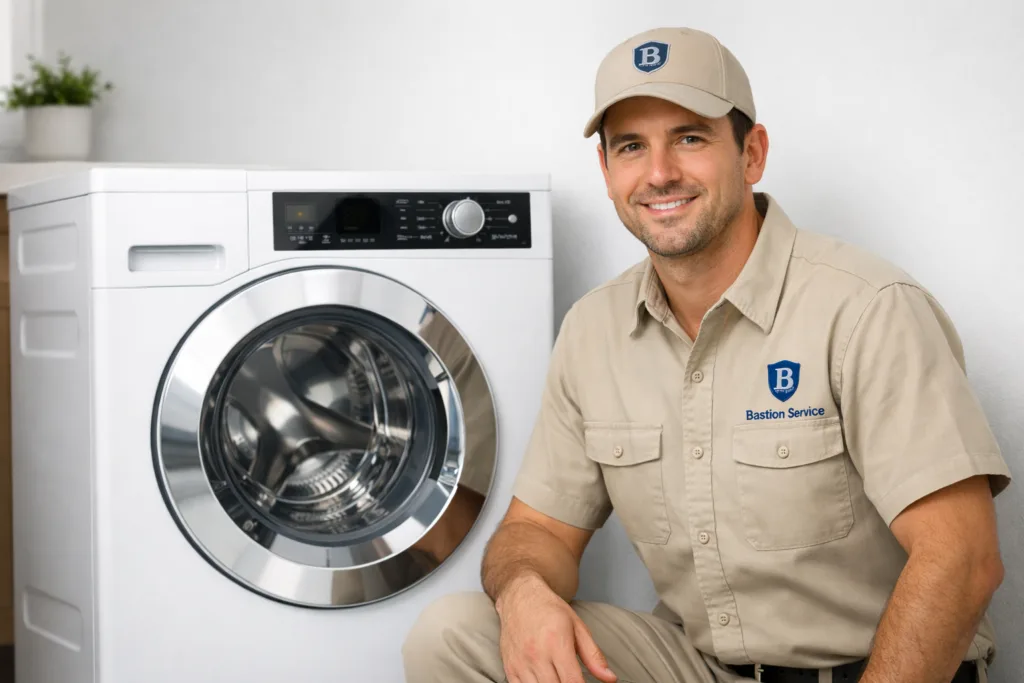
Many washer problems start with a small change in performance before they turn into a full breakdown. Clothes may come out wetter than usual, a cycle may stall near the end, or the machine may begin making a sound that was not there before. With Miele washers, those early warning signs are worth paying attention to because the same symptom can have more than one cause, and continuing to run the appliance can make the eventual repair larger than it needed to be.
How Miele washer problems usually show up
A symptom-based inspection is often the fastest way to understand what is happening. Instead of assuming a single failed part, it helps to look at when the problem appears during the cycle and what the washer is doing at that moment.
Washer will not drain fully
If water remains in the drum after a cycle, the issue may involve a blocked filter, drain pump trouble, a kinked or restricted hose, or a control problem that prevents the washer from completing the drain sequence. In some cases, the machine will also skip or limit the spin cycle because it senses that water has not left the tub properly.
Homeowners often first notice this when towels come out heavy or the door stays locked longer than expected. That pattern matters because a draining problem can affect several other functions at once.
Spin cycle is weak or inconsistent
A Miele washer that tumbles but does not reach full spin may be responding to an out-of-balance load, retained water, suspension wear, or a sensor issue. If the washer repeatedly redistributes clothing without finishing the cycle, the machine may be trying to protect itself from excessive movement.
One missed spin does not always mean a major repair, but repeated weak spinning should be checked before it leads to more strain on the drive and suspension system.
Water leaks during fill, wash, or drain
Leaks are easier to describe than to trace. Water at the front of the machine may point to a door seal issue, while water appearing at the back can involve hoses, clamps, or drain routing. Some leaks happen only during draining, which can make the source harder to spot without testing the washer through the full cycle.
Sudsing can also contribute to overflow behavior, so the timing and amount of leaking are useful clues when narrowing down the fault.
Door does not lock or unlock correctly
If the washer will not start because the door does not register as closed, the problem may be related to the latch, strike, lock assembly, wiring, or control response. When the door stays locked after washing, retained water in the machine is often part of the story, but not always. A failed lock mechanism or interrupted cycle can also prevent normal release.
Noise, vibration, or banging
Not every sound means internal damage, but new mechanical noise should not be ignored. Rattling can come from foreign objects, while banging during spin may suggest load-balance issues or worn suspension components. Grinding or scraping sounds deserve more caution because they can indicate deeper mechanical wear.
If the washer is moving more than usual, shaking the floor, or striking the cabinet during spin, it is best to stop using it until the cause is identified.
Error codes and stopped cycles
Error codes are helpful, but they do not replace diagnosis. The same code may be triggered by a straightforward flow restriction or by a related component failure elsewhere in the system. When a cycle stops at the same point each time, that pattern can reveal whether the problem is tied to filling, heating, draining, sensing, or door-lock confirmation.
What to do before scheduling repair
There are a few safe observations that can help describe the problem more clearly. Notice whether the washer fails at the beginning, middle, or end of the cycle. Check whether water is left inside, whether the detergent drawer is pulling in water normally, and whether the noise happens only at high spin or throughout washing. If there is leaking, note where the water appears and whether it happens during fill or drain.
Avoid repeated test cycles if the washer is leaking, tripping power, producing a burning smell, or making severe mechanical noise. Those symptoms can point to faults that worsen quickly with continued use.
When the washer should be taken out of service right away
- Water is leaking onto the floor regularly
- The machine will not drain and the tub stays full
- A burning odor appears during operation
- The washer trips the breaker or loses power mid-cycle
- There is loud grinding, pounding, or metal-on-metal sound
- The cabinet shakes violently during spin
In these situations, stopping use can help limit damage to the washer and the surrounding laundry area.
Common causes behind poor wash results
Not every service call starts with a complete failure. Sometimes the complaint is that clothes no longer come out as clean, rinsed, or fresh as they should. That can happen because of restricted water flow, heating problems, drainage issues, oversudsing, or a cycle that is ending early without obvious warning.
If detergent residue remains on clothing, the washer may not be rinsing effectively or may not be receiving the correct water volume. If items come out with odor, moisture retention and incomplete draining are common possibilities. When fabrics feel rough or heavy after washing, a spin or drain issue is often involved even if the washer appears to finish the program.
Heating and fill issues in Miele washers
Some Miele washer complaints are less visible but still important. Slow filling can stem from inlet valve problems, restricted screens, or water supply issues affecting cycle timing. Heating-related faults may show up as poor cleaning, extended cycle times, or interruptions during specific programs.
Because modern washers rely on coordinated input from multiple components, a symptom that seems like a simple water problem may actually involve sensing or control behavior. That is why replacing parts based only on the most obvious symptom can miss the real cause.
Repair or replace?
For many households in West Hollywood, repair is worth considering when the problem is isolated and the rest of the washer is in solid condition. Miele units are often kept in service successfully when the fault is limited to one system such as draining, door locking, water intake, or suspension.
Replacement becomes a more realistic discussion when the washer has a history of repeated breakdowns, major internal wear, severe leak-related damage, or multiple failing systems at the same time. Age alone does not decide the answer. The better measure is the condition of the appliance as a whole and whether the current repair restores reliable operation without stacking new risk on top of old problems.
What a useful service visit should include
A productive appointment should do more than name a symptom. It should verify the complaint, isolate the source, and explain what failed and why. For Miele washer repair in West Hollywood, that often means checking drain performance, fill behavior, lock operation, suspension stability, hose and seal condition, and any stored fault information if the model supports it.
That process gives homeowners a clearer basis for the next step, whether the answer is a direct repair, a return visit with parts, or a decision that replacement makes more sense. When the issue is diagnosed correctly from the start, it is easier to avoid unnecessary trial and error and get the laundry routine back to normal.